
‘The mouse that roared’: Legendary architect Gehry enhanced Las Vegas landscape


When Larry Ruvo introduced himself to Frank Gehry in Gehry’s office in Los Angeles in 2003, Gehry’s first words were, “I’m not building a building in Las Vegas.”
Ruvo took the response as a challenge, not a rejection.
The lifelong Las Vegan and hospitality icon planted himself across from the legendary architect. He told Gehry he would spend all of his scheduled 45 minutes selling his new acquaintance on designing what would become the Cleveland Clinic Lou Ruvo Center for Brain Health — in Las Vegas.
The meeting lasted 3½ hours. That was merely the beginning. Gehry finally asked Ruvo for time to mull over this concept, and set another meeting two weeks later.
Ruvo brought the person he refers to as his “secret weapon,” his wife, Camille, co-founder of the Center.
“He looks at my wife, and he said, ‘Did you ever make mud pies when you were young? She said, ‘Yes,’” Ruvo said Friday morning, his voice cracking. “He said, ‘Well, you never made mud pies with your enemies, only with friends. I like your husband. I’m going to do this building.’ And that’s how it happened.”
On Friday afternoon, Ruvo arranged to hang a K’riah ribbon on the facility, the ribbon torn by Jewish mourners, symbolizing grief after the loss of a loved one. This is a modern alternative to the tradition of tearing clothes while grieving a loss.
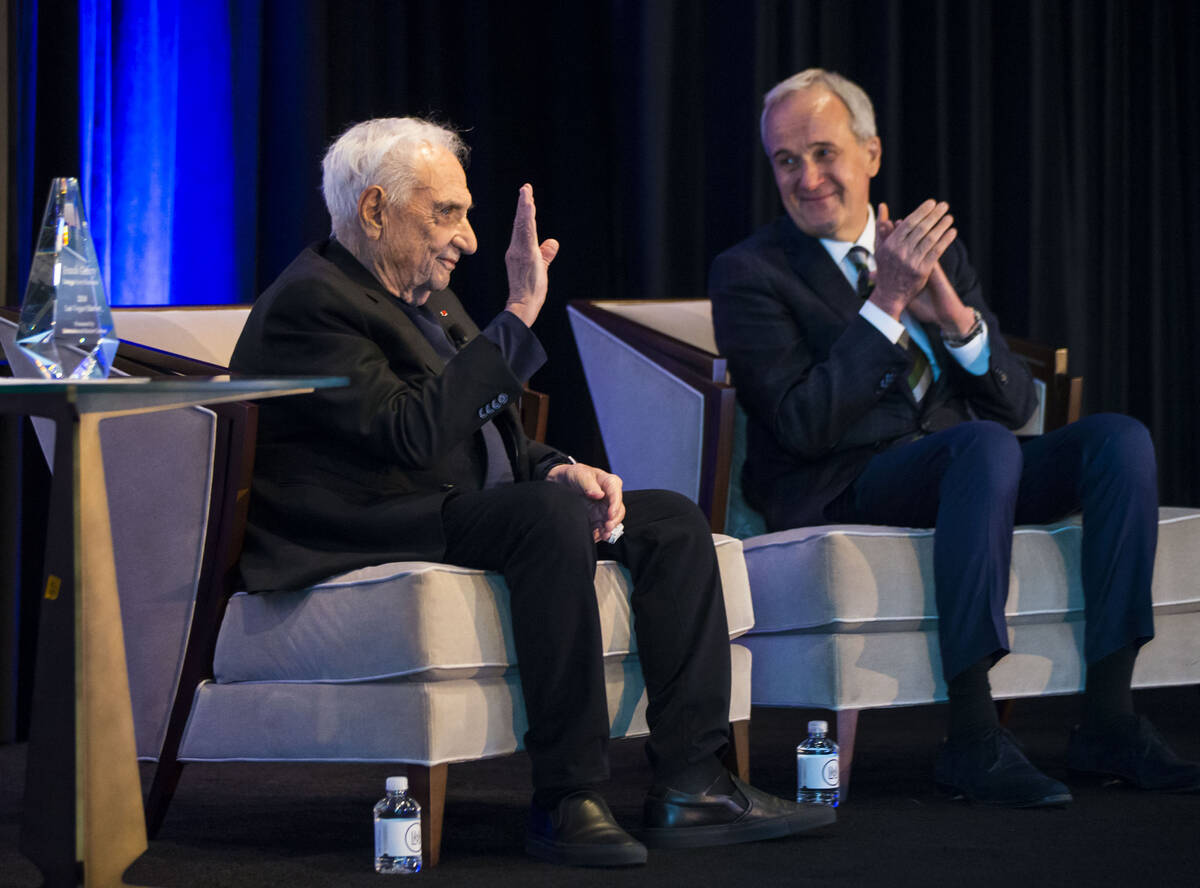
Gehry died Friday at age 96 after a respiratory illness in his home in Santa Monica, California. Gehry was famous for such famed buildings as Guggenheim Bilbao and Disney Concert Hall. He was renowned for his groundbreaking computer-aided designs and sculptural forms that defined modern design.
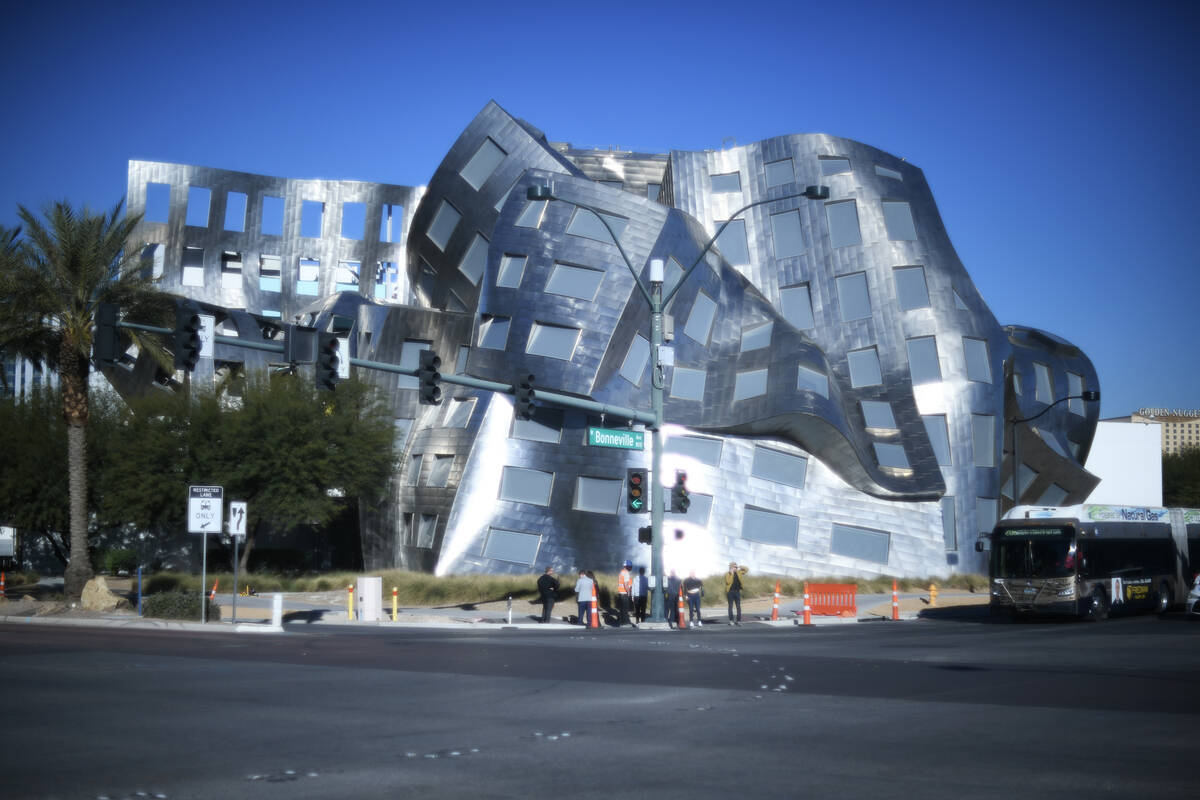
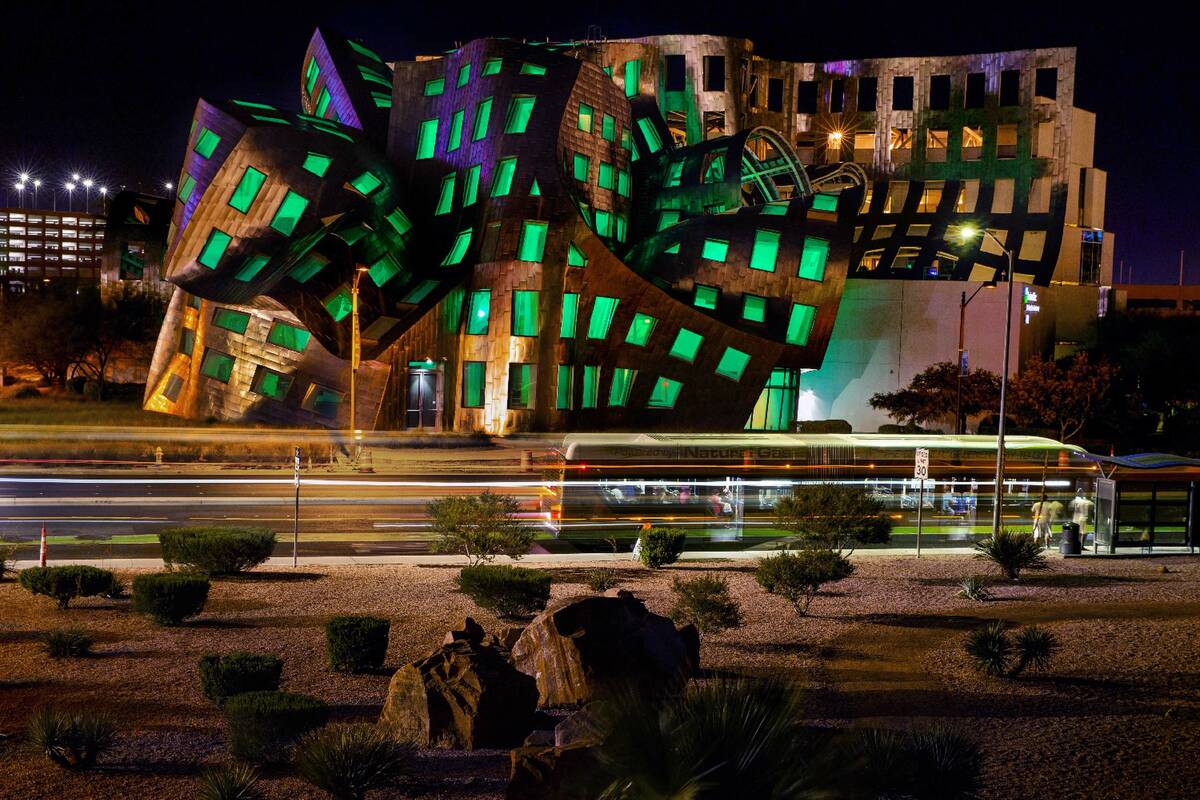
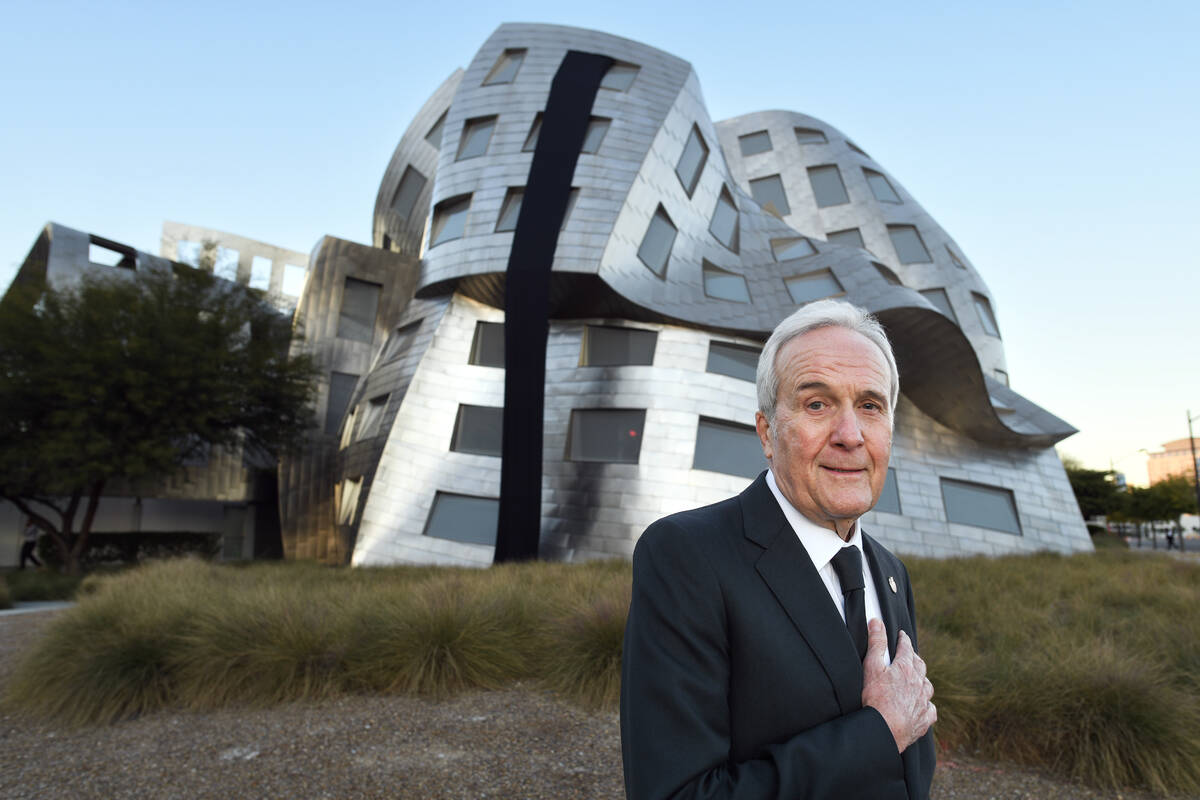
The Ruvo Center is Gehry’s lasting legacy in downtown Las Vegas. The home of groundbreaking research and treatment of myriad brain disorders cost an estimated $100 million. The clinic opened for patient care in the summer of 2009 in Symphony Park.
Ruvo said Gehry was concerned his methods and vision would not fit the Las Vegas landscape.
“He said, ‘Everything is so overdone in Las Vegas, what am I going to do? You’ve got volcanoes, you’ve got Excalibur, you’ve got Paris and all these buildings on the Strip.’”
Gehry added that what Ruvo had in mind was not a giant building. But after reviewing the location and the Center’s purpose, he told Ruvo, “I’ve got to be the mouse that roared.”
“And boy, did he ever make us roar,” Ruvo said. “The foundation that has put Las Vegas on the map for neurological diseases in the world was laid by Frank Gehry.”
Gehry’s artistic contribution has made the clinic internationally recognizable. His work was so valued that he designed a dog house, at Ruvo’s request, to be auctioned at the 2006 Keep Memory Alive Power of Love gala at MGM Grand Garden.
The bidding reached $350,000, at which point Gehry said he would design two canine fortresses, at a combined bid of $700,000.
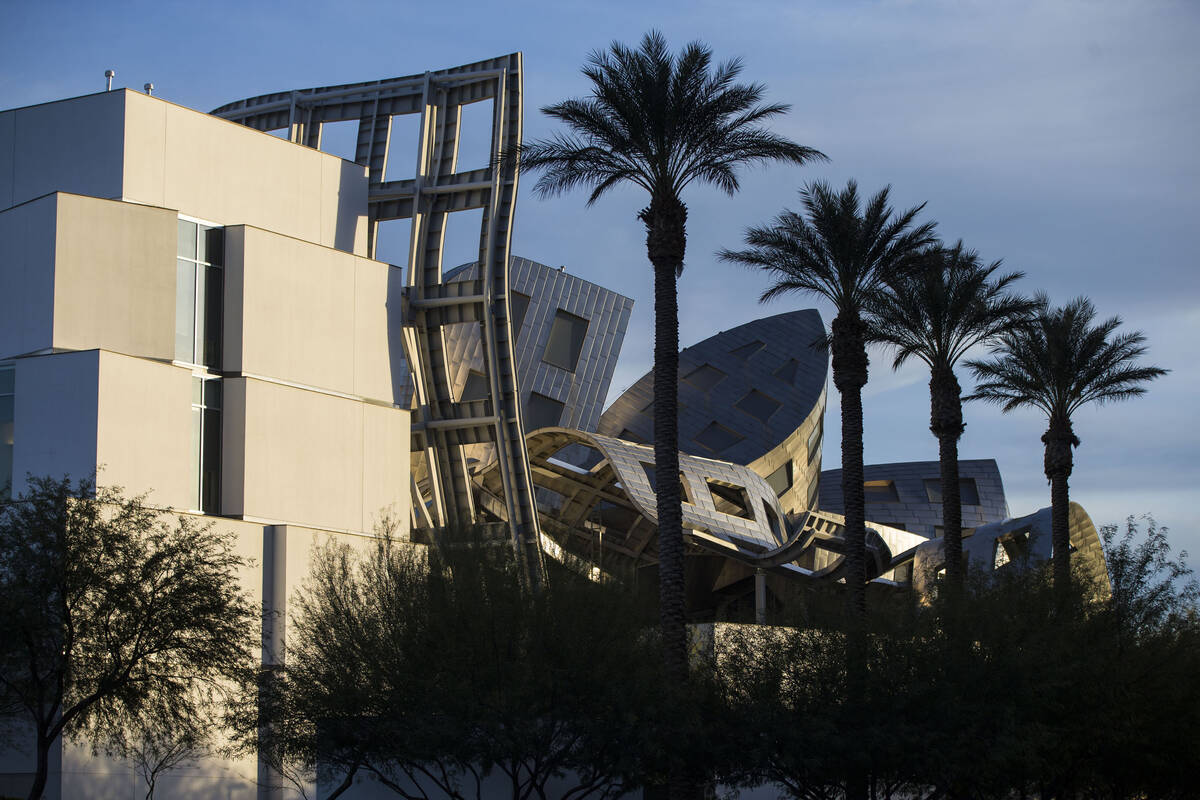
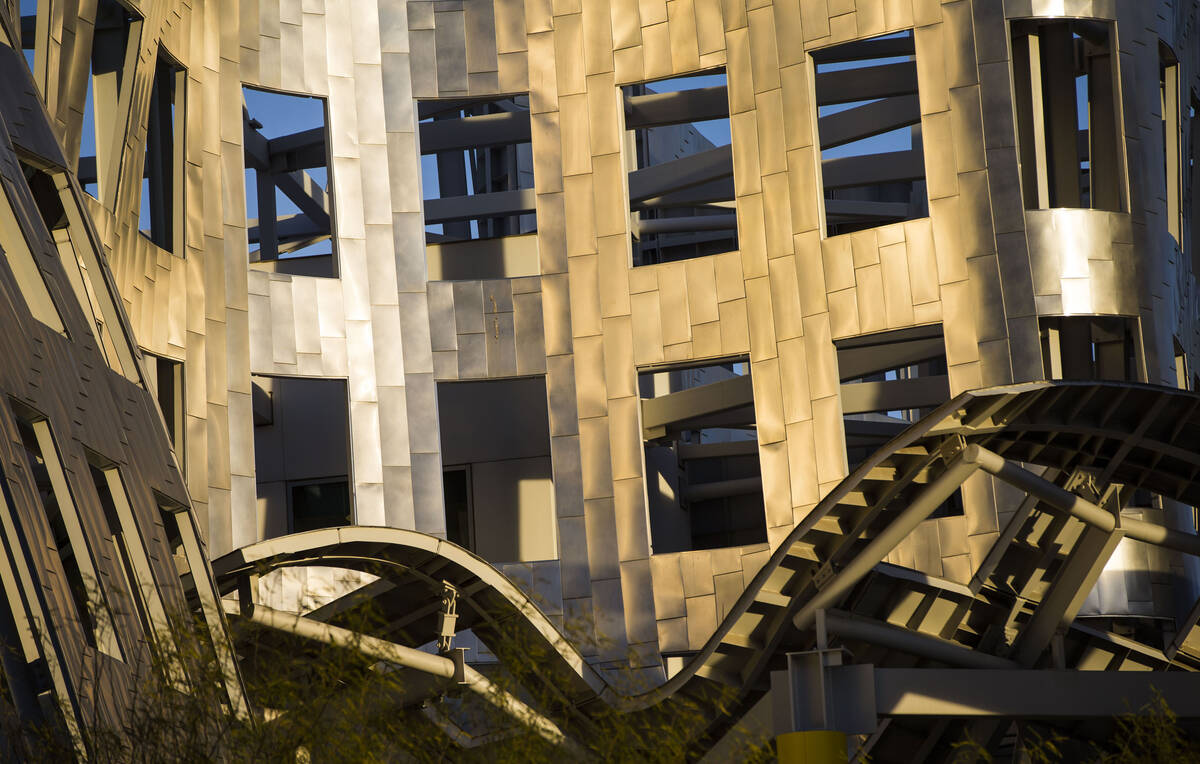
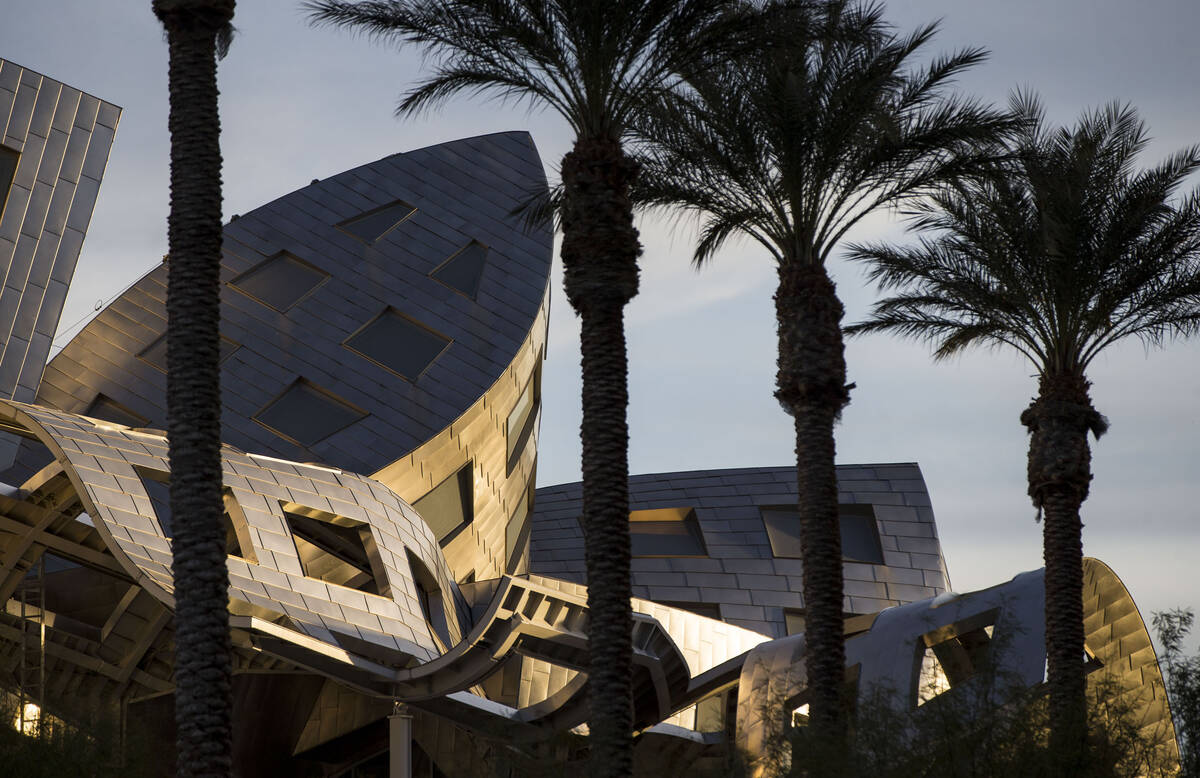
The Ruvo Center’s flowing, undulating structure, in which no two windows are the same size, is often interpreted as a brain compromised by disorder or disease. Gehry said that was not his conscious intention. He had been long known for dramatic curves and shining titanium panels, to indicate movement.
“He was asked that question by authors and editors from the architectural world, when we opened the building, ‘Was that what you planned?’” Ruvo said. “He said, ‘No.’ Then they said, ‘Is that what your subconscious planned?’ And he said, ‘I only do what my subconscious tells me to do. So if it told me to do the brain, I did it. It’s all up to my subconscious.’”
‘Profoundly innnovative force’
UNLV School of Architecture Director Daniel Ortega praised Gehry’s “fearless: methods.
“I join colleagues around the world in recognizing Frank O. Gehry as a pioneering and profoundly innovative force in the discipline of architecture,” Ortega said in a statement. “His fearless approach to form, materiality, and the expressive potential of architecture reshaped how we understand the built environment and expanded the very boundaries of design.”
Ortega said the Ruvo Center “stands as one of the most significant works of modern architecture in our region, a testament to the power of bold vision to elevate both place and purpose. Mr. Gehry’s remarkable contributions have left an indelible mark on our city and on generations of architects who continue to learn from his example. His presence as an icon of modern architecture will be deeply and sincerely missed.”
John Katsilometes’ column runs daily in the A section. Contact him at jkatsilometes@reviewjournal.com. Follow @johnnykats on X, @JohnnyKats1 on Instagram.