A short history of the old neon signs along Las Vegas Boulevard
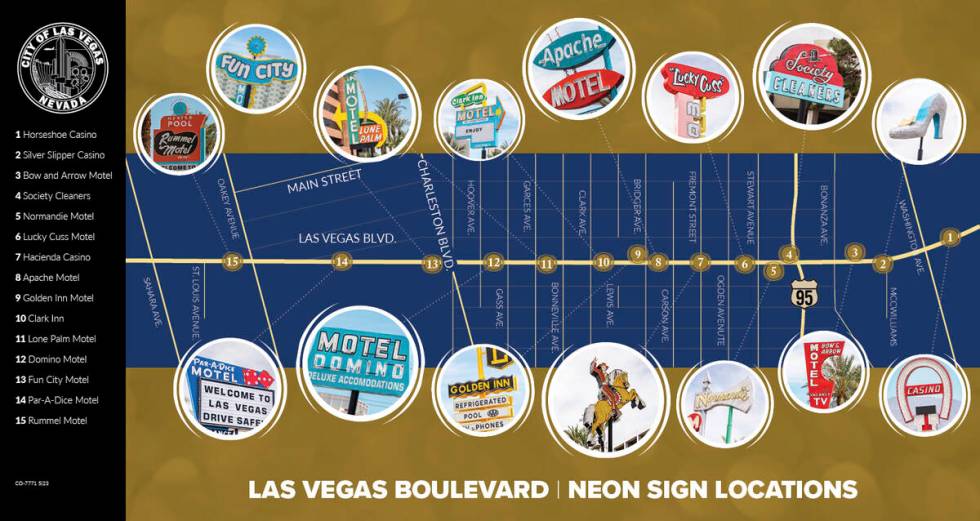
Fifteen refurbished neon signs are on display along Las Vegas Boulevard, dotting the route from Sahara Avenue to the Neon Museum, just north of Washington Avenue.
Fifteen refurbished neon signs are on display along Las Vegas Boulevard, dotting the route from Sahara Avenue to the Neon Museum, just north of Washington Avenue.
The relics of a long-gone Las Vegas were installed in the past few years, with the latest batch of eight lighting up in May 2023 to coincide with the city’s birthday. All signs are co-owned by the city, the museum and YESCO Custom Electric Signs, the company behind just about every iconic sign in town, dating back more than 100 years.
The most recent batch cost about $125 million and included funding for the hard-to-miss archway north of the Sahara and the nearby showgirls. Aaron Berger, the Neon Museum’s executive director, said in 2023 that the project makes Las Vegas history more accessible.
A map of all refurbished sign locations along Las Vegas Boulevard. (City of Las Vegas)
So here’s a little bit of that history:
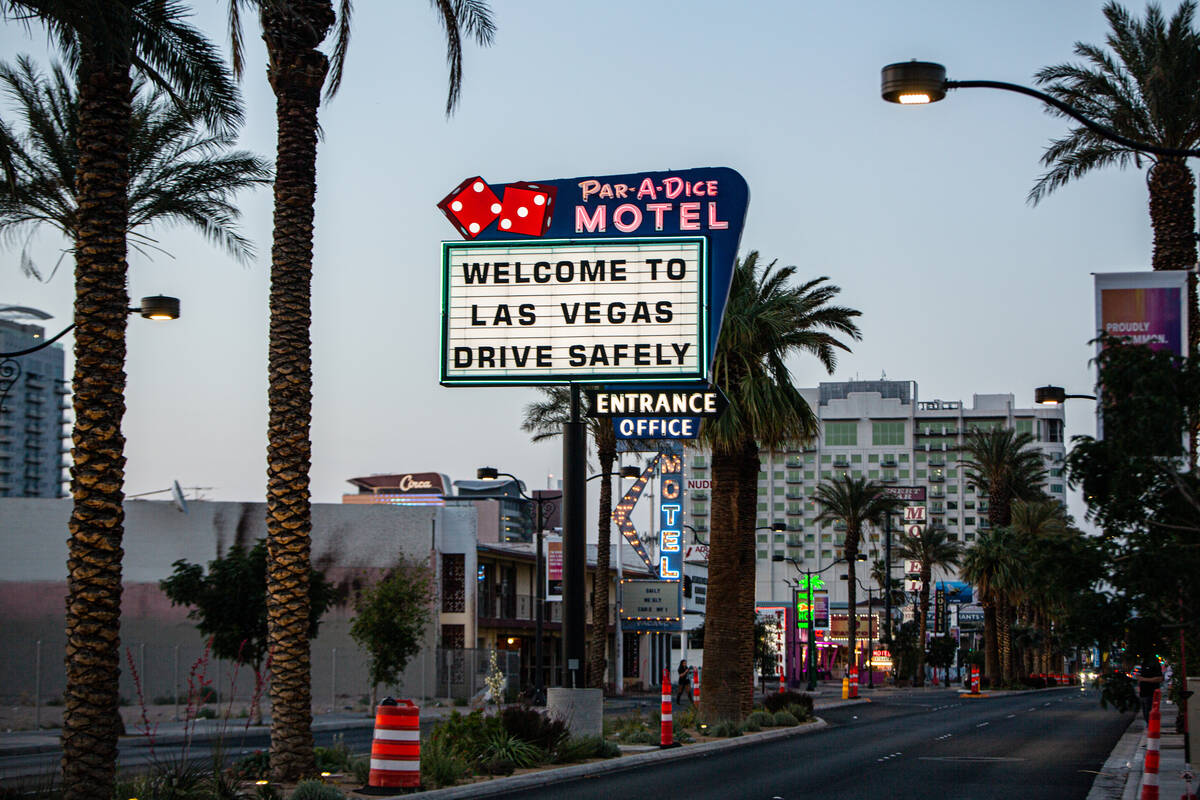
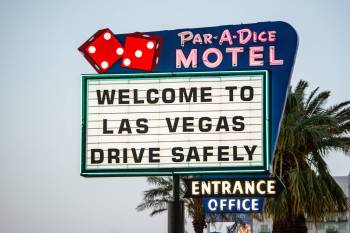
It's unknown when the Par-A-Dice Motel sign was installed. (City of Las Vegas)Par-A-Dice, 1953
Not to be confused with the Pair-O-Dice Club (and speakeasy) of the 1930s, the Par-A-Dice Motel came a couple of decades later and also used the play on “paradise/pair of dice.” The motel operated from 1953 to 2010 at the corner of Eastern Avenue and Fremont Street and originally had a second sign atop a small tower featuring two large red dice.
North of Oakey Boulevard
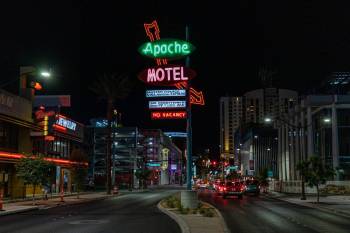
The Apache Motel was demolished to make way for Las Vegas City Hall. (City of Las Vegas)Apache Motel, 1965
In 1961, this motel was named after the Apache people of the Southwest. (Quick note: The Apache were not in Southern Nevada, home to the Nuwuvi, or Southern Paiute. As the Neon Museum puts it, “another example of a property that borrowed from Native American culture without considering cultural nuances.”) It also followed the Apache Hotel, which opened in Binion’s in 1932, closed and then reopened in 2019. As for the motel, it was demolished in 2010 to make way for Las Vegas City Hall, and the motel sign still advertises color TV and “tubs.”
North of Bridger Avenue
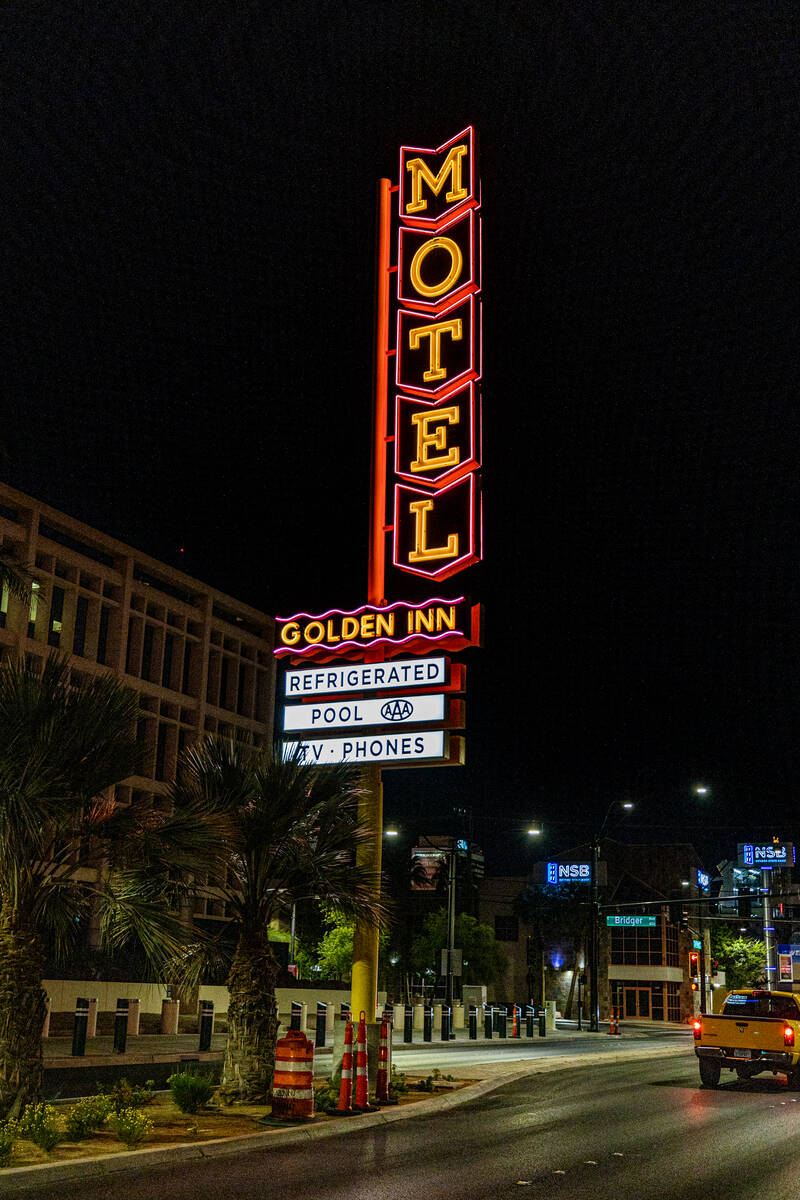
Golden Inn Motel, 1960
Standing in the Golden Inn’s place today is The Ogden, a luxury high-rise. The motel opened in 1961 and was designed by Nevada architect James B. McDaniel. According to the Neon Museum, the property advertised itself as “98 steps to downtown.” It closed in 2004.
South of Bridger
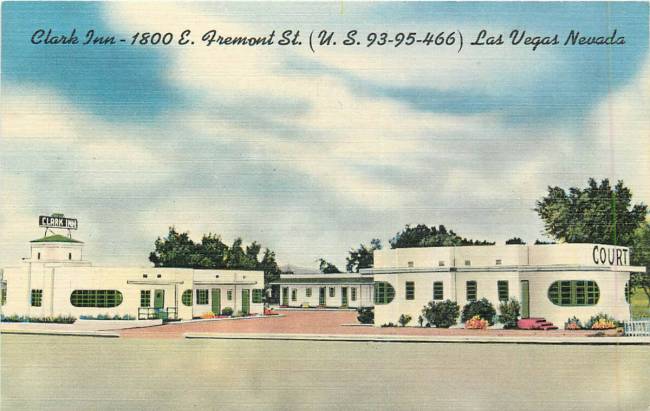
A postcard shows the unique shape of Clark Inn Motel. (VintageLasVegas.com)
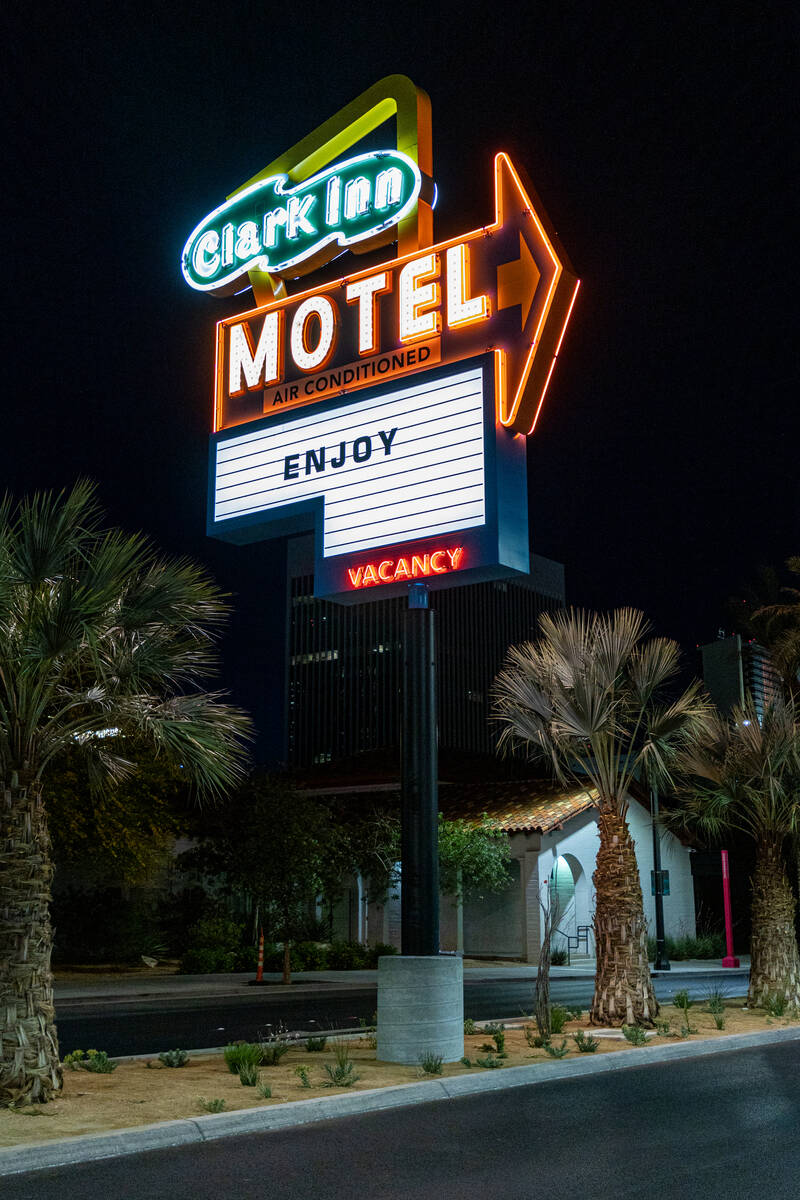
Clark Inn, 1962
A quick history of Las Vegas: Clark County was named for Sen. William A. Clark, a railroad tycoon who was instrumental in forming the link between Salt Lake City and Los Angeles. That’s not this Clark. The inn was opened by O.W. Clark, whose family owned the motel through its closure. The building was demolished in 1988, which is a shame, because it was truly a unique structure, built with rounded corners and oval-shaped windows. Another unique tidbit: The Clarks loved to garden there and stored fruits and vegetables in the basement.
North of Clark Avenue
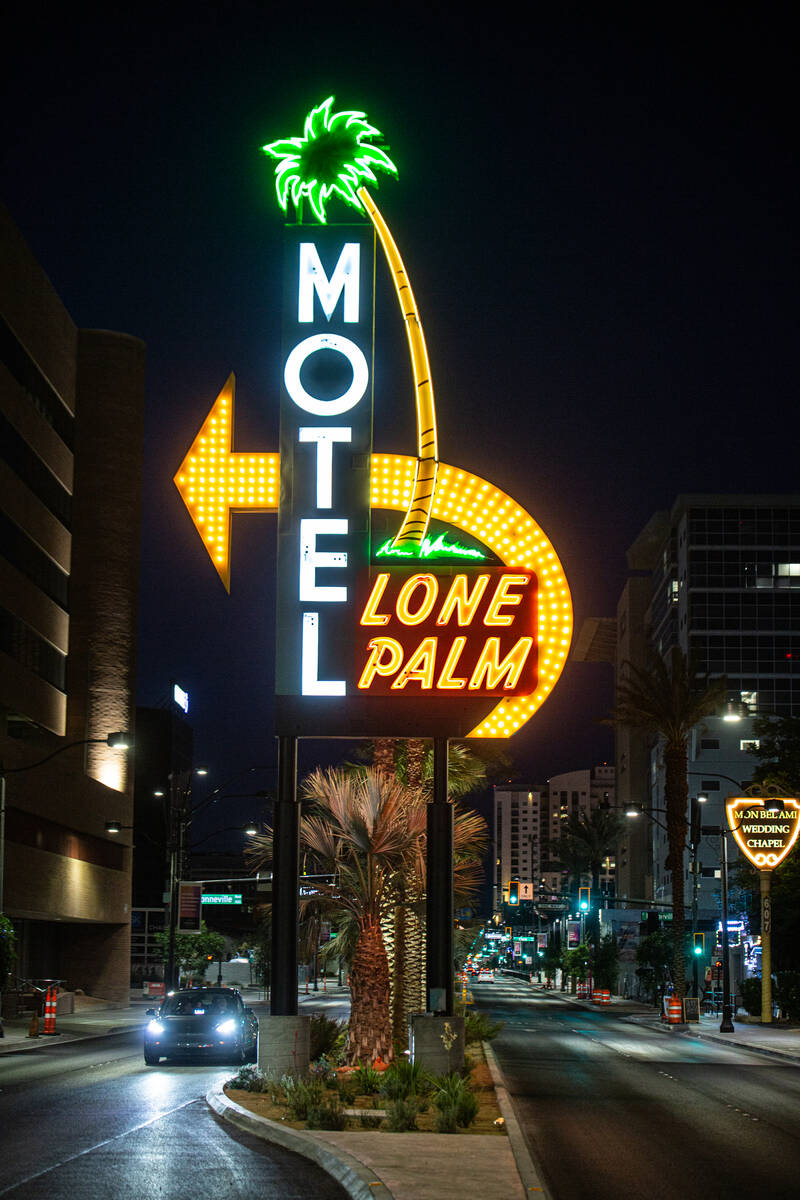
Lone Palm Motel, 1954
There’s no mistaking this sign, which features a single palm tree alongside the vertical “MOTEL.” Opened in 1954, the Lone Palm Motel was the precursor to the New York-New York. Or at least, it was on the same piece of land. While a cruise around town in the ’50s showed the range of motels, this one stood out with an apartment section and an RV park.
North of Garces Avenue
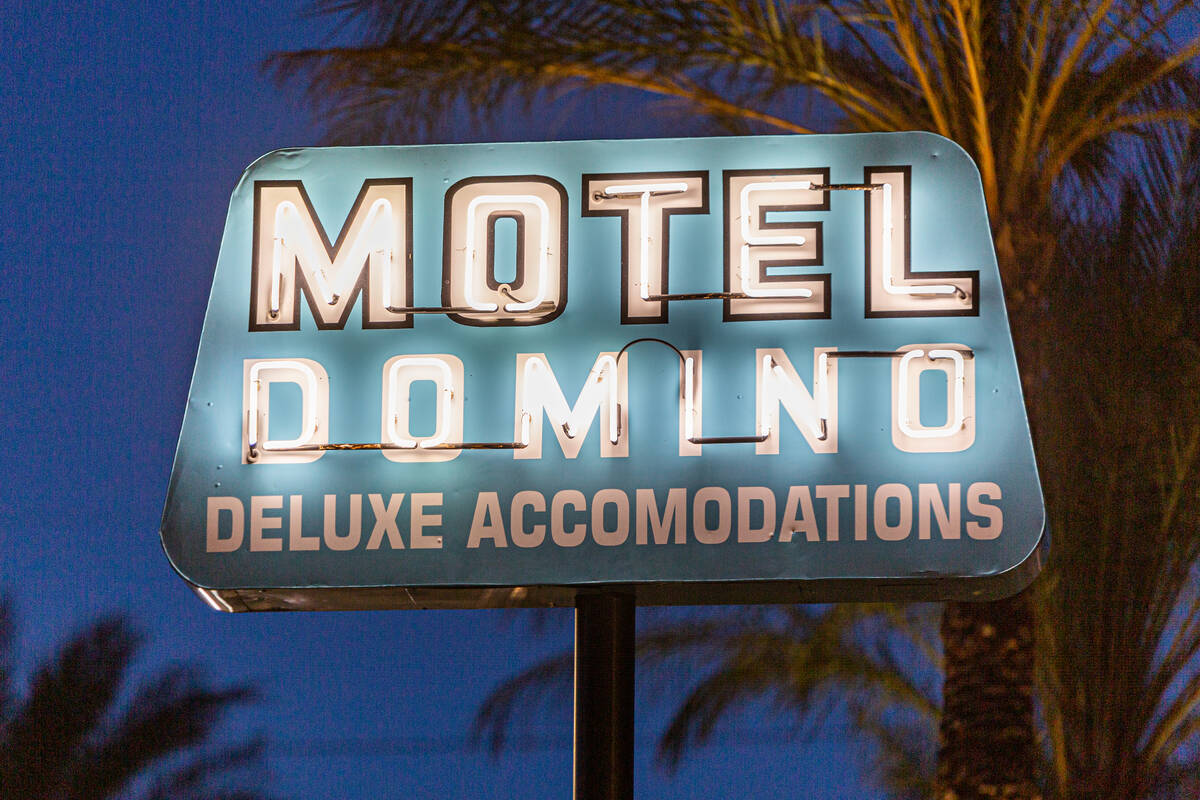
Domino Motel, 1960s
With few frills, the Domino Motel (1953 to 1995) sat roughly where The Strat stands today. Paradise was paved, and it’s now a parking lot.
North of Hoover Avenue
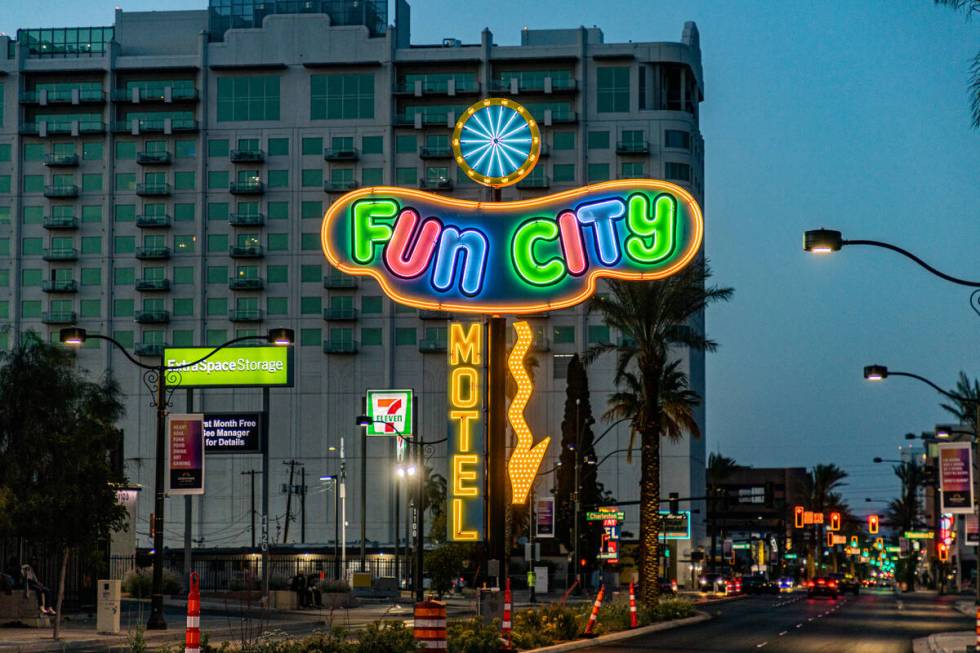
The latest refurbished sign is the Fun City Motel sign, created in the 1980s. (City of Las Vegas)
Fun City Motel, 1952
One of the longest-lasting historic motels (and one of the best signs), Fun City opened in the ’50s as the Glenn Vegas Motel, then switched to the Vegas Holiday Motel a decade later. Another decade passed before the Fun City Motel name stuck. The sign, also from the ’80s, is one of the most featured local, retro motel signs in pop culture. The motel closed in 2020.
South of Charleston Boulevard
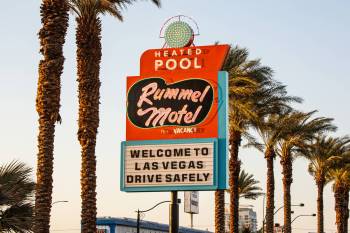
Rummel Motel's sign dates back to 1958. The motel closed in 2017. (City of Las Vegas)Rummel Motel, 1968
Opened by Ralph Roles and his wife, Treva, in 1952, the motel closed in 2017 after a fire. Another fire the following year destroyed most of the building. Roles, a Southern Nevada Bowling Hall of Famer, briefly worked as a firefighter before operating the motel for 20 years. He died in 2002. Rummel, we suspect, comes from the German noun that loosely translates to bustle, commotion or ballyhoo.
South of Oakey
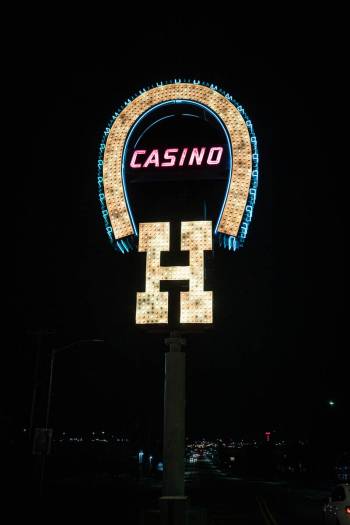
The Horseshoe sign comes with baggage: The history of Benny Binion. (City of Las Vegas)Horseshoe, 1951
Before the funky carpet that’s prevalent nowadays, casino floors were covered in sawdust. It was easier to sweep up spills, ash and other messes. Then along came Benny Binion, who had the crazy idea to install carpet and sweep the sawdust for good. Not only that, he introduced chairs at slot machines. He also had an extensive criminal history and an FBI file that started when he was only 20. If that sounds dramatic, it is — so much so that “Yellowstone’s” Cole Hauser will play Binion in an upcoming TV series.
Binion died in 1989, and the name Binion’s Horseshoe stuck while the family ran the casino through 2004. It’s now Binion’s, owned by TLC Enterprises, but the original horseshoe sign remains on Las Vegas Boulevard. In the meantime, Bally’s took up the old name, now known as the Horseshoe Las Vegas.
North of Washington
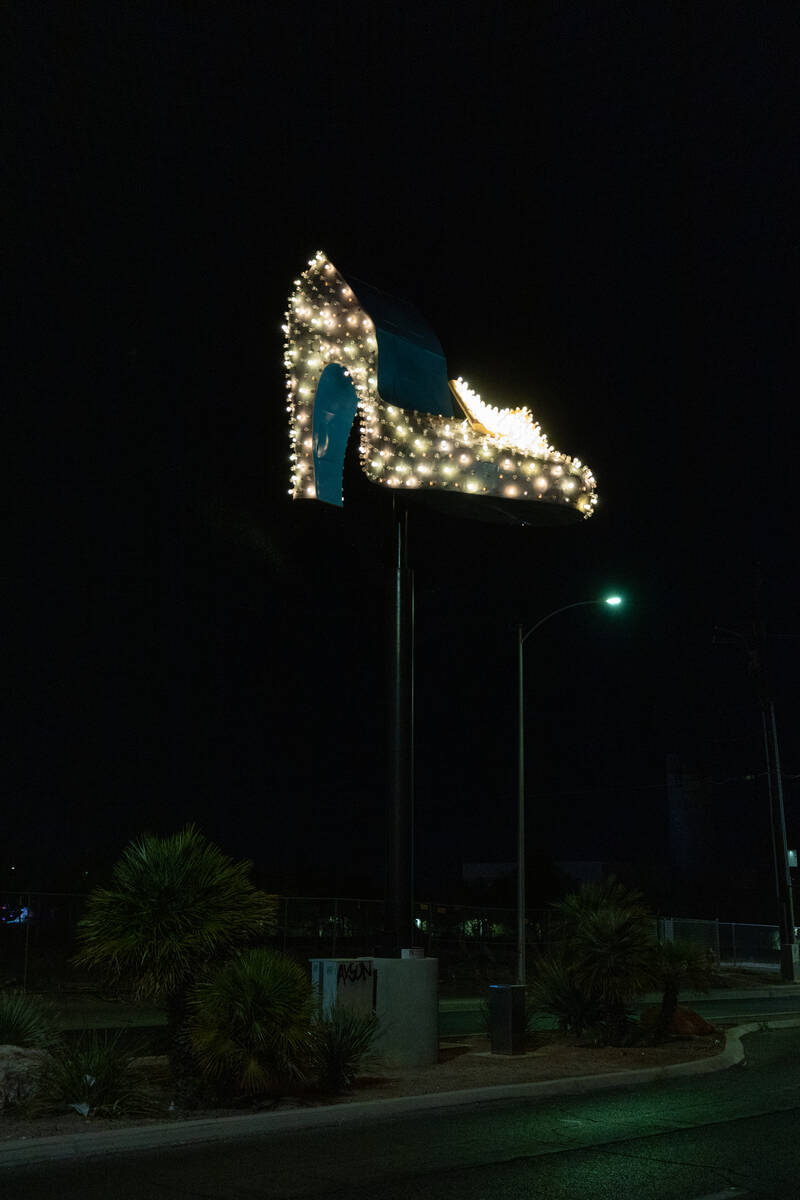
Silver Slipper, 1950
The sign that’s a shoe! A high heel, specifically, graced this motel from 1950 to 1988. Las Vegas history can truly be summed up by the history of the plot of land at 3120 Las Vegas Blvd. South:
The Pair-O-Dice closed, and on that land went the Hotel Last Frontier. In 1950, the Silver Slipper was added in what was now Last Frontier Village. That sold and became the New Frontier. In the mid-’60s, it was renamed the Frontier and owned by Howard Hughes. In 1987, the motel was sold with the Frontier and torn down to make room for more parking. The village faced additional challenges, with the 1991 start of a Culinary union strike, the longest in state history. Phil Ruffin’s 1998 purchase of the hotel marked the end of the strike, and he renamed it the New Frontier (again). It was demolished in 2007 and has sat empty ever since.
Near the Neon Museum at McWilliams Avenue
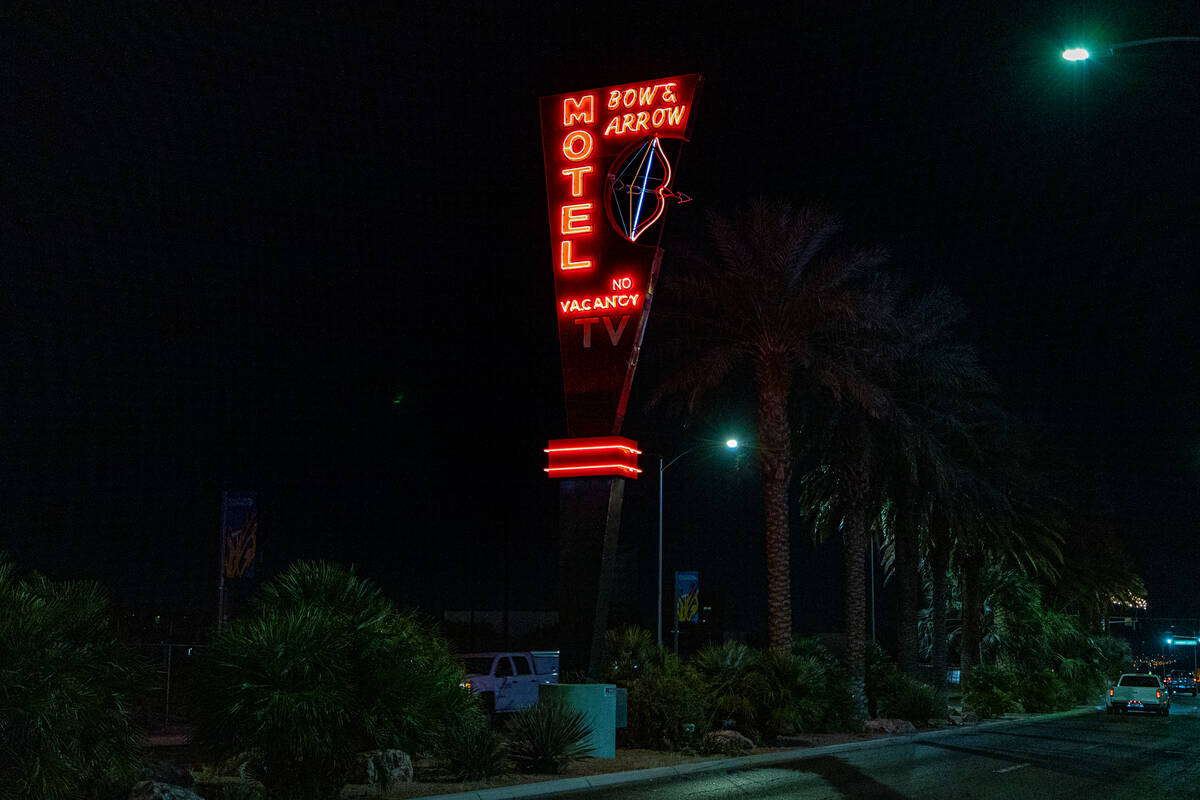
Bow and Arrow Motel, 1950s
Animation in neon is an art, and the Bow and Arrow Motel nailed it with its namesake neon animation of a bow and arrow that once pointed to the motel. This sign’s restoration was funded privately, the RJ previously reported, and was an easy job for restoration crew Ultrasigns, since it had no internal electronics. According to the museum, the sign was believed to have been designed by Betty Willis, who created the “Welcome to Fabulous Las Vegas” sign.
South of McWilliams
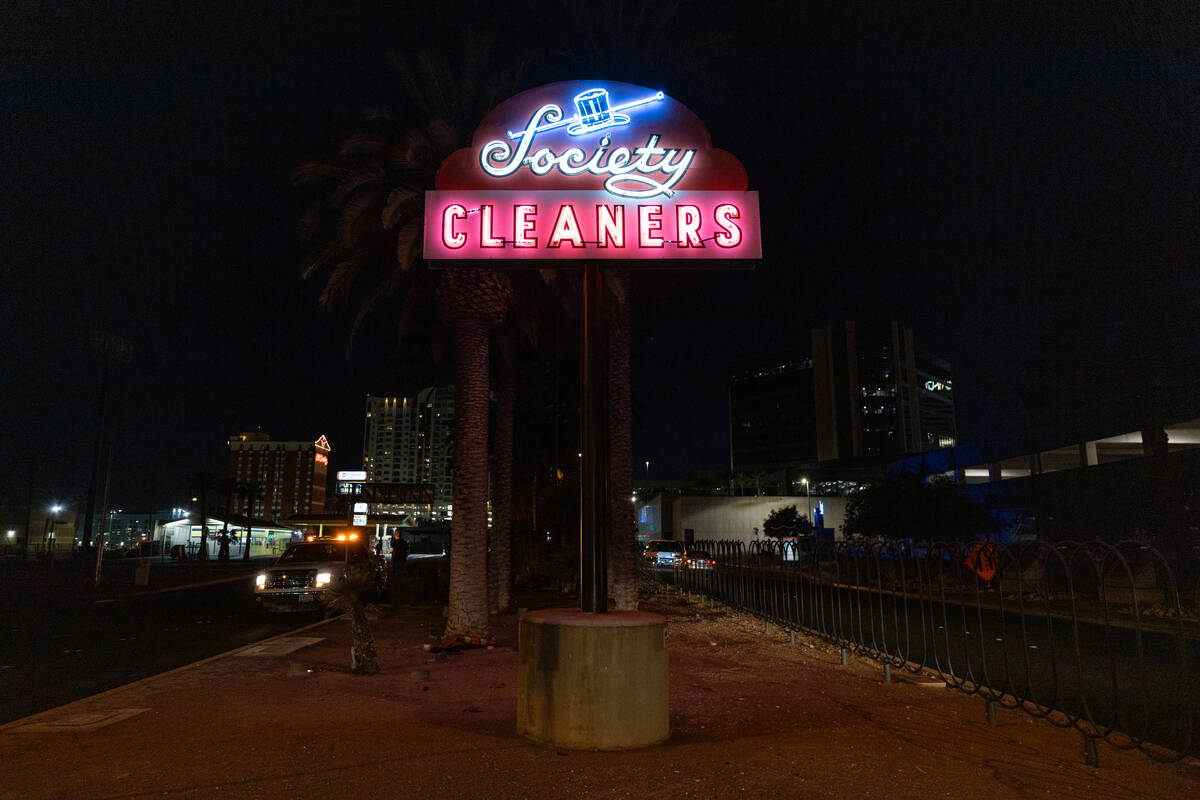
Society Cleaners, 1946
Wayne and Braunda Gamette opened a cleaning shop that operated for 60 years at 11th and Fremont streets. It closed in 2014. Little is available online about the couple, but the museum says the top-hat-and-cane imagery on the sign reflects the family’s involvement in the arts.
South of U.S. Highway 95/Interstate 515
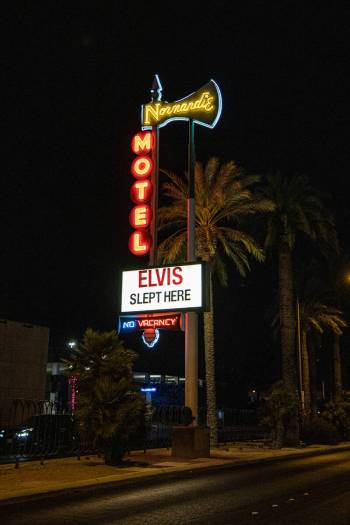
The Normandie Motel sign, also known as downtown's "ELVIS SLEPT HERE" sign, was designed by Betty Willis. (City of Las Vegas)Normandie Motel, 1940s
You may know this one as the sign that reads: “ELVIS SLEPT HERE.” Opened way back in 1938, the motel survived until 2002 in the spot that’s now home to the Gold & Silver Pawn shop (aka the “Pawn Stars” store). This one was definitely designed by Betty Willis and features a hatchet. Did Elvis sleep there? The world may never know.
North of Stewart Avenue
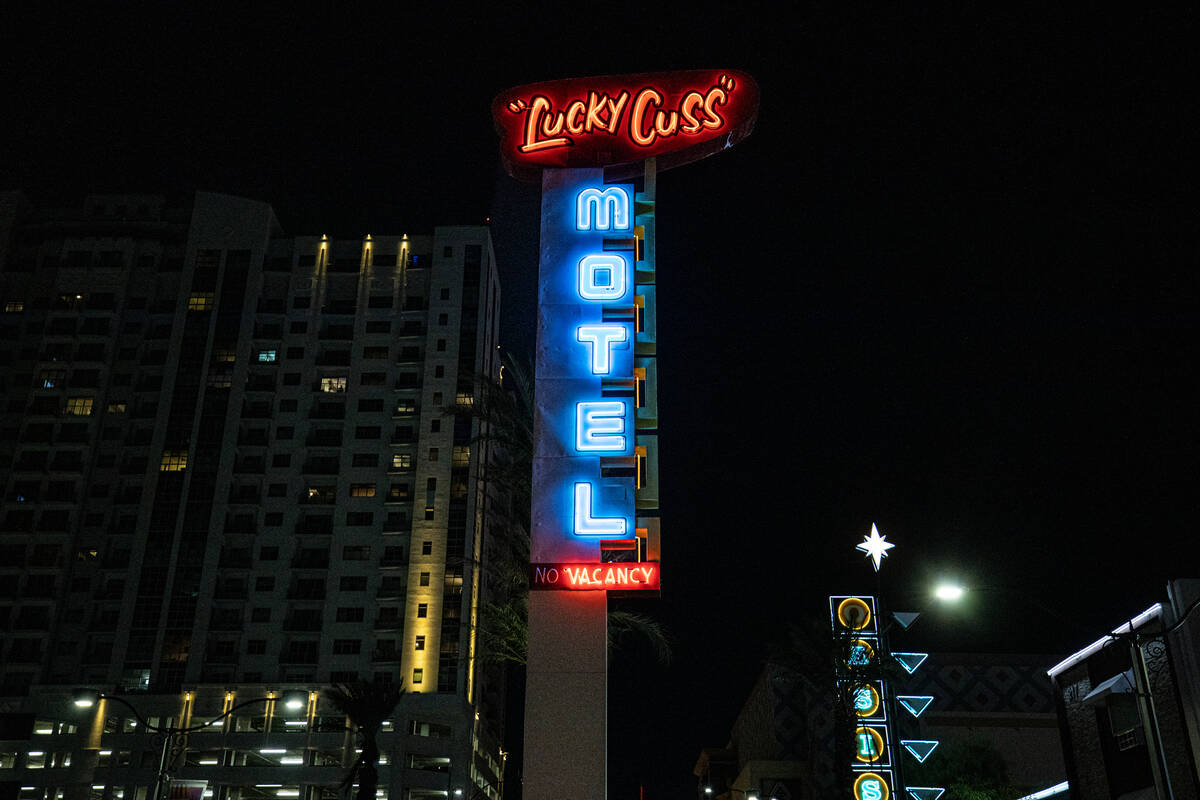
Lucky Cuss Motel, 1955
This motel wasn’t so lucky after the height of Fremont East’s midcentury motel boom, having closed in 2002 after more or less falling apart. The sign was saved, but little is known about it beyond its appearance in a Bill Griffith comic strip.
South of Stewart Avenue
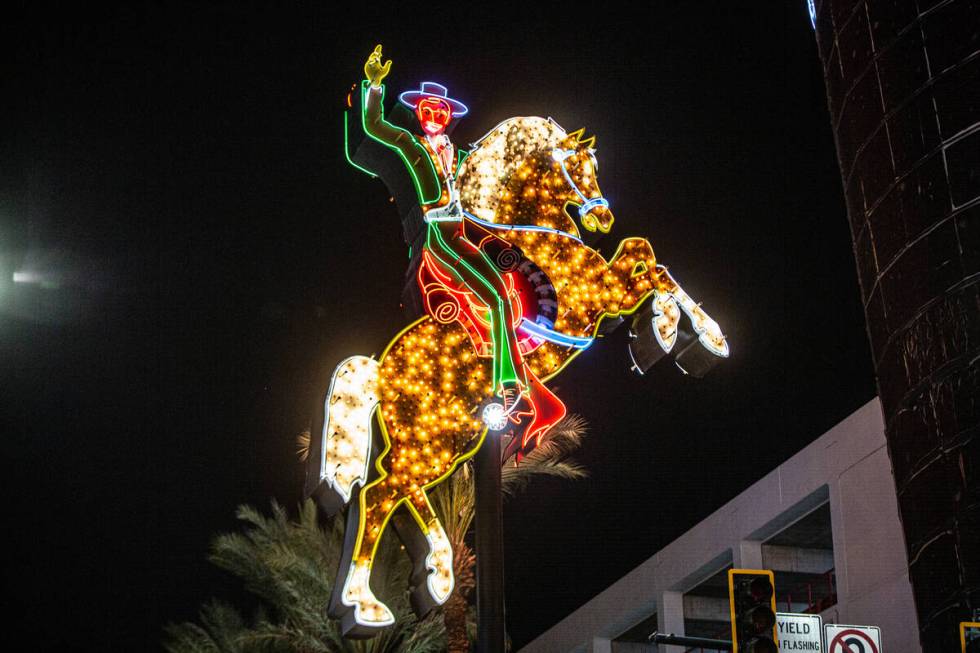
The Hacienda horse-and-rider sign is the most famous of the bunch, at Las Vegas Boulevard and Fremont Street. (City of Las Vegas)
Hacienda, 1956
If you’ve ever been to Fremont Street, you know this sign very well.
The Hacienda hotel-casino opened in 1956, and 11 years later came this iconic horse-and-rider neon sign, made by YESCO and commissioned by owner Judy Bayley. The bucking horse was based on her own pet horse, according to the museum, which chose this sign as the first to refurbish in 1996 when the casino was imploded. Hacienda Avenue remains, but it now leads drivers to Mandalay Bay.




 Add as a preferred source on Google