Shakespearean theater makes its final bow at 54th annual Utah Shakespeare Festival

As Hamlet would (and did) say, “The play’s the thing.”
At this season’s Utah Shakespeare Festival, however, one special playhouse is stealing part of the spotlight from the six repertory productions that start Thursday.
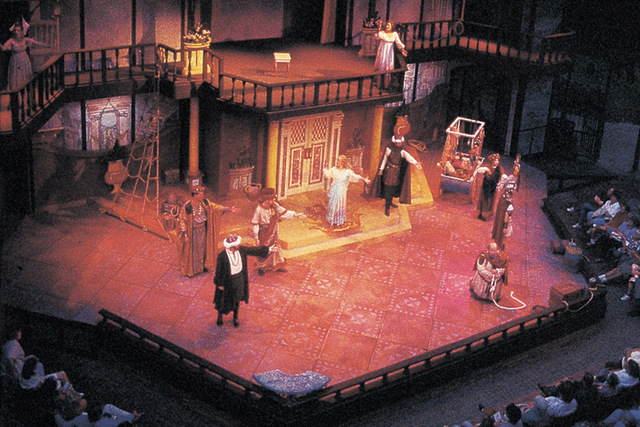
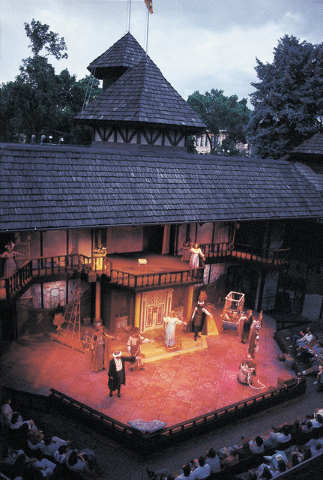
That’s because the 54th annual festival — based in Cedar City, about three hours north of Las Vegas on Interstate 15 — marks the final bow for the outdoor, Elizabethan-style Adams Shakespearean Theatre, home to most of the festival’s Shakespeare since 1977.
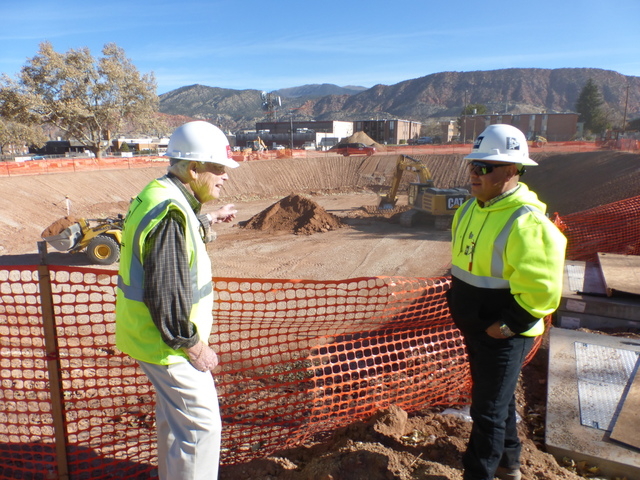
Next summer, the Tony-winning festival’s outdoor productions are scheduled to move to the Engelstad Shakespeare Theatre in the $35 million Beverley Taylor Sorenson Center for the Arts.
“Every day there are more bricks up,” director J.R. Sullivan (who’s staging “Amadeus” this season) observes of the construction adjacent to the festival’s indoor Randall L. Jones Theatre, which opened in 1989. “It’s already reaching to the sky.”
According to festival founder Fred Adams — who’s also directing this season’s “The Taming of the Shrew,” the festival’s first production in 1962 — “The Engelstad will look like a theater” when audiences arrive in Cedar City starting this week, with the tower, a three-story building that’s the iconic part of the Engelstad, in place.
But that’s next season’s theater.
This season, expected to be the final one for the beloved Adams’ “Wooden O” (to borrow Shakespeare’s description of his own Globe from “Henry V”) has everyone in a nostalgic mood.
“It’s very bittersweet,” says Brian Vaughn, the festival’s co-artistic director, who’s directing this season’s “Henry IV, Part Two,” playing Petruchio in “Taming of the Shrew” — and recalling more than two decades performing at the Adams.
“It’s a huge part of my life, working out there,” Vaughn notes, recalling his first production at the Adams (1991’s “Volpone”) and how he felt “a beautiful, symbiotic relationship between performer and audience that’s unlike any other venue” he knows.
Shakespeare’s “plays themselves are both intimate and grand,” he adds, “and so is the space. It’s kind of electric when you’re inside one of these plays.”
The two-tier Adams is “one of those magic spaces,” says Sharon Ott, who’s directing this season’s “King Lear” in the Adams. “It’s a joy to stage Shakespeare the way he imagined.”
That’s what the Royal Shakespeare Company and the BBC discovered in 1981, when they were searching for an open-air theater that most resembled the Bard’s own Globe — and found it in Cedar City, Utah. (The current Shakespeare’s Globe in London didn’t open until 1997.)
“You come to Utah and it’s your language, it’s Shakespeare, it’s wonderful” was then-RSC member (and future Oscar- and Tony-winner) Jeremy Irons’ reaction. “It’s like coming home.”
Media coverage of the shoot (for the BBC’s “All the World’s a Stage” series), from major magazines and newspapers, raised the Utah Shakespeare Fesitval’s profile around the world — and even in the festival’s home state, Adams recalls.
During the 1981 filming, the fesitval’s “Wooden O” worked its magic one bright, sunny afternoon.
At least it was a bright, sunny afternoon until the “Hamlet” scene in which the ghost of the title character’s murdered father appears to his son — and clouds rolled, a breeze came up and hail began pelting the stage, remembers executive director R. Scott Phillips.
Seven BBC cameras kept rolling during the stormy moment, which lasted no more than a minute, after which the sun reappeared.
David Ivers, the festival’s co-artistic director — who’s directing this season’s “Charley’s Aunt” and performing in “Amadeus” — also remembers when the Cedar City weather enhanced the on-stage action during “Much Ado About Nothing” in 2010.
“It was one of those great Cedar City nights — a little bit warm and blustery,” Ivers says. That is, until the moment when his character, the determined-to-stay-a-bachelor Benedick, finally acknowledges his love for the tart-tongued Beatrice and kisses her — with a sudden burst of thunder and lightning punctuating the moment.
Ivers also remembers the time when, during the 1998 production of “Taming of the Shrew,” a dog ran in from the Adams courtyard, “up a ramp and across the stage. I was fortunate enough to say,” borrowing a line from Lady Macbeth, ‘Out, damn Spot.’ ”
The laugh that ensued was “probably the biggest” Ivers experienced in more than 40 festival productions, he says.
“I will miss that,” he says of the Adams’ enchanting, sometimes enchanted atmosphere.
But “we have huge plans for the future,” Ivers adds — including the new 200-seat studio theater, which will give the festival three stages next year.
It’s a far cry from the very first Utah Shakespeare Festival, in 1962, when “we had a $1,000 budget” underwritten by the Cedar City Lions Club, Adams remembers. That first year, the festival sold $3,500 worth of tickets, leaving $2,500 left to finance the second festival season.
This year’s festival budget: $7.2 million. (And “we’re still about $1.2 million from balancing the budget,” according to Phillips.)
That covers not only the six main-stage productions — “Henry,” “Lear” and “Shrew” outdoors at the Adams, “Amadeus,” “Charley’s Aunt” and “South Pacific” indoors at the Randall — but nightly pretheater greenshows, daily post-show discussions, seminars featuring festival cast and crew and other activities.
But, as “Hamlet” reminds us, “The play’s the thing.” So, without much more ado, here’s a play-by-play guide to the six productions opening this weekend:
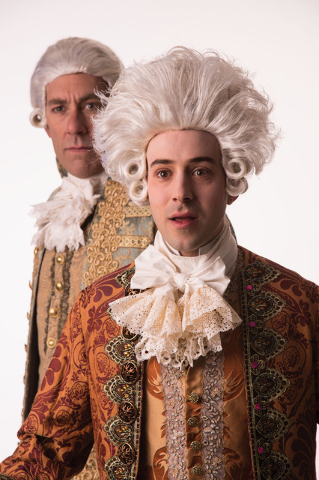
“Amadeus” (Thursday through Sept. 5) — You may have seen the Oscar-winning 1984 movie adaptation of Peter Shaffer’s Tony-winning play about the relationship between Antonio Salieri, court composer to Holy Roman Emperor Josef II, and musical upstart Wolfgang Amadeus Mozart.
But you haven’t really seen “Amadeus” until you’ve seen it on stage, insists Ivers, who plays Salieri, a man of God who wonders why God has bestowed genius not upon him but upon the infantile, foul-mouthed Mozart (Tasso Feldman).
“I love the movie — but really, it’s meant to be in a theater,” Ivers says. “It’s a love letter to theater.”
Director J.R. Sullivan agrees, describing “Amadeus” as “blazingly theatrical,” a “bit of a fantasia” that explores “the nature of genius and our expectations of great artists,” along with “the cost of consuming hatred” for Salieri, “a third-rate composer with a pair of first-rate ears.”
In Ivers’ view, Salieri “thinks he has an understanding about the world” and “lives with piety, virtuousness and rigor — and then genius,” in the person of Mozart, “enters the world.”
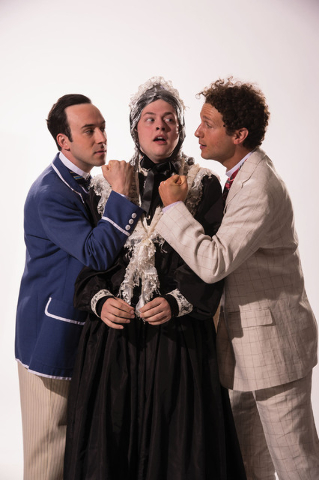
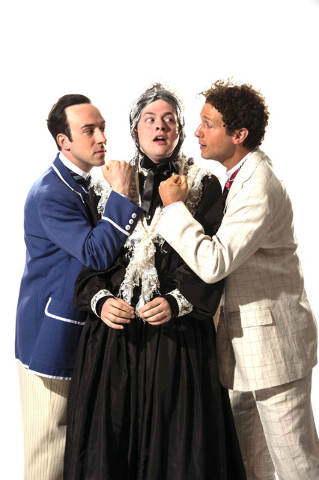
“Charley’s Aunt” (Friday through Oct. 31) — And for something completely different, Ivers goes from playing “Amadeus’ ” tortured protagonist to directing Brandon Thomas’ Victorian-era romp, about two college chums (Brendan Marshall-Rashid, Tasso Feldman), hoping to woo two charming young ladies, who persuade their wacky pal (Michael Doherty) to pose as the title character.
“It is a 125-year-old, well-made play,” he comments, that’s “as important and well-structured as (Shakespeare’s) ‘Taming of the Shrew.’”
Initially, Ivers “really didn’t want to direct” the comedy, which returns to USF for the first time since 1997. But when he read it again, he “found it so much more charming and optimistic” than he remembered.
“It’s such a funny play — and with heart too,” Ivers says. Although “the play is fast-paced, the lifestyle isn’t, the society isn’t,” he adds. Revisiting that time proves “extraordinarily charming.”
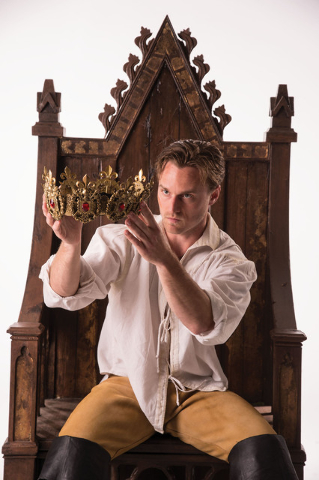
“Henry IV, Part Two” (Saturday through Sept. 5) — The festival’s chronological Shakespeare history cycle continues with Henry (once again played by Larry Bull) in failing health and young Prince Hal (returnee Sam Ashdown) torn between youthful rebellion and the often harsh realities of royal power.
Although both halves of “Henry” share similar themes, according to director Brian Vaughn, this summer’s sequel proves “much more melancholy” than “Part One,” which Vaughn directed last season. For one thing, “the battles are more internal battles,” unlike the literal fights for England’s throne that power “Part One.”
The character fighting most of those internal battles is Prince Hal, who “recognizes he has to to turn away from those around him,” Vaughn says. “It’s about Henry and Hal — and Hal’s acceptance of becoming king of England.” (Which festival audiences will see next season as the saga continues in “Henry V.”)
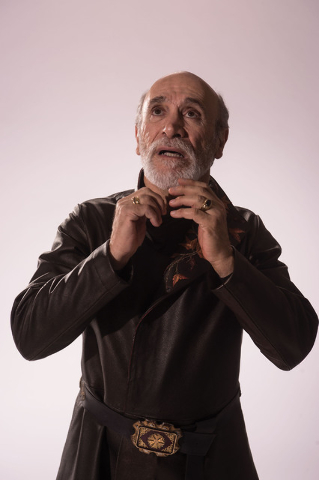
“King Lear” (Saturday through Sept. 4) — In Shakespeare’s towering tragedy, the aging monarch (played by Tony Amendola of TV’s “Once Upon a Time”) finds his world collapsing into chaos after he divides his realm between two flattering daughters — and disinherits his third, truly loving child.
“As an actor, it’s easy to get lost in the notions of kingship,” according to Amendola, who returns to the festival after portraying “The Merchant of Venice’s” Shylock in 2010.
But Lear also is “head of a family. He’s head of a business,” Amendola points out. “He’s incomplete, things are out of balance. A failed father, a single father” who “has everything” yet retains “a need for love, a need for assurance, in spite of his power.”
In director Sharon Ott’s view, “Lear” ranks as “obviously, one of the great works of art, in any time,” one that’s “an extraordinary expression of mortality and what it means to be human.” And though “it’s filled with terrible deeds and lots of death” — elements Ott also finds in such contemporary dramas as HBO’s “Game of Thrones” — the play “has a lot of just plain old energy.”
Granted, “Lear is a mountain to climb,” Amendola acknowledges, citing “the size of the play, the scope of the play.” But though “there’s no way you’re ever going to get it all, to me, if it were all on the page, there would be no need to do the play.”
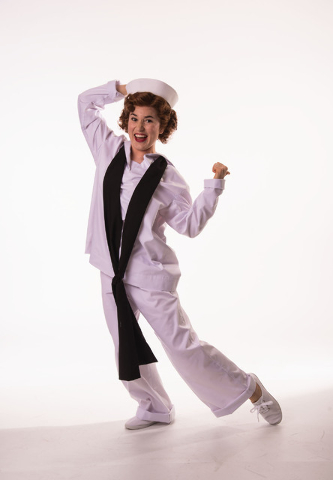
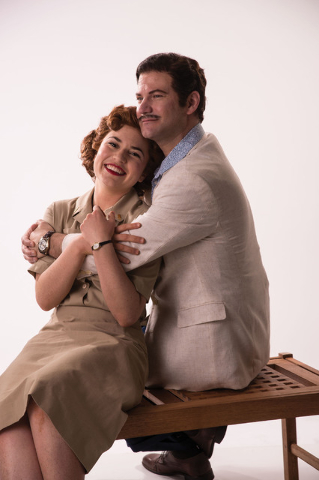
“South Pacific” (Saturday through Sept. 4) — They don’t make musicals like “South Pacific” anymore, says Brad Carroll, who’s directing the Rodgers and Hammerstein favorite about an American nurse (Allie Babich) who finds love — and confronts prejudice — during World War II.
“It’s like comfort food,” Carroll says of the festival’s first Rodgers and Hammerstein staging — comfort food of the meat-and-potatoes variety, one that “goes from serious musical theater to old-style musical comedy, all in one evening.”
It also manages to touch on perennial themes, especially in the musical number “Carefully Taught,” which explores racism — and remains “relevant without changing a word,” Carroll says.
Many of those in the cast are “brand-new to the festival,” the director points out, adding that there’s “a whole new energy in the room with the newbies,” even with a venerable musical like “South Pacific,” which debuted more than 60 years ago.
“Will ‘Wicked’ still be produced in 66 years?” Carroll asks, citing “South Pacific’s” staying power. “Those old shows are in our DNA.”
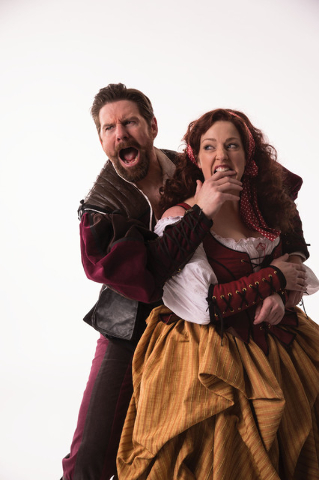
“The Taming of the Shrew” (Thursday through Sept. 5) — The first time Utah Shakespeare Festival founder Fred Adams directed “The Taming of the Shrew,” it was 1962 — “and it was brilliant,” he deadpans.
This year’s production of Shakespeare’s knockabout represents his fourth time calling the shots — and his approach has changed along the way.
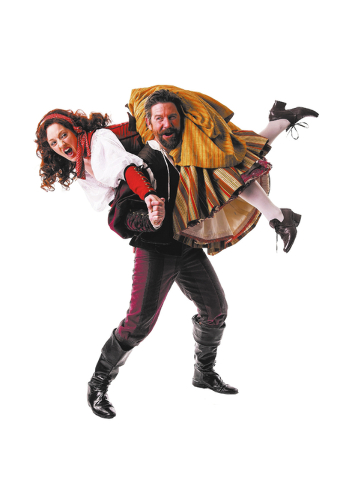
Initially, Adams took a “knock-down, slapstick, kick-‘em-in-the-slats” approach to the (mis)match between the fortune-hunting Petruchio (played by artistic co-director Brian Vaughn) and the strong-willed Katherina (Melinda Pfundstein, alias Vaughn’s real-life wife).
But “at the heart of it, it’s a love story,” Vaughn says, one that shows how opposites can find each other “in the midst of all the craziness” surrounding them.
“Shrew” can sometimes come across as “very misogynistic,” Adams acknowledges, but it helps to “have a Petruchio and Kate who thoroughly love and adore each other” and convey that connection on stage
“It’s one of those plays that requires a lot of give and take,” Vaughn says, “and trust. But that’s built in already.”
For more stories from Carol Cling go to bestoflasvegas.com. Contact her at ccling@reviewjournal.com and follow @CarolSCling on Twitter.
PREVIEW
What: 54th annual Utah Shakespeare Festival
When: "Amadeus," "Henry IV, Part Two," "King Lear," "South Pacific" and "The Taming of the Shrew" through Sept. 5, "Charley’s Aunt" through Oct. 31
Where: Southern Utah University, 170 miles north of Las Vegas on Interstate 15
Tickets: $28-$75 (800-752-9849, www.bard.org)