Summer treats for kids can be fun while providing nutrition

Start with summer, add kids and snacks, and what do you get? Ooey-gooey s’mores. Crisp-crusted corn dogs. The sweet nectar of Popsicles and snow cones running down little chins.
All of which adds up to a lot of sugar, fat and sodium. If you’d rather give your kids more healthful treats that are still fun, there are plenty of ideas out there.
First and foremost, said registered dietitian and UNLV assistant professor Karen Spears, it’s good to start healthful snacking habits early, when kids are toddlers or only slightly older.
“That’s the group that actually does more snacking that you can control,” Spears said. “You lose control once they leave the house and snack, so you have to have already established healthy habits. They’ll be influenced by their social peers.”
One thing Spears recommends is to let the kids take ownership of their snacking. That might mean giving them zip-top plastic bags and permanent markers so they can decorate them at will, and either fill up the bags or let the kids fill them up with a variety of cut-up fruits and vegetables.
“And that way it’s colorful inside the bag, too,” she said.
Just be careful what you serve with those veggies.
“One thing I have seen so many times, especially in the schools, is they serve carrots with ranch dressing,” she said, which leads to a need for a little dressing redress.
“I’ve seen them use their carrot as a spoon,” Spears said. “What they’re really doing is eating the ranch dressing.”
If those carrot sticks are going to just be a vehicle for the dip, the solution is to make the dip something more healthful, such as tuna salad made with shredded carrots and low-fat mayonnaise, or hummus.
“Kids aren’t usually aware of hummus, but they actually receive hummus very well,” she said.
Madeleine Sigman-Grant, a professor and maternal child health and nutrition extension specialist with the University of Nevada, also likes to serve kids hummus, but with zucchini.
“I use zucchini slices rather than sticks because they dip easier,” she said. “When you cut zucchini into sticks they’re not very sturdy.”
She suggests scoring the outside of the zucchini, vertically, with a fork before slicing.
“When you cut it in circles, it has these little marks around it, so they look like wheels,” she said. Yogurt dip is another choice besides hummus, she said.
Frozen fruits are other great summer snacks, Sigman-Grant said.
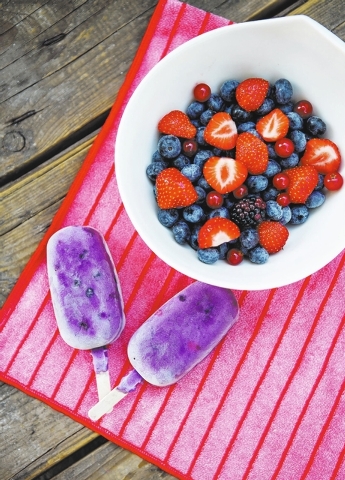
“I know in some of the markets you can get frozen berry blends,” she said. “They’re great to eat just cold, in a bowl, with maybe a tiny sprinkle of nuts or something like that on top. They’re cold and refreshing.”
Frozen bananas are another option, she said; peel first, put them on wax paper before freezing, “and then you can roll them in nuts and a tiny bit of chocolate.”
Spears said she likes to freeze grapes, “so they’re like little Popsicles.”
Sigman-Grant also likes the “good old standard” of pureeing fruit, putting it in paper cups, inserting sticks and freezing to make fruit pops.
“That’s an old one, but it’s healthy,” she said.
And she and Spears emphasize the benefits of eating whole (or pureed whole) fruits and vegetables, instead of juice.
“People think 100 percent juice is perfect,” Spears said. “The whole fruit is much better. All they do is drink all this juice, which is a lot of sugar, and it really doesn’t have the fiber and everything else” that whole fruit does.
Spears said she sometimes will take water and squirt in a little juice for flavor, but said she tries to reserve that for occasions like family outings, so the kids don’t get so accustomed to flavored water that they won’t drink it plain.
She also avoids giving them a lot of dried fruits, because the sugars in them are very concentrated.
Whole grains are lacking in the diet of a lot of kids (as well as a lot of adults), so she recommends whole-grain crackers with a little peanut butter on top, or maybe peanut butter and a few raisins.
“And of course people use apple slices and dip it in peanut butter,” she said. “Another common one is putting peanut butter in celery,” topping it with raisins for the Scout-camp favorite Ants on a Log.
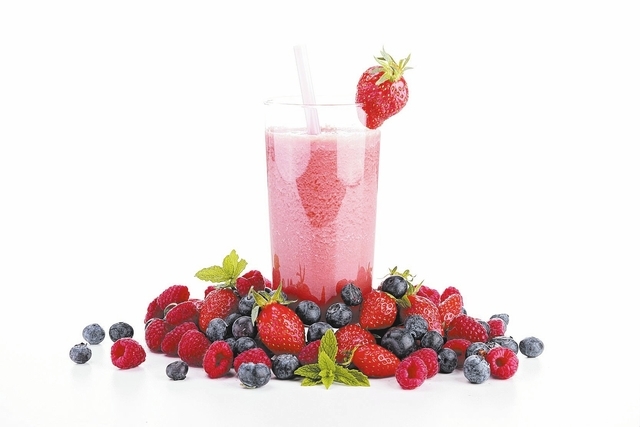
Another old favorite, the smoothie, is recommended by Sigman-Grant.
“Smoothies can be made with yogurt or milk, lots of fruits and nowadays vegetables,” she said. “I’ve seen somebody put in a little apple juice and then put in kale and they call it a green apple smoothie. You can’t taste the kale because the apple juice is masking it. With some yogurt, it really tastes great.”
Spears likes to make a more healthful version of macaroni and cheese, with low-fat milk and cheese, and portion it in cupcake tins, then refrigerating or freezing them. The diminutive size, which can be adjusted to the size of the child, is a kid-pleaser, she said; “they’re not eating it out of a casserole.”
“Even leftovers from the night before” can appeal, she said. “I’ve found that meatballs are very well-received. I’ve found that is a nice snack, even cold.”
Sometimes, Spears works an educational element into snacking. She’ll let the child choose a location on a map, and then will coordinate the snack to that location — banana chips for Africa, or a mango drink for India.
“The fun part is they get to choose something,” she said. “Introducing the children into the process works a lot better.”
Spears said it’s important that parents understand what she calls “the rules of snacking,” including that children’s appetites often follow cycles, so while they might not eat much one day, they will on another day.
“And I usually recommend a designated snacking zone, then they can’t eat in front of the television,” she said.
Putting out a bowl of fruit for at-will snacking is a good idea, she said, but she likes to keep track of how much they’ve had between meals so she can take it into account when it’s time for dinner.
Maybe the most important point of all: Remember to set a good example.
“Children mimic their parents,” Spears said. “You are setting the guidelines of what that child’s going to do for life. Even if you might want to buy a low-fat hot dog — like a turkey dog — in the perspective of a child, they see a hot dog. I’m really concerned when I see people use foods that mimic another food and they think it’s OK.
“They’re young and they can’t tell the difference. You are the example.”
Contact reporter Heidi Knapp Rinella at hrinella@reviewjournal.com or 702-383-0474.