Pool pioneer: Kaskade helped turn Vegas into a nightlife capital


It all went down as the sun came up, one of the great moments at a festival where bigger is always better — until it’s not.
Flashback to June 18, 2017: It’s the waning hours of Electric Daisy Carnival’s eighth year at Las Vegas Motor Speedway, the three-day marathon of beats, flesh and dusk-till-dawn revelry nearing completion.
It was a tumultuous evening by EDC standards, thanks to a disastrous showing by DJ Khaled at the CosmicMeadow, where he showed up late and missed nearly his entire set, only to be booed relentlessly upon arrival, later claiming that he was sabotaged by fest promoters.
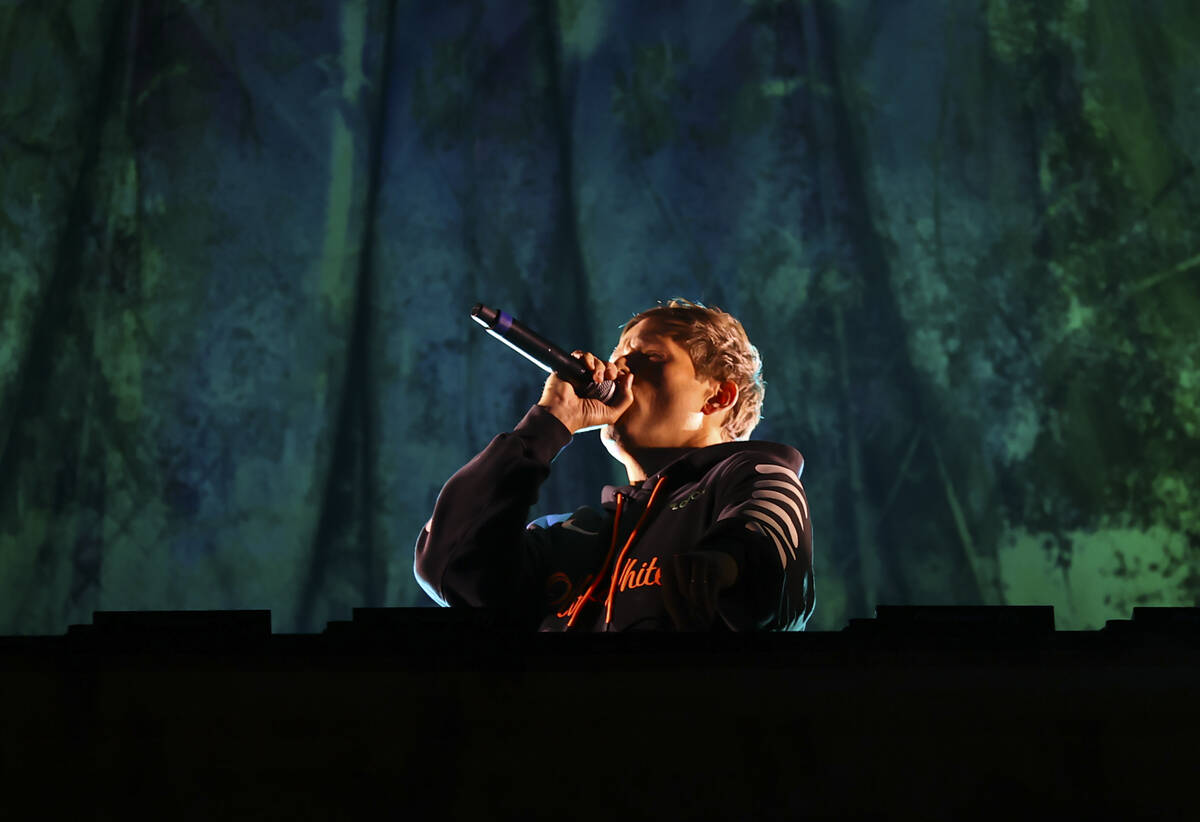
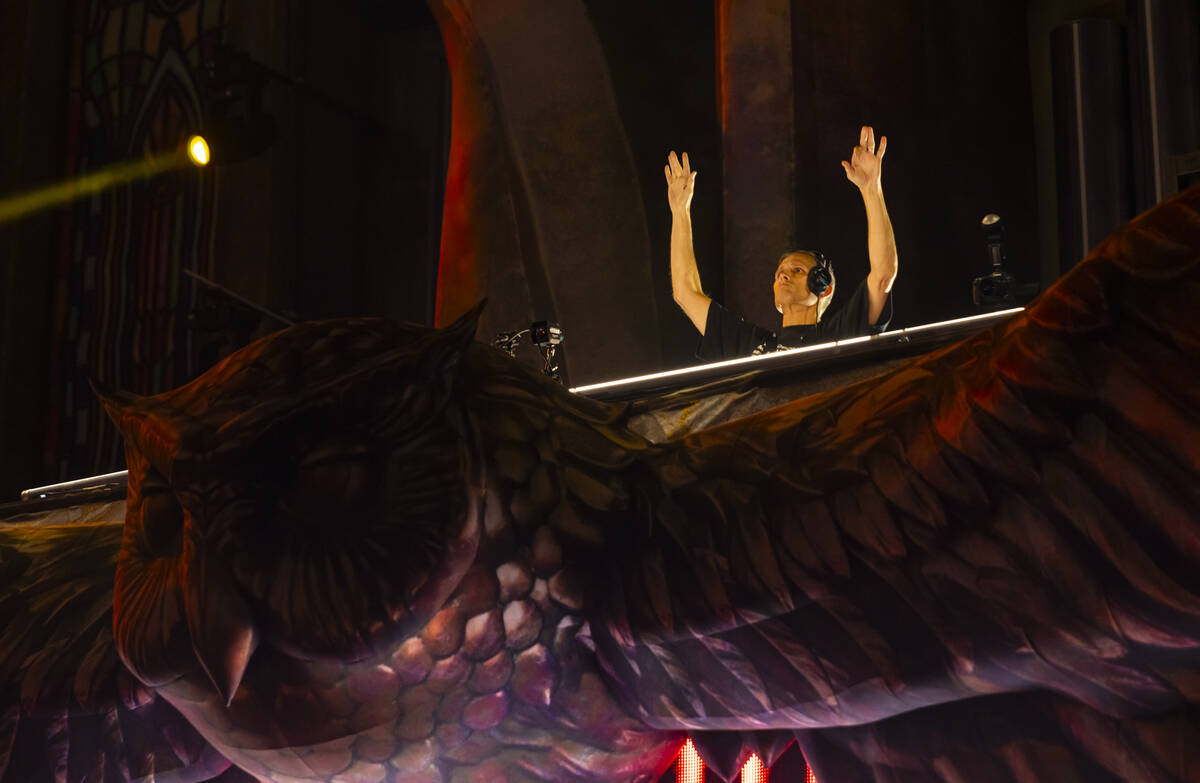
But then at 4 a.m., Kaskade hit the decks for a surprise performance in an even more surprising setting: atop the Kalliope art car, named after the Greek muse of poetry and eloquence, which glowed like a neon rainbow outfitted with tires.
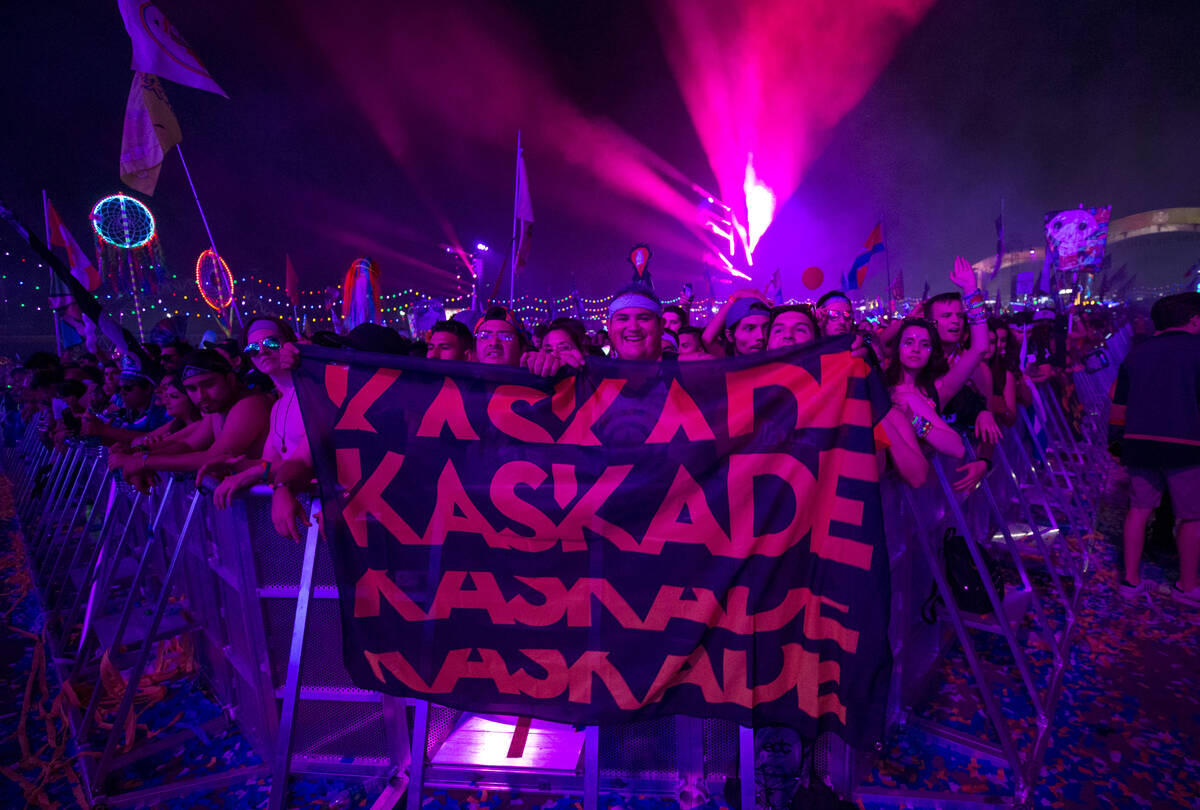
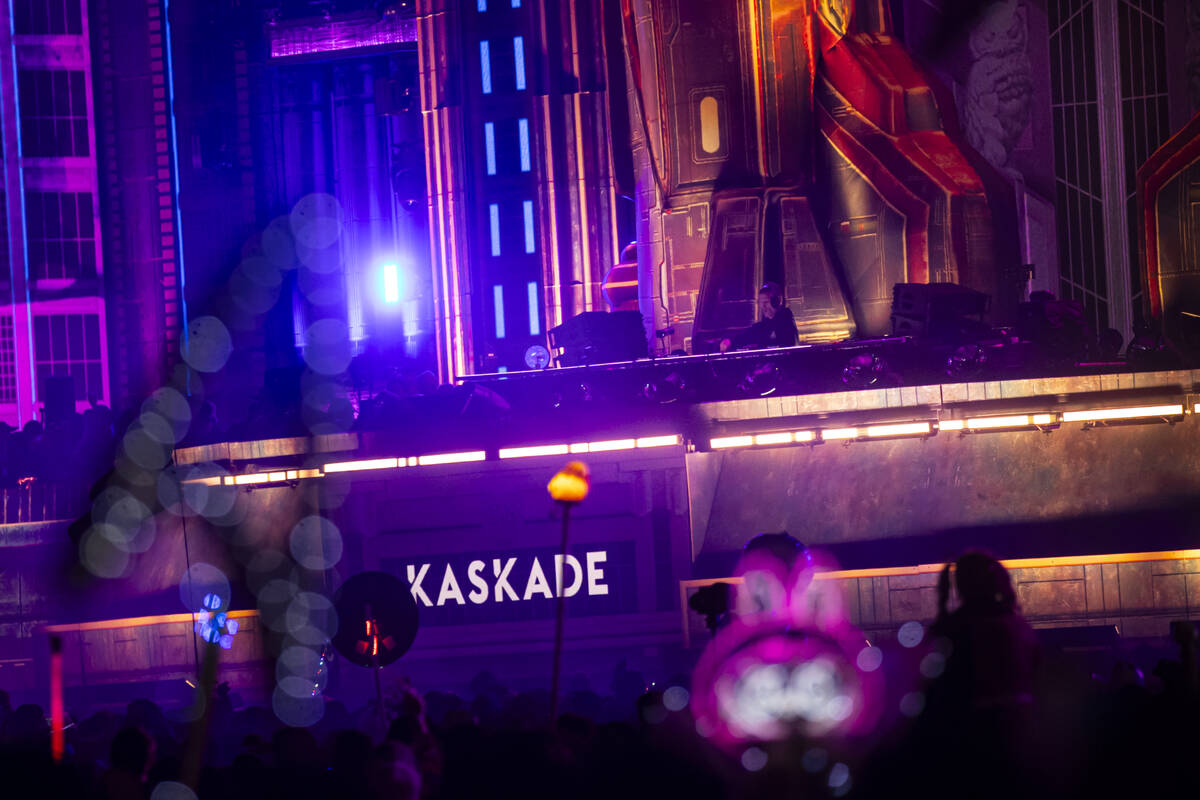
Now keep in mind, Kaskade (aka Ryan Raddon) — who’d played EDC Vegas four times previously by this point — was used to commandeering massive stages like the nearby KineticField, where he’d get crowds of 40,000-plus moving in unison like this giant tidal wave of humanity crashing ashore at a racetrack.
And here he was performing in a setting as in-your-face as the KineticField is ginormous, with practically no separation between himself and an incredulous, fast-growing audience.
But it wasn’t just one of those special, “You had to be there, man” moments in EDC history; it was also an encapsulation of Raddon himself.
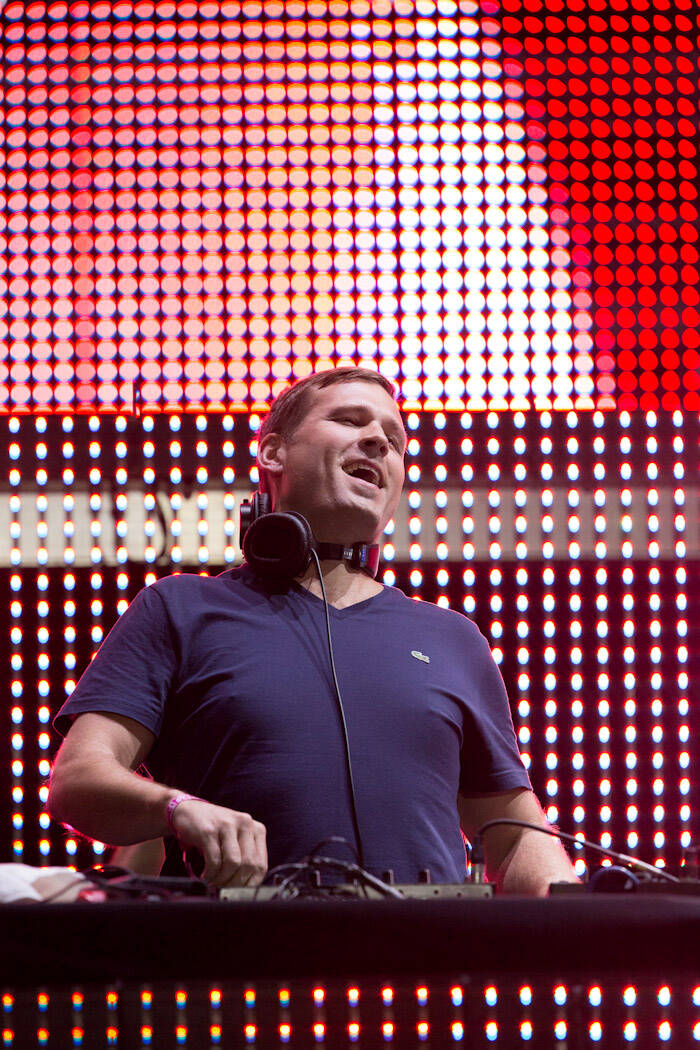
An EDM man of the people if ever there was one, Kaskade came out unannounced with little to no fanfare and proceeded to deliver an ecstatically received performance that remains the stuff of EDC lore.
A little over an hour later, Kaskade concluded his set just as daylight began poking through the mountaintops that ring the venue. Any ugliness that prefaced his appearance gave way to a beatific close to the weekend.
Kaskade sent ’em home with a smile — and those smiles have endured at both EDC, where he’s performed every year since, and at numerous Vegas clubs, where he’s played a central role in turning this city into an EDM capital.
And it all goes back to the summer of 2010 …
The (Vegas) ties that bind
Fifteen years ago, “Kaskade Sundays” launched at Wynn Las Vegas’ Encore Beach Club.
It was one of the first — if not the first — big-name DJ residencies ever on the Strip.
“When I was approached to play a random weekend day at a pool party, it just seemed like an amazing idea to ask for what we now call a ‘DJ residency,’ but that didn’t exist yet,” Raddon recalls in an interview with Neon. “So I said, ‘Put me in, Coach, every weekend, and let’s see what happens?’ ”
“They put me in, it blew up immediately and the idea caught fire,” he continues. “Now, every hotel has a massive talent DJ on their roster and have positioned themselves as a destination for the club experience instead of an added value. It will ebb and flow as all things do, but I don’t think the DJ residency in Las Vegas is going to disappear anytime soon.”
Back then, though, those DJ residencies felt far-fetched around these parts — to say the least.
“Me beginning a summer residency happened even before Ibiza was capitalizing on DJs as the draw,” Raddon notes. “What made me want to do it was the sense of wonder about (whether) it could click. It clicked immediately, and I realized within the first drop of my first song played at the pool party that there was something special about this.
“It really was a hand-in-glove experience to help write the story of Vegas being this epicenter of dance music,” he adds. “Las Vegas was ready to have this chapter written, and I was ready to write.”
A dance floor staple turns 10
The Vegas connections don’t end there for Raddon: A decade ago, he debuted “Disarm You” at EDC, one of his biggest singles, which has since become an EDM touchstone that hits like a blown kiss with Ilsey’s airy, incandescent vocals and a pinballing beat that crests into a full-on rhythmic bear hug.
“ ‘Disarm You’ has really had legs,” Raddon says, reflecting on the 10th anniversary of its release. “I attribute it to many things, but Ilsey’s vocals on this track, along with the messaging of the lyrics, just made it something that hit with a large part of my audience. It’s a war cry for people to let love in, which is essentially the thread that connects most of my music. I did think it was special when the track was finished, and it means so much to me when I see people singing along, overcome with what the song means to them personally.”
Raddon’s sets are somewhat unique among his peers in that nearly everything he plays is either his own material or something that he’s had a hand in.
“I listen to new music constantly,” he says. “If you hear something in my set that wasn’t created by me, there’s a big chance I have put my fingerprints on it: an edit here, a mashup there.
“My process is to gather enough moods in my pocket that I can do what works best with the audience in real time,” he elaborates. “As far as time consumption, there is never a time where I’m not doing it. I can be surfing, and a song will come into my head that I mentally take note to listen to once I’m back on land.”
When it’s time to perform, he tends to keep things loose and instinctual.
“At this point in my career, with the years and experience I have, there isn’t really a large preparation period,” he says. “I know what I have access to as far as music goes. I understand where I’m going to begin every set, but the concept of the set is born during the set. The way I prepare is to lean on the decades that I’ve been doing this.”
Those decades extend back to when Raddon was a music-mad teen in his native Chicago, where he found solace on the dance floor. It changed everything for him — and he’s been returning the favor ever since.
“I was a kid that belonged everywhere,” he recalls. “I had friends, but I was more or less a shapeshifter that nobody really knew. I was in choir; I was a B-boy. I loved playing at the arcade, and I hit up the all-ages clubs every chance I got.
“The thing that drew me into the music was that when I was there on the dance floor, I was finally home, no longer changing according to who was around, but strongly myself,” he explains. “I knew it would at least be a foundational part of my life, and hoped it would be a cornerstone. Luckily, it’s been exactly that.”
Contact Jason Bracelin at jbracelin@reviewjournal.com or 702-383-0476. Follow @jasonbracelin76 on Instagram.

 Add as a preferred source on Google