Sand Dollar tries to recapture blues magic

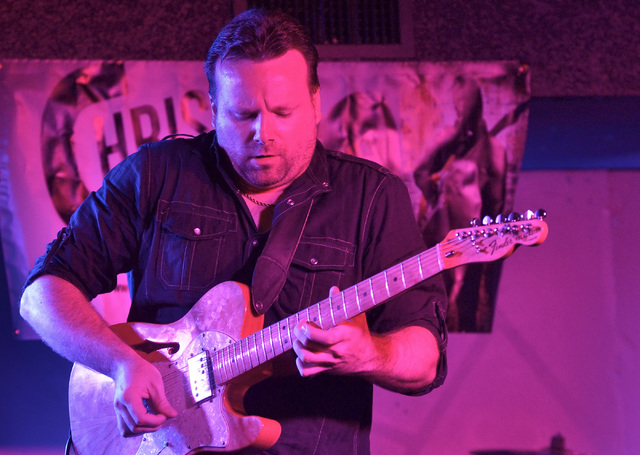
His lips are moving, but it’s his guitar that’s doing all the talking.
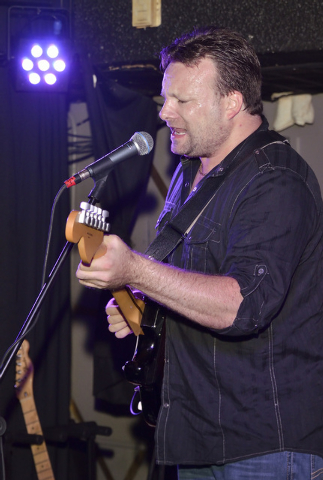
It has plenty to say: it howls and moans, growls and wails as Chris Zemba mouths the notes screaming from the thing while pistoning his foot into the stage as if he was trying to break it in two.
Between songs, though, Zemba quiets his instrument and savors his words as he addresses the crowd on a recent Thursday night.
These words have been a long time coming.
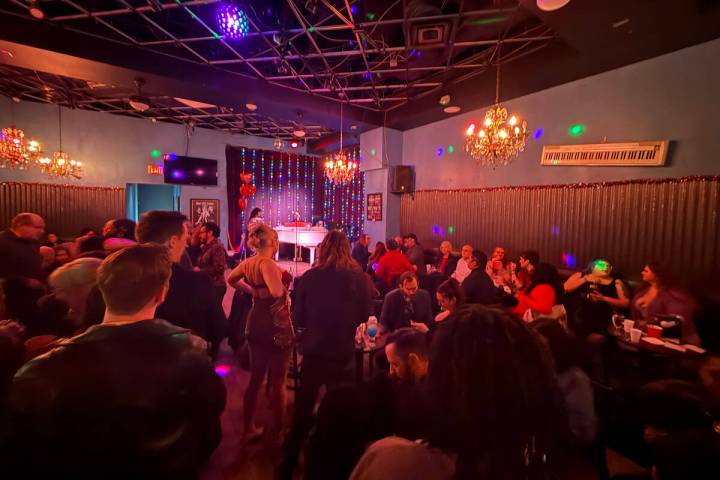
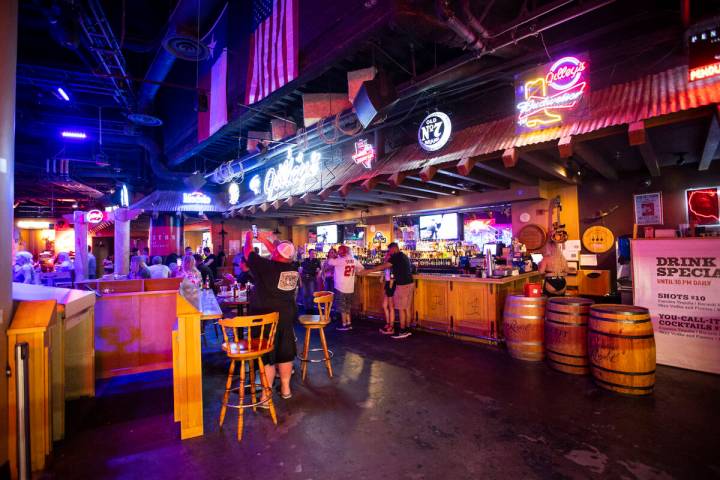
“It’s nice to be here at the Sand Dollar Lounge,” he says, bathed in purple light, surrounded by walls painted a similar color. “This is one of the legendary blues clubs on the West Coast.”
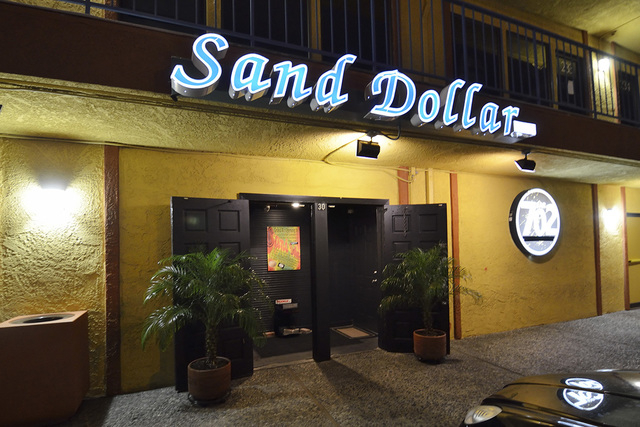
And with that, the Sand Dollar Lounge — officially known as the Sand Dollar Lounge at Bar 702 — was officially reborn.
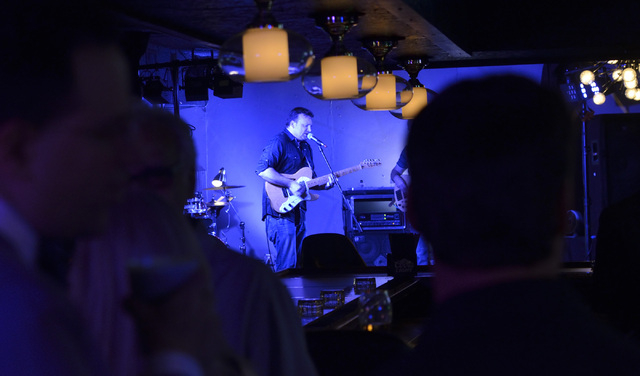
Chris Zemba &The Late Shift Band was the first act to take the stage during the club’s five-night reopening celebration, which kicked off a week ago today.
Since originally opening in 1976, the club has had a history as tempestuous as one of Zemba’s solos, which he frequently performs with his eyes clamped shut on this night, his playing as fluid as the Budweiser several patrons sip on.
After going through a succession of owners during the first two decades of its existence, the Sand Dollar became the Bikini Bar in 2010.
There was an attempt to relaunch the venue two years later, which didn’t stick, and the place became Bar 702, which was featured on Bar Rescue last year.
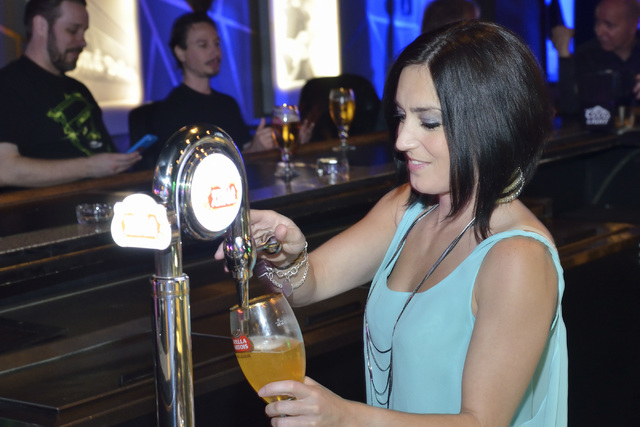
Enter another new set of owners this spring, who are intent on reviving the Sand Dollar brand after noticing that there was still plenty of love for the name and what it represents.
“We came in, and our customers and the musicians just started calling it the Sand Dollar,” says owner Brooke Alexander, a Chicago transplant who also oversees a bar there and who will run the Sand Dollar with her father’s help. “That’s what people wanted it to be. And we wanted to go back to that.”
But what will make things work this time around?
This is far from the first attempt at making the Sand Dollar viable again.
For Alexander, it’s about tightening the focus of the live entertainment, homing in on the blues again, and being a more hands-on presence in the day-to-day operations of the club.
“It was going in a couple different directions the last few years,” she says, noting how previous owners booked a heterogeneous mix of local and national acts of various musical styles. “They were kind of getting away from consistent, quality, live local music, which is what this place was. In businesses in general, when you don’t have an identity, that’s where you can fall off.”
For a Vegas blues lifer like singer-guitarist Scott Rhiner, who fronts the Moanin’ Blacksnakes and who has played the Sand Dollar for 15 years, the venue’s relaunch is a familiar storyline.
He’s just hoping for a different outcome this time.
“I guess I’ve gotten jaded over the thing,” says Rhiner, who has consistently played the room even when it wasn’t the Sand Dollar in recent years. “It seems like the new owners are putting a lot more thought into how they’re going to succeed, which is refreshing.”
Over the years, the Sand Dollar developed a name for itself as the kind of joint where big names like Muddy Waters, B.B. King, Etta James, Ted Nugent and Joe Bonamassa, to name a few, would stop by for a drink or for impromptu jam sessions, intermingling with bikers and other regulars after playing a gig on the Strip or elsewhere in town.
Rhiner recalls a time when there used to be lines of taxis and limousines outside the Sand Dollar on the weekends, full of out-of-towners seeking a taste of the local scene in a down-to-earth, decidedly nonglitzy setting. Back then, the Sand Dollar was a hub for local musicians, a place where they went just to hang.
“The Sand Dollar was never about any one band, it was about the scene,” Rhiner says. “It had kind of lost that over the last few years. That place was never about the real hot chicks with bikinis. It was about the music.”
This is what first lured Zemba to the Sand Dollar shortly after he moved to Vegas from the East Coast 12 years ago.
“There was a sense of community there,” he recalls. “The place was really, really busy, there were a lot of musicians, a lot of great players. It felt more real. It was the polar opposite of the Las Vegas Strip. It just seemed like it had more meaning.”
Over a decade later, what made him come to the Sand Dollar in the first place is what’s made him keep coming back.
“People still associate the name with blues in Las Vegas,” Zemba says. “The name means something.”
Contact reporter Jason Bracelin at jbracelin@reviewjournal.com or 702-383-0476. Follow on Twitter @JasonBracelin.