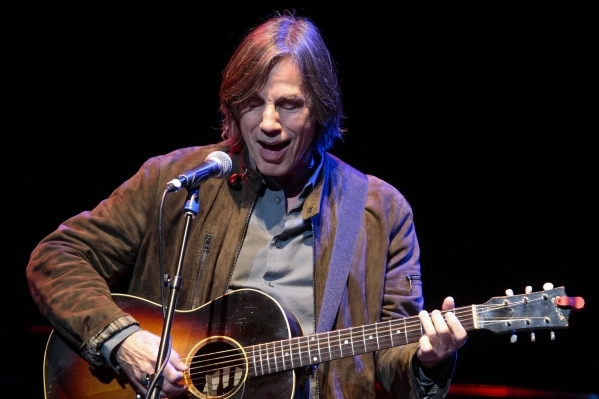
Humanitarian work in Haiti inspired Jackson Browne’s latest album

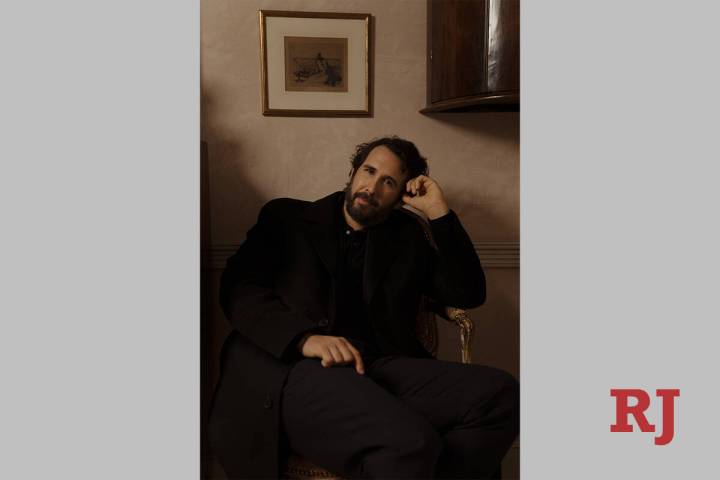
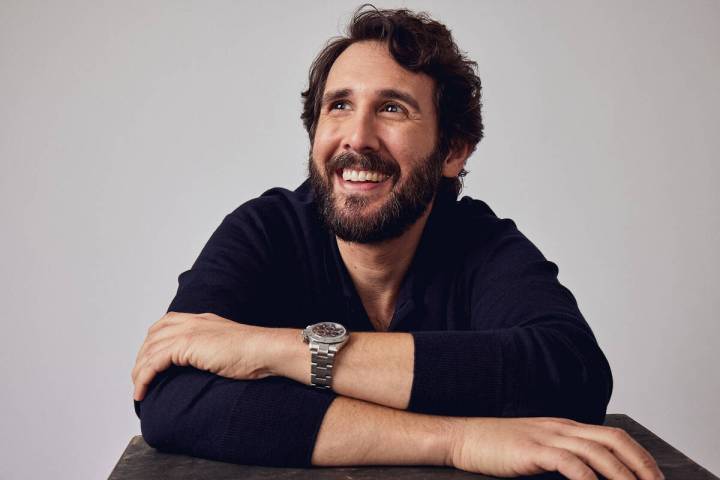
Having Jackson Browne talk to you about making music: Can you imagine what that must be like? Unreal, right? Like getting tips on shooting hoops from Michael Jordan or something. But that's exactly what some students at Artists for Peace and Justice's Audio Institute in Haiti got to experience not too long ago when the legendary songwriter stopped by.
Before heading off for some shows in Europe, Browne spent some time with the organization, which focuses on cultivating the community in Haiti through education and health care. The outfit has several schools down there, including Artists Institute — the one Browne spoke at — along with a secondary school and Cine Institute, which offers courses in filmmaking.
The organization's humanitarian work inspired Browne's latest album, the dependably solid "Standing in the Breach," the cover of which features a shot taken after the 2010 earthquake that battered the country. He was there to talk to the kids about engineering and making records, but from the sound of it, the students had just as big an impact on him, probably more so even, than he had on them.
"You look in their faces and you ask them what they want to be — the world they live in, there's not a lot of prospects," he notes. "On the other hand, they're asked to dream — told to dream, you know — and their dreams are as wild and as beautiful and as soaring as anybody you'd meet, or even more so, than people you'd meet in an American city perhaps."
His time there was "inspiring," he says, "absolutely inspiring. Of course I realized I've got a really privileged life. I get to travel, you know, do shows and play with the musicians that are the very best musicians I can hope for and make music that I dreamt up in my head.
"It's a great life," he goes on, "but it can be kind of, well, you know, like you say, there's stimulation — there's an incredible amount of stimulation everywhere in our culture, you know, whether it's from social media or whether just movies and constant barrage of information. Like I'm going to have two newspapers shoved under my door every morning, and sometimes it's a mistake to look at that."
Indeed, as good as we have it in this country, it can all become overwhelming, which is why he believes it is a good thing that places like this glowing town in Southern Nevada exist. He sees the escapism offered by our city as a way to decompress, so we can rise up and engage in activism, which has always been a very big part of his life and his songwriting.
"I think that there should be a place like Las Vegas," he declares. "It's also a place where people with dreams — dreams of becoming performers or striking it rich or maybe just having a lost weekend. You know? But, I think in that way, you can use it as a metaphor. I really think that escapism may be the most prevalent theme in our society, but it's not a bad thing. It's not a completely bad thing. You need some relief. You need to escape part of the time.
"The other part of you — there's a very important part that dictates that we take responsibility for what we're doing to the world, not only in terms of ecology, but in terms of rights, people's rights," he goes on. "We're beginning to accept things that we should never accept. The idea of police impunity. The idea that police, you know, can, if a cop feels threatened, he can shoot somebody dead. I mean, that's crazy.
"There are very serious things going on in our world," he adds, "things that demand our attention and demand that we step up."
That's exactly what "Standing on the Breach" is about, ultimately, stepping up, even when you're not sure if it's going to make a difference or not. In the title track, after grappling with how tragedy affects all of us, regardless of our status, when Browne concludes with the lines, "After all that's come undone/And you know the world you're waiting for may not come/No it may not come/But you know the change the word needs now, is there, in everyone," there's a tangible sense of hopefulness and optimism coursing through the song.
"It's funny that you're saying that, because what it is, it's such a hopeful thing to say, and it's such a debatable thing to say," he points out. "I hear it — I live through that every night — I sing that song every night, and I get to the end of the song and sing, 'But you know the change the world needs now is there, in everyone.' And it just stops. It just stops, and I've heard people just sit there and say, 'That's not going to happen.'
That's kind of the point. "Standing In the Breach," like many of Browne's songs, is almost more about asking questions than it is about presenting the answers.
"I think asking questions is really the important part," he confirms. "I mean, I go up there on stage, and the times I find myself saying things — I realize the worst thing I can do is go up there and start handing out a bunch of answers. People didn't come for that. The questions are fine, especially if you state them in a way that is very much the way that one person talks to another, one person wonders in the company of their friends about a situation, or discuss a political situation the way you talk about it in a bar with your friends.
"That's what music is good for," he continues. "It's good for making contact with the things that we wonder the most about. I think, if in the course of a song, the natural thing is for the for the song to resolve in some way, some way emotionally, whether it's to find a little bit of light in the midst of all the darkness, or to find a path through it.
"I love that song because it had so many things that I had to dwell on," he says, circling back. 'We will all assemble.' We will all — you know, all of us will come together? That's really the question, the underlying question of the whole thing, is how many people will come together and what will we accomplish?
"The song became about more than Haiti," he concludes, "but the circumstance of Haiti remains a very good model for what's going on in the world elsewhere, too."
Read more from Dave Herrera at bestoflasvegas.com. Contact him at dherrera@reviewjournal.com.
Preview
Who: Jackson Browne
When: 8 p.m. Friday
Where: Pearl at the Palms, 4321 W. Flamingo Road
Tickets: $64-$124 (702-942-7777)

 Add as a preferred source on Google