Festival shows there’s more to hula than shaking grass skirts

You know all of those cool hula dancing sequences you see in TV shows and movies?
Enjoy them. They're fun to watch. But as you watch, keep in mind that such pop culture depictions of hula may not be particularly authentic, and that's because hula is more about history and heritage than random, albeit energetic, hip-swinging.
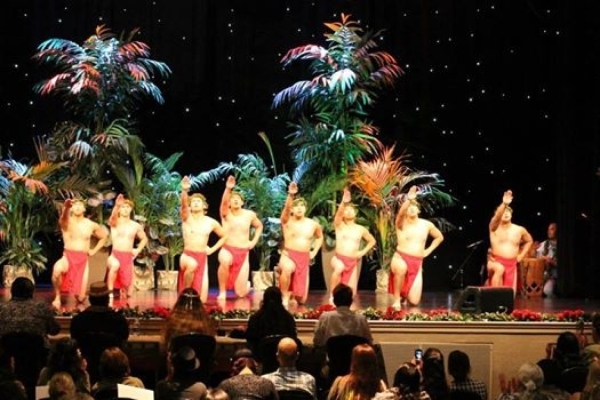
Luckily, seeing the real thing doesn't even require a trip to Hawaii. All it takes is a quick, ocean-free hop to Sam's Town, 5111 Boulder Highway, Friday and Saturday for the Kumukahi Ukulele & Hula Festival.
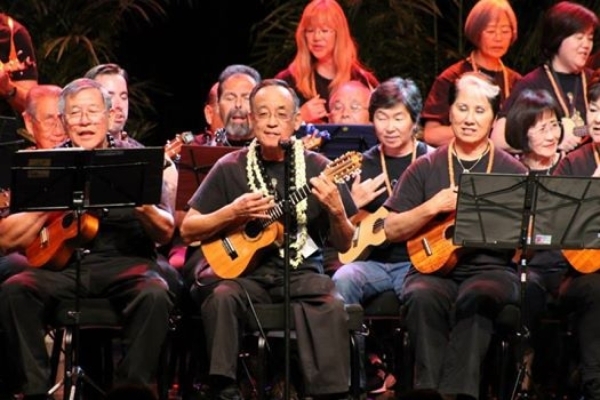
The festival, which this year makes its third trip to Las Vegas, will feature performances by and competitions among more than a dozen hula groups and four ukulele groups hailing from Southern Nevada, California, Arizona and, of course, Hawaii, which will be represented by four groups.
On Friday doors will open at 3 p.m., a formal opening ceremony is scheduled for 4 p.m., and the first group will appear at 4:45 p.m.
On Saturday, the session begins at 10 a.m. Then, at 8 p.m., the Kanikapila, a concert celebrating Hawaiian culture and featuring live performances by Sean Na'auao and Bo Napoleon, will begin.
Tickets to each event are $22 and can be purchased at the Boyd Gaming box office, by calling 702-284-7777 or going online www.samstownlv.com. For more information about the festival and daily schedules, visit the festival website http://kumukahi310.com.
Sissy Kaio, a festival director, says previous festivals have sold out — sales last week were strong and hinting at another sellout, she adds — and festivalgoers typically include both aficionados of hula and ukulele and newcomers who may not be familiar with either art form.
In fact, Kaio estimates that 30 percent of guests are people who attend mostly because "it just looks like an interesting thing to go to. And tickets are not very expensive, so that's another reason that some people are coming."
However, Kaio says festivalgoers of both stripes will see a broader range of hula styles — and a more authentic expression of the art form — than they might be accustomed to.
"I think some of them are a little bit familiar with hula. Maybe they've been to Hawaii," she says. "But this particular festival features a kind of more culturally oriented Hawaiian dancing than on TV. It's a little more culturally based. So I think a lot of people enjoy that."
Typically, hula schools and groups that appear at the festival preface their performances with a few words about what they're going to do, Kaio says. "It educates the audience about what they're going to see."
And what guests will see are dancers ranging from kids to senior citizens, Kaio says, adding that the festival will feature both traditional and modern forms of hula. The more ancient forms are performed to an accompaniment of native Hawaiian instruments or chanting and tend to be "very nature-oriented or in honor of a king or queen," Kaio says.
Then, "you have the modern hula, which is accompanied by guitar, ukulele, bass and singers," Kaio says, and which tend to be "more about places in Hawaii" or romantic stories.
Halau Hula O Noelani, the Noelani hula school of Los Alamitos, Calif., will be performing at the festival for the third year. Kumu — or head teacher — Samantha Aguon says the Kumukahi festival highlights groups that perform more authentic forms of hula.
"We don't teach what everyone sees on TV," Aguon says. "It's historical. A lot of the mele, or songs, are usually passed down from our teachers' teachers. So, historically, you can trace a lot of things in the performance to Hawaii history.
"A lot of what you see, or what some folks have the preconception of, is that hula is, like, grass skirts and a lot of shaking, and it's really not. There's a lot more that goes into it. Hula is not just dancing. It teaches, or studies, the culture and history of Hawaii."
Through hula, Aguon adds, "we've been able to reteach our children and grandchildren."
The longstanding art form even is holding on well in the 21st century. Aguon says many youngsters come to her school for lessons only because parents "are forcing them to come, because the parents want them to learn about their culture.
"But then what happens is that, through the type of teaching that's being done or the style of teaching that's done, kids eventually take to it. And we've grown, up from 11 students to, like, 50 students in four years."
Contact reporter John Przybys at 702-383-0280 or jprzybys@reviewjournal.com or follow @JJPrzybys on Twitter.
Preview
What: Third annual Kumukahi Ukulele & Hula Festival
When: 3 p.m. Friday, 10 a.m. Saturday; Kanikapila concert at 8 p.m. Saturday
Where: Sam's Town, 5111 Boulder Highway
Tickets: $22 (702-284-7777 or www.samstownlv.com)