

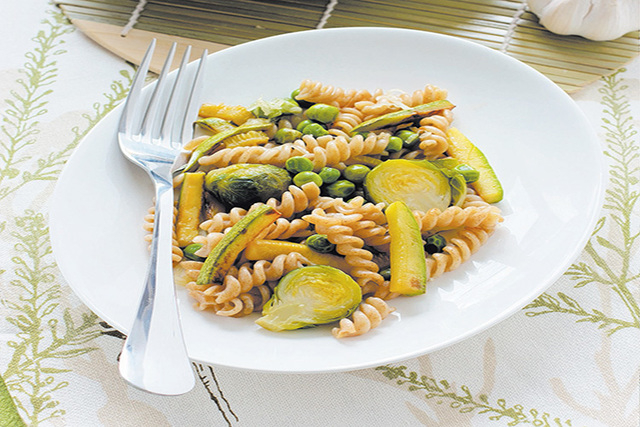
Good for us, but not really good

Would you like to get the health benefits from the higher fiber of whole-wheat pasta, but can’t stand what many perceive as a cardboard taste and texture? Here are a few tips: Bear in mind that the quality has improved, try experimenting until you find a good brand and remember that not every sauce goes well with it.
“The past four or five years, the quality got much better,” said Vincenzo Scarmiglia, executive chef of Fiamma at MGM Grand.
Which is not to say it’ll be easy to dive right in if you’re not familiar with whole-wheat cuts.
“It’s an acquired kind of idea,” said Bryan Forgione, executive chef at Buddy V’s Ristorante at the Grand Canal Shoppes.
“There’s a little bit of a firmer texture,” said Rob Ferris, executive chef of The Buffet at Bellagio. “I think the application and what you’re cooking, how you’re utilizing it, are what make it more attractive.”
Ferris said, for example, that he wouldn’t use whole-wheat pasta with an Alfredo sauce.
“It might have a tendency to absorb a little too much,” he said. “That’s why I like pomodoro sauces. We’re doing a marinara right now. We have done it before with some smoked salmon. That worked out really nice, we had some fresh English peas in there, a little dill sauce.”
Scarmiglia said it’s important not to overcook whole-wheat pasta, just as is the case with white pasta.
“If you overcook it, it can be a little bit bad consistency,” he said. “That kind of pasta needs to be cooked al dente. You want to cook it 90 percent in the water and finish it in the sauce with a little bit of the cooking water.”
Ferris said whole wheat is a regular offering among the five choices on the Bellagio buffet’s pasta station. They settled on Barilla, he said, after sampling five or six brands.
“I like the way this pasta stands up to our applications,” Ferris said. “With a steam table, you want something that’s going to absorb the flavors, and at the same time it’s sitting in the steam table. This holds itself well; it doesn’t get overcooked.”
Among the most popular of the whole-wheat offerings on the buffet, he said, is penne with zucchini, squash, eggplant and tomato sauce.
“It seems to make sense to be all-vegetable,” Ferris said.
That’s the case, as well, at Buddy V’s, where Madeline’s Whole Wheat Penne remains a popular menu item. It’s made with pepperonata, broccolini, kale, shallots, garlic and mushrooms, topped with ricotta salata and basil pesto.
Forgione said the restaurant settled on DeCecco whole-wheat penne after trying various brands.
“The texture really stands up,” he said. “It’s got that nice nuttiness you’re looking for. The flavor’s just there.”
At Fiamma, where whole-wheat pasta is not on the menu but available as an option, Scarmiglia said he favors an Italian brand, Maestri Pastai.
And a taste test by Cook’s Illustrated’s America’s Test Kitchen favored another Italian brand, Bionaturae.
Geetha Krishnan, a registered dietitian and certified diabetes educator in the outpatient clinic at University Medical Center, said whole-wheat and whole-grain pastas have much the same nutritional benefits, and that the whole-wheat types may lead to elevated sugar levels in people who are susceptible.
Krishnan said some people just refuse to eat any kind of pasta other than white, and dietitians have come around to accepting that and emphasizing portion control and what else is on the plate.
“I think people are going back to taking the advice from us,” she said. “ ‘I love my white, but I’ve learned to eat less. I have a large salad or a big serving of vegetables at the same meal, so I get my fiber.’ ”
She also suggests adding a little Parmesan cheese to any pasta dish to help people feel more satisfied.
“Sprinkling cheese or any kind of food that has a little extra fat on it seems to create the sensation of feeling full much more than if you just had some plain pasta and put some tomato sauce on it,” she said.
Whatever your choice, Ferris said the preparation is important to ensure the health benefits will be acceptable.
“As healthy as you want to go, whether we’re talking about pasta, turkey burgers or whatever, it’s what the chef puts into it,” he said. “You don’t want that cardboard turkey burger, either.”
WHOLE-WHEAT SPAGHETTI WITH ITALIAN SAUSAGE AND FENNEL
¼ cup extra-virgin olive oil
6 medium garlic cloves, minced and pressed through garlic press (about 2 tablespoons)
½ teaspoon red pepper flakes
Table salt
8 ounces sweet Italian sausage, removed from casing
1 medium fennel bulb, halved, cored and sliced thin
½ cup pine nuts, toasted and coarsely chopped
½ cup coarsely chopped fresh basil leaves (see note)
2 tablespoons juice from 1 lemon
1 pound whole-wheat spaghetti
1 ounce grated Pecorino Romano cheese (about ½ cup)
Combine oil, garlic, pepper flakes and ½ teaspoon salt in small bowl; set aside.
Heat sausage in 12-inch nonstick skillet over medium-high heat; cook, stirring to break sausage into ½-inch pieces, until browned and crisp, 5 to 7 minutes. Using slotted spoon, transfer sausage to paper towel-lined plate, leaving rendered fat in skillet. Return skillet to medium-high heat, add fennel and ¼ teaspoon salt and cook, stirring frequently, until fennel is tender, about 5 minutes.
Push fennel to sides of skillet to create 3-inch clearing; add oil-garlic mixture and cook, stirring constantly, until fragrant, about 1 minute. Stir to combine garlic mixture with fennel and cook for 1 minute longer. Remove skillet from heat and stir in sausage, pine nuts, basil and lemon juice.
Meanwhile, bring 4 quarts water to boil in large Dutch oven. Add pasta and 1 tablespoon salt to boiling water; cook until al dente. Reserve ¾ cup pasta cooking water, drain pasta and return pasta to Dutch oven.
Add sauce and reserved cooking water to pasta and toss to coat. Season with salt to taste. Transfer to serving bowl, sprinkle with cheese and serve.
Serves 4.
NOTE: Chop the basil at the last possible moment to prevent it from discoloring.
Recipe from Cook’s Illustrated
WHOLE-WHEAT PASTA WITH PECORINO AND PEPPER
1 tablespoon black peppercorns (divided use)
1 pound dried whole-wheat spaghetti
1½ cups (about 4½ ounces) grated Pecorino Romano (divided use)
2 tablespoons chopped flat-leaf parsley (optional)
Toast peppercorns in a dry small skillet over medium-high heat, shaking skillet, until fragrant and beginning to pop, 2 to 3 minutes. Coarsely crush peppercorns with a mortar and pestle or wrap in a kitchen towel (not terry cloth) and press with the bottom of a heavy skillet.
Cook spaghetti in a pot of boiling salted water (2 tablespoons salt for 6 quarts water) until al dente.
Meanwhile, fill a large ceramic bowl with hot water to warm it. Just before pasta is done cooking, drain bowl but do not dry.
Reserve 1 cup pasta-cooking water, then quickly drain pasta (do not shake off excess water) and add to warm bowl. Sprinkle 1¼ cups cheese and ½ cup cooking water evenly over pasta and toss quickly. Toss in parsley (if using) and 2 teaspoons crushed pepper. If pasta seems dry, toss with some additional cooking water. Serve pasta immediately, sprinkled with remaining pepper and cheese. Serve additional cheese on the side.
Serves 4 to 6.
Recipe from Gourmet
WHOLE-WHEAT PASTA WITH SAUSAGE, LEEKS AND FONTINA
6 quarts water
2½ teaspoons salt (divided use)
1 pound uncooked whole-wheat penne or rigatoni
1 tablespoon olive oil
1 (4-ounce) link sweet Italian sausage
2 cups chopped leeks
4 cups shredded Savoy cabbage (about 9½ ounces)
1 cup fat-free, less-sodium chicken broth
¼ teaspoon freshly ground black pepper
½ cup (2 ounces) shredded fontina cheese
Bring water and 2 teaspoons salt to a boil in a large stockpot. Stir in pasta; partially cover and return to a boil, stirring frequently. Cook 8 minutes or until pasta is almost al dente, stirring occasionally. Drain.
While pasta cooks, heat olive oil in a Dutch oven over medium-high heat. Remove casing from the sausage. Add sausage to Dutch oven; cook 2 minutes or until lightly browned, stirring to crumble. Add leek; cook 2 minutes or until leek is soft, stirring frequently. Add cabbage; cook 2 minutes or until cabbage wilts, stirring frequently. Add remaining ½ teaspoon salt, broth and pepper; bring to a boil. Reduce heat and simmer 15 minutes or until vegetables are very tender.
Add pasta to Dutch oven, tossing well to coat; bring to a boil. Reduce heat and cook 1 minute, stirring constantly, or until pasta is al dente. Remove from heat; stir in cheese. Serve immediately.
Serves 4 to 6.
Recipe from Cooking Light
WHOLE-WHEAT PENNE WITH ROASTED BUTTERNUT SQUASH AND BACON
2 cups butternut squash, cut in ½-inch cubes
2 tablespoons olive oil
Sprinkle of coarse-grain salt
8 ounces whole-wheat penne
5 thick slices bacon, diced
3 teaspoons garlic, minced
½ cup Parmesan, grated
2 tablespoons chopped fresh sage
Balsamic vinegar, for drizzling
Preheat oven to 450 degrees. Toss the squash with the balsamic vinegar, olive oil and salt on a foil-lined baking sheet. Roast for 15 to 20 minutes, or until the squash is soft (but not mushy) and becoming caramelized — stirring at least once in the process. Set aside.
Cook the pasta in a large pot of water according to the directions on the box. Reserve 1 cup of the cooking water when draining the pasta. Set aside.
Saute the bacon in a large skillet until the fat is rendered and bacon is crisp. Drain the bacon on a paper towel-lined plate and set aside. Pour out all but 1 tablespoon of bacon drippings from the skillet and add the garlic to the pan. Cook the garlic for a minute, being careful not to burn it. Add the roasted squash, bacon and pasta to the skillet with the garlic and toss everything together. Add reserved cooking water, ¼ cup at a time, to the pasta mixture until it looks evenly wet — you may not need all of the water. Warm things up on low heat if necessary. Sprinkle the chopped sage and Parmesan cheese on top, give the dish one last toss and serve immediately. Drizzle a little balsamic vinegar over the top of each serving if so desired.
Recipe from Hodgson Mill
Contact reporter Heidi Knapp Rinella at hrinella@reviewjournal.com or 702-383-0474.