Baking pie worth the extra effort

Easy as pie? Not exactly.
“No,” said Megan Romano, a pastry chef and owner of Chocolate &Spice bakery-cafe. “It’s one of those things that has very basic ingredients, very few ingredients, and it shows if you don’t do it the right way. It shows your errors very easily.”
“It’s not easy,” said Jack Bishop, editorial director for Cook’s Illustrated and America’s Test Kitchen. “There are many places where pies can go wrong.”
One of the biggest problems, Bishop said, is that pies are one of those things — like the Thanksgiving turkey — that most people make only about once a year, so they don’t get the practice and the chance to develop their skills and preferences that they do with more everyday dishes.
But if we’ve put you off pie baking permanently, don’t be daunted. The experts offer a lot of tips to make the process almost live up to its proverb.
“The dough is clearly the first thing,” Bishop said. “There’s a lot of fear around pie dough, that it’s going to stick, it’s going to crack, they’re going to go through all of that work.”
A few years back, the geniuses (and we don’t say that lightly; there are a lot of food scientists there) at America’s Test Kitchen came up with what they are so sure is a full-proof method, they even named it Foolproof Pie Dough (and of course the recipe follows). The secret is vodka.
The problem with most pie-dough recipes, Bishop said, is that they use very little water, to ensure that gluten won’t be overdeveloped and the finished crust will be flaky instead of leathery. But that lack of moisture makes the dough difficult to handle and easy to tear. With the vodka, Bishop said, “We’re able to add enough moisture to the dough that it rolls out beautifully.” Being alcohol, the vodka evaporates in the hot oven, so voila: flaky pastry.
“For a lot of people, it’s a game-changer,” Bishop said of the recipe, which first was published in 2010. He added that his wife, a professional pastry chef, has come around to using it.
Other pastry chefs have their own methods.
“A lot of people mix in the butter cold,” Romano said. “That’s one thing that always led to my errors. I take it when it’s fairly room temperature and I run it along a box grater. That drops it into my bowl of flour in pieces. I further work it together with my hands until it’s meal. I work that butter as long as I can work it. I was surprised how little water is actually needed, maybe only a tablespoon.”
She rolls between pieces of lightly dusted parchment paper, stacking the crusts and putting them into the refrigerator.
Jeanne Forrest, pastry chef and co-owner of Layers Bakery in Henderson and Las Vegas, rolls her pie dough between two pieces of plastic wrap, being careful not to use any more flour then necessary, then refrigerates it for as long as overnight. That refrigeration, she said, gives the dough a chance to absorb the moisture equally.
“From there, it’s easy,” Forrest said.
The chefs stressed that it’s important to not stress your dough, as you’re trying not to stress over it.
“Pie dough does not like to be overhandled,” Forrest said. “You just want to work the butter in as finely as you can. It’s important that the butter be really, really cold so it takes a long time to break down and be absorbed into the flour. Once you add the flour, the key is to not overwork it.”
Another tip: Romano suggests using a lattice top crust when making a fruit pie. While the cutting and weaving may seem like a little more work, it prevents the problem of space between the filling and crust that often occurs with full top crusts.
“I find a lattice pie more forgiving,” she said.
Bishop said America’s Test Kitchen recommends using a glass pie plate, so you can peek at the bottom to ensure it’s done.
“A lot of people want to use disposable pans,” he said. “That’s not so great. It doesn’t get much heat conduction.” If you must use a disposable pan, he said, put it on a metal baking sheet to increase heat conduction.
Romano recommends working in advance, both to practice and to produce the finished product.
“We started with those small 4-inch pies early on,” she said of bakery staff, “so by the time pie season came, we were well practiced in it.”
On the big day, she said, your oven is going to be full of turkey, so make the pies in advance.
“Pies are very well made the day before,” Romano said.
Or even longer. If you’re making multiple pies, she recommends preparing the fillings one day, the dough the next and baking the third day.
“It’s kind of streamlined,” she said, “and no one part is overwhelming.”
And about the filling for your pumpkin pie:
“Don’t even bother making it with pumpkin,” Bishop said. That is, raw pumpkin.
“Canned pumpkin is just as good and way easier,” he said.
And as you might imagine, the test kitchen has developed a method for that as well.
“They like to bloom the spices in a saucepan with a little butter and then add the canned pumpkin,” Bishop said. “It cooks off any tinny flavor and also evaporates a bit of moisture, eliminating a key problem with pumpkin pie, which is that it can be soggy. It’s a really great way to make pumpkin pie.”
For apple pie, he said, use more than one variety, so you get various textures and various degrees of sweetness.
“So you get a pie that’s not too dry, not too juicy, with a nice balance of sweet and tart flavors,” he said. “Two apples are better than one.”
And don’t be in a rush to eat it.
“If you’re making the pies the morning of, and they haven’t really cooled, they’re going to just be difficult to slice and really sloppy,” Bishop said. If you want warm pie, he said, heat it in a 300-degree oven for about 10 minutes.
And when cutting that difficult first slice, he suggests making three cuts.
“You cut the first piece, then you cut the second piece, and you remove the first piece,” Bishop said. “It’s less likely to tear the first piece.”
So go ahead and prove that pie-making really is easy.
“My words of advice are you just have to go ahead and do it,” Forrest said. “The only way to not be afraid of something is to do it.”
FOOLPROOF PIE DOUGH FOR A SINGLE-CRUST PIE
1¼ cups unbleached all-purpose flour (6¼ ounces)
½ teaspoon table salt
1 tablespoon sugar
6 tablespoons cold unsalted butter (¾ stick), cut into ¼-inch slices
¼ cup chilled solid vegetable shortening, cut into 2 pieces
2 tablespoons vodka, cold
2 tablespoons cold water
Process ¾ cup flour, salt and sugar together in food processor until combined, about 2 one-second pulses. Add butter and shortening and process until homogenous dough just starts to collect in uneven clumps, about 10 seconds (dough will resemble cottage cheese curds with some very small pieces of butter remaining, but there should be no uncoated flour). Scrape down sides and bottom of bowl with rubber spatula and redistribute dough evenly around processor blade. Add remaining ½ cup flour and pulse until mixture is evenly distributed around bowl and mass of dough has been broken up, 4 to 6 quick pulses. Empty mixture into medium bowl.
Sprinkle vodka and water over mixture. With rubber spatula, use folding motion to mix, pressing down on dough until dough is slightly tacky and sticks together. Flatten dough into 4-inch disk. Wrap in plastic wrap and refrigerate at least 45 minutes or as long as 2 days.
Adjust oven rack to lowest position, place rimmed baking sheet on oven rack and heat oven to 425 degrees. Remove dough from refrigerator and roll out on generously floured (up to ¼ cup) work surface to 12-inch circle about 1/8 inch thick. Roll dough loosely around rolling pin and unroll into pie plate, leaving at least 1-inch overhang on each side. Working around circumference, ease dough into plate by gently lifting edge of dough with one hand while pressing into plate bottom with other hand. Leave overhanging dough in place; refrigerate until dough is firm, about 30 minutes.
Trim overhang to ½ inch beyond lip of pie plate. Fold overhang under itself; folded edge should be flush with edge of pie plate. Flute dough or press the tines of a fork against dough to flatten it against rim of pie plate. Refrigerate dough-lined plate until firm, about 15 minutes.
Remove pie pan from refrigerator, line crust with foil and fill with pie weights or pennies. Bake for 15 minutes. Remove foil and weights, rotate plate and bake for 5 to 10 additional minutes until crust is golden brown and crisp.
Note: Vodka is essential to the texture of the crust and imparts no flavor — do not substitute extra water. The alcohol is key to our recipe; if you don’t have vodka on hand, you can use another 80 proof liquor. This dough will be moister and more supple than most standard pie doughs and will require more flour to roll out (as much as ¼ cup).
— Recipe from Cook’s Illustrated
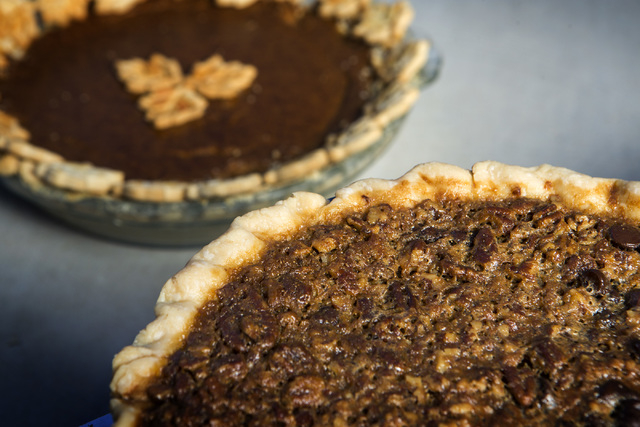
CHOCOLATE BOURBON PECAN PIE
½ (15-ounce) package refrigerated pie crusts (or 1 homemade single-crust pie crust)
1½ cups chopped pecans
1 cup (6 ounces) semisweet chocolate morsels
1 cup dark corn syrup
½ cup granulated sugar
½ cup firmly packed brown sugar
¼ cup bourbon or water
4 large eggs
¼ cup butter or margarine, melted
2 teaspoons cornmeal
2 teaspoons vanilla extract
½ teaspoon salt
Fit crust into a 9-inch deep-dish pie plate according to package directions; fold edges under and crimp.
Sprinkle pecans and chocolate evenly onto bottom of crust; set aside.
Combine corn syrup and next 3 ingredients in a large saucepan and bring to a boil over medium heat. Cook, stirring constantly, 3 minutes. Remove from heat.
Whisk together eggs and next 4 ingredients. Gradually whisk about one-fourth hot mixture into egg mixture; add to remaining hot mixture, whisking constantly. Pour filling into prepared piecrust.
Bake at 325 degreese for 55 minutes or until set; cool on wire rack.
Serves 8.
— Recipe from Southern Living
THE BEST PUMPKIN PIE FILLING
2 cups plain pumpkin puree (16 ounces), canned or fresh
1 cup packed dark brown sugar
2 teaspoons ground ginger
2 teaspoons ground cinnamon
1 teaspoon fresh grated nutmeg
¼ teaspoon ground cloves
½ teaspoon table salt
²/³ cup heavy cream
²/³ cup milk
4 large eggs
Brandied Whipped Cream
1¹/³ cups heavy cream (cold)
3 tablespoons confectioners’ sugar
1 tablespoon brandy
Process pumpkin, brown sugar, ginger, cinnamon, nutmeg, cloves and salt in a food processor fitted with steel blade for 1 minute. Transfer pumpkin mixture to a 3-quart heavy-bottomed saucepan; bring it to a sputtering simmer over medium-high heat. Cook pumpkin, stirring constantly, until thick and shiny, about 5 minutes. As soon as pie shell comes out of oven, whisk heavy cream and milk into pumpkin and bring to a bare simmer. Process eggs in food processor until whites and yolks are mixed, about 5 seconds. With motor running, slowly pour about half of hot pumpkin mixture through feed tube. Stop machine and scrape in remaining pumpkin. Process 30 seconds longer.
Immediately pour warm filling into hot pie shell. (Ladle any excess filling into pie after it has baked for 5 minutes or so — by this time filling will have settled.) Bake until filling is puffed, dry-looking, and lightly cracked around edges, and center wiggles like gelatin when pie is gently shaken, about 25 minutes. Cool on a wire rack for at least 1 hour.
For whipped cream: Beat cream at medium speed to soft peaks; gradually add confectioners’ sugar, then brandy. Beat to stiff peaks. Accompany each wedge of pie with a dollop of whipped cream.
Serves 8.
— Recipe from Cook’s Illustrated
APPLE CRUMB PIE
1¼ cups all-purpose flour, plus more for rolling (divided use)
6 tablespoons unsalted butter, room temperature
¼ cup packed light-brown sugar
¾ teaspoon salt
Dough for single-crust pie
2 tablespoons fresh lemon juice
4 pounds Granny Smith apples (8 to 10)
1 cup granulated sugar
1 cup raisins
1 teaspoon ground cinnamon
Preheat oven to 375 degrees. Make crumb topping: In a medium bowl, combine 1 cup flour, butter, brown sugar and ¼ teaspoon salt. Work with fingers until large clumps form; freeze.
On a lightly floured piece of wax paper or parchment paper, roll dough into a 14-inch circle. Carefully fit into a 9-inch deep-dish pie plate, gently lowering dough into bottom and sides of pie plate without stretching (you will have a 2-inch overhang all around). Refrigerate.
Place lemon juice in a large bowl. Peel, core and slice apples 1/8 inch thick, transferring them to the bowl as you work. Add granulated sugar, raisins, cinnamon, remaining 1/4 cup flour and remaining ½ teaspoon salt; toss to combine. Transfer apple mixture to pie crust, pressing in firmly. Fold dough overhang over filling, pleating it as you work your way around pie; press dough firmly against filling.
Bake 45 minutes, then sprinkle apple filling with crumb topping. Continue to bake until golden and bubbling, 30 to 45 minutes more. Cool at least 6 hours before serving.
Serves 8.
— Recipe from Martha Stewart Living Omnimedia
PEAR-ROSEMARY PIE WITH CHEDDAR CRUST
2½ cups all-purpose flour
1/8 teaspoon salt
3 tablespoons granulated sugar (divided use)
1 cup finely grated sharp cheddar cheese
1 cup cold butter, cut into ½-inch cubes
3 tablespoons cold heavy cream
4 to 5 tablespoons ice-cold water
3¼ pounds Bartlett pears, peeled and sliced
1/3 cup firmly packed light brown sugar
2½ tablespoons cornstarch
2 tablespoons fresh lemon juice
1½ teaspoons vanilla extract
1 teaspoon chopped fresh rosemary
¼ teaspoon table salt
1 large egg, lightly beaten
Pulse first two ingredients and 2 tablespoons granulated sugar in a food processor 3 or 4 times or until combined. Add cheese and butter; pulse 10 to 12 times or until mixture resembles coarse meal. Drizzle cream and water over mixture; pulse 4 or 5 times or just until moist clumps form. Divide dough in half and flatten into disks. Wrap disks in plastic wrap and chill 30 minutes.
Meanwhile, stir together pears, next 6 ingredients and remaining 1 tablespoon granulated sugar in a large bowl.
Preheat oven to 400 degrees. Roll one dough disk into a 12½-inch circle on a lightly floured surface. Fit dough into a 10-inch pie plate; fold edges under and crimp. Spoon pear mixture into crust.
Roll remaining dough disk to 1/8-inch thickness on a lightly floured surface and cut into 6 (2 ½-inch) strips. Arrange strips in a lattice design over filling; press ends of strips into crust, sealing to bottom crust, and crimp. (Reroll scraps if you do not have enough strips to cover pie.) Whisk together egg and 2 tablespoons water. Brush lattice with egg mixture.
Bake at 400 degrees for 55 minutes to 1 hour, shielding with aluminum foil after 30 minutes to prevent excessive browning. Let cool on a wire rack 1 hour.
Variation: Pear-cherry pie with cheddar crust: Prepare as directed, adding 1 cup dried cherries to pear mixture and increasing cornstarch to ¼ cup.
Serves 8.
— Recipe from Southern Living
PUMPKIN APPLE PIE
1/3 cup packed brown sugar
1 tablespoon cornstarch
½ teaspoon ground cinnamon
¼ teaspoon salt
1/3 cup water
2 tablespoons butter
3 cups sliced peeled tart apples
Pastry for a single-crust pie
Pumpkin layer:
¾ cup canned pumpkin
¾ cup evaporated milk
1/3 cup sugar
1 egg
½ teaspoon ground cinnamon
¼ teaspoon salt
Whipped cream (optional)
In a saucepan, combine the brown sugar, cornstarch, cinnamon and salt. Stir in water until smooth. Add the butter; bring to a boil. Add apples. Cook and stir for 4 minutes.
Place pastry in a 9-inch pie plate. Add apple mixture. In a bowl, whisk the pumpkin, milk, sugar, egg, cinnamon and salt until smooth; pour over apple layer. Flute the edges.
Bake at 375 degrees for 50 to 55 minutes or until a knife inserted near the center comes out clean. If necessary, cover edges with foil during the last 15 minutes of baking time to prevent overbrowning. Cool completely.
Garnish with whipped cream, if desired. Store in the refrigerator.
Serves 6 to 8.
— Recipe from Taste of Home
Contact reporter Heidi Knapp Rinella at hrinella@reviewjournal.com or 702-383-0474.


 Add as a preferred source on Google