Wild and Hairy Place

Zoo director Pat Dingle's twisted sense of humor came out after the monkeys attacked.
A photographer had placed his hand on the fence of the Barbary macaque cage, to get the attention of one of the female monkeys. And it worked, unfortunately.
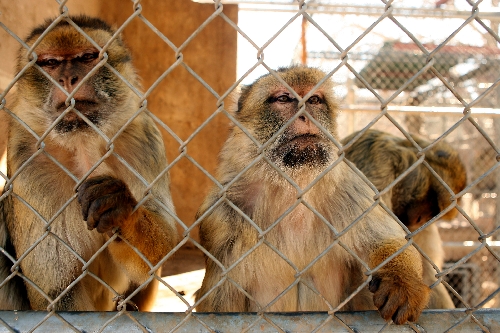
She screamed a Barbary ape warning cry that caused all five of her fellow monkeys to throw themselves against the fence, screeching and baring their teeth in an attempt to ward off what they perceived as a threat.
In the aftermath, the monkeys furiously groomed the "victim" and Dingle told the photographer, "do like this," smacking his lips together. Dingle chuckled because he knew the sound is the Barbary monkey-equivalent for throwing the gauntlet down.
"We have a twisted sense of humor around here," Dingle explained.
"Here" is the Southern Nevada Zoological-Botanical Park, most likely the only place in Las Vegas where you can see the endangered Barbary macaque, five of them, all next to an endangered Chinese alligator that sits unmoving at the bottom of its pond, next to a family of otters.
For 30 years, Dingle has been the force behind the zoo; a cop turned bird man who opened a pet store that became what it is now. It has had three decades to grow but for the first time in its existence, Dingle says, the zoo is on the verge of becoming, if not great, at least better than its current three acres of bare-bones habitats and animal exhibits.
"There has never been the momentum for a class act zoo like there is now," Dingle says. "I can't pin it on one thing, everything is coming together."
It's still far from matching the San Diego Zoo, a partner to the local zoo, but it's a beginning.
A new Barbary macaque habitat is scheduled to open in the next few weeks, which will enable zoo staff to house all of the Barbary apes together in one enclosure.
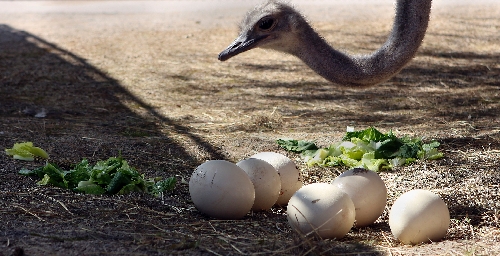
A couple of meerkats are scheduled to arrive from the Bronx Zoo in a few weeks, too. They will join the approximately 200 other animals that live at the zoo, including a bearcat, a chimp, fossas, a lion, two ostriches, pygmy goats and peacocks, among others. There are no plans to replace the 10-year-old lion that died in 2009.
Over the years, the zoo and Dingle have received criticism for the size of the animals' enclosures and the sparseness of the habitats. Because the zoo hasn't received business or community support in a way that could make a real difference, the majority of the operating budget, $500,000 annually, has to go to the animals' care, Dingle says.
But help is starting to come forward. Two years ago, Food for Less awarded the zoo an $18,500 grant to expand the petting zoo.
Now, a local architect is doing a master plan for the zoo, so that potential donors can see for themselves where their money might go.
"This will give us an idea on how much funds need to be raised to accomplish a remodel," Dingle says.
Plans are in the works to develop corporate and personal fundraising strategies.
"We're doing fine, we just don't look like what the Las Vegas zoo should look like," Dingle says. "We haven't had the capital for big and beautiful. We just haven't had the funds to make more aesthetically pleasing exhibits. The animals come first. It's not bad, but it could be so much better."
Contact reporter Sonya Padgett at spadgett@review journal.com or 702-380-4564.