Tutu Much

Consider the tutu, that light, ethereal ring of fluffiness encapsulating a ballet dancer's waist and hips.
If there's one thing above all others that announces you're about to hear classical music and see a lot of demi-plies, en pointe and maybe some attitude, it's the tutu.
Aside from that -- and the fact that the name sounds funny -- what do you know about it?
It's the requisite uniform of ballerinas everywhere and adorns those little jewelry box figurines that almost every girl has owned.
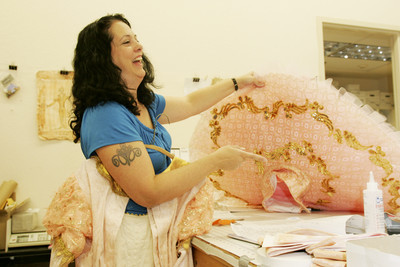
But no two tutus are alike, says Suzanne Deikmann, a former ballet dancer and now a local tutu seamstress.
Deikmann freelances for the Nevada Ballet Theatre when the wardrobe department needs a tutu or two, which is usually the case with the annual holiday production of "The Nutcracker," now in performance. She has been making them since her days as a dancer more than 25 years ago.
There's a lot more to them than meets the eye, she says.
First, the name. It's French, of course. Professional ballet originated in the court of France's King Louis XIV during the late 1600s, although what is believed to be the first tutu wasn't worn until 1832.
"Tu" is French for "you," an informal way to refer to friends and family. But "tutu" doesn't translate to "you you." Rather, it's believed to be a twist on a slang word for a baby's bottom, or at least "the little ruffles on a baby's butt," Deikmann says.
Say again?
The layers of a tutu -- as many as 12 or more -- suggest the image of ruffles or folds not unlike the infant cellulite on a baby's bottom. And, since the tutu covers a dancer's derriere, well, you get the point.
But another version of the word's origin is that French ballet fans sitting in the cheap seats down front actually had a different view of the dancers than audience members sitting in the upper levels. And, voila, the word "tutu" was born.
Making sense yet?
There are two types of tutus: Romantic and classical, says Christine McInnis, wardrobe mistress for Nevada Ballet Theatre. She recently made a classical tutu for the Sugarplum Fairy in "The Nutcracker."
First came the Romantic tutu, long, bell-shaped and flowing. Worn by ballerina Marie Taglioni, it enabled the audience to see her ankles and feet, a somewhat risque thing for the times.
"It must have been scandalous to see those ankles," McInnis says.
Over the years, the tutu started getting shorter and morphed into what is now called the classical tutu. With it, audiences could see the dancers' legs and intricate footwork.
Tchaikovsky's "Nutcracker," a classic Christmas show, features 16 Romantic tutus and 30 classical, McInnis says.
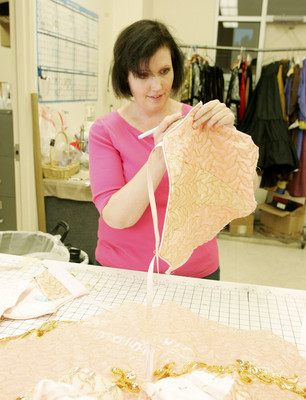
Instead of being a one-size-fits-all costume, the tutu must be fitted to an individual dancer for safety and decorum, Deikmann says. An ill-fitted tutu can show more skin than the ballerina intends.
It also could break a guy's finger if he gets it caught in a loop of loose fabric. Tutus have been known to kill, as well. In the 1860s, a ballerina's tutu caught fire from the gas lamps that lit the stage and she died, Deikmann says.
The tutu actually sits at a dancer's hips, as their partners need to hold their waists for lifts. A basque, or a band of cloth, wraps the waist and is about the width of a man's hands. That's where the male dancer lifts his ballerina, McInnis says.
The garments are hand-sewn and take about 40 hours to make, fittings not included.
A single tutu contains about 2,700 square inches of netting in it, Deikmann says, and the material is hard to find. The price can range from $3 to $180 a yard. Prices vary, but the average cost of an individual, professional tutu is about $3,000.
Though they appear soft and delicate, tutus are pretty durable garments, Deikmann says. Repairs are common, but she has made tutus that have lasted more than 20 years.
Contact reporter Sonya Padgett at spadgett@reviewjournal.com or 702-380-4564.
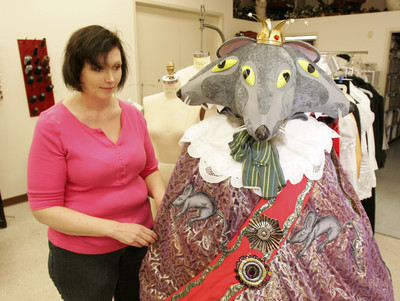
Holiday Favorite in Performance Nevada Ballet Theatre revives a Christmas classic, “The Nutcracker,” with several performances scheduled through Dec. 28. It’s one of the most famous fairy tale ballets and has become a holiday tradition, says Clarice Geissel-Rathers, ballet mistress of Nevada Ballet Theatre. Many people have heard Tchaikovsky’s famous music, but they probably don’t realize it is from “The Nutcracker,” Geissel-Rathers says. All of the famous elements are there: the toy soldiers, the Mouse King, the Sugarplum Fairy and the land of sweets. And, of course, the Nutcracker himself. The costumes are as much a part of the ballet as the music and characters themselves. It takes weeks to prepare, fitting dancers, repairing costumes, making new ones, says wardrobe mistress Christine McInnis. A two-person crew, with the help of some freelancers, prepare hundreds of costumes, shoes and headgear for the ballet. There are about 250 costumes in the show, McInnis says, along with dozens of other small pieces, such as hair bows, socks, jewelry, hats and gloves. There are 80 kids’ costumes, as well as 85 hats, 20 hair bows and several turbans. There is currently only one Nutcracker head; it was cracked and had to be repaired before the ballet started. “The Nutcracker” runs at 8 p.m. today through Saturday, Tuesday, and Dec. 26 and 27; 2 p.m. Saturday and Dec. 26 and 27; 1 p.m. Sunday, Wednesday and Dec. 28; and 4:30 p.m. Sunday and Dec. 28 in the Judy Bayley Theatre on the University of Nevada, Las Vegas campus, 4505 S. Maryland Parkway. Tickets are $45, $55, $75 and $85, depending on the date. For tickets, call 895-2787 or visit nevadaballet.com.