The Ice Gals Cometh

One's got the skates. One's got the songs. Both have the spotlight.
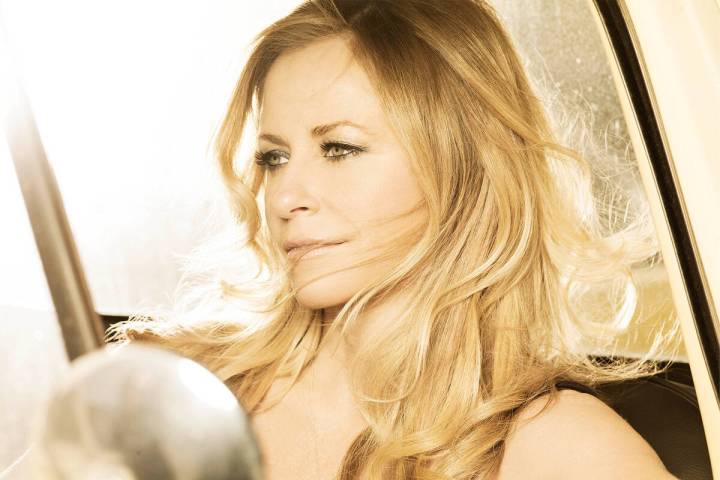
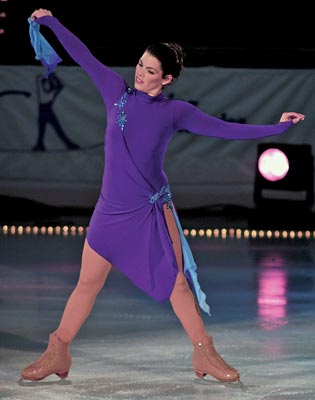
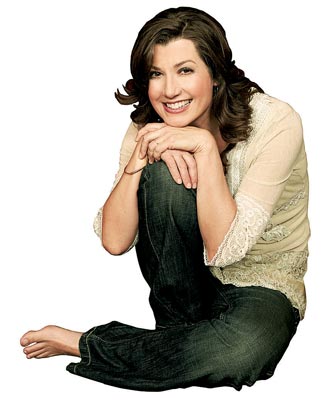
Icon of the ice Nancy Kerrigan (notice the Olympic medals) and mistress of multi-genre music Amy Grant (notice the record as best-selling Christian music artist of all time) highlight "Holiday Celebration on Ice" at the Orleans Arena on Tuesday.
Grant -- also known for bouncy mainstream hits such as "Baby, Baby" and "Every Heartbeat" -- will be joined by singer Michael W. Smith to provide the melodic backdrop to the balletic moves of Kerrigan and a lineup of renowned figure skaters, including Todd Eldredge, Yuka Sato and Shae-Lynn Bourne.
In interviews, Kerrigan and Grant chat about life on and off the rink and the stage:
NANCY KERRIGAN
Question: What can people expect at this show?
Answer: We skate to live music, which is always fun. It helps bring the emotion to the skating. Amy Grant will perform live, and I get to skate to her singing, which is beautiful, she's got a great voice.
Q: Do you offer advice to young skaters?
A: I have a really hard time keeping it to myself if I see something. I go up to coaches and say, "You mind if I say something here?" With my other jobs (skating commentator, TV specials, ice shows, even a cameo in "Blades of Glory"), plus having three children, I don't have as much energy to put into coaching full time. I think coaches are aware I don't want to take over a student, I don't want to do anything to interfere. But it's hard when you have to go and say, "Your coach has been saying this and this and this, and they're right, but how about if you try it like this?" Or saying things in a different way that makes things click.
Q: Your oldest son, Matthew, is 12 now. Has he shown any interest in going into skating?
A: He started skating after seeing himself on TV. Kristi Yamaguchi does a family and friends show. My kids have been in my numbers with me. I choreographed the program so he was good enough, and he said, "Cool! I want to do this!"
Q: Would you encourage him to go into it full time?
A: It's really hard unless you make a huge commitment to really go for it. It's great discipline and learning to focus, qualities that can take you in so many directions in life, it doesn't have to be in sports. But he has done a couple of competitions, and as a parent I'm here to support, but it's really hard to sit on the sidelines. He'll say, "Mom, I can do a flying camel!" (a spin done in a spiral where the free leg is horizontal to the ice) but I'll say, "You haven't even done a back camel yet." You can't fool me, I know better. It's funny to watch, but he's excited and he's got a spark, and that's something you can't teach.
Q: Has ice skating changed much as a sport?
A: It's different now. We've had a lot of champions who were very young, so there's been a lot of injuries and no longevity. Tara Lipinski had a hip replacement at 19. There are U.S. Olympic champions, and you don't even hear about them. That has hurt the sport, to not see them grow more.
Q: Do you think people's perceptions of you are still intermingled with memories of the attack on you in 1994?
A: There's the memory of being attacked and the memory of going to the Olympics and getting two medals. I hope people remember that, because it was sure exciting. I was a victim then, so any perception of that would be really sad, especially after all the hard work and all I've accomplished. A lot of people wouldn't try to come back after that. It was extremely frightening, but (the competition) was one of the most-watched events ever. People say, "Well it was because of (the attack)." I say, "No way!" I won't give credit to the negativity.
It's so long ago that I feel it was a whole other lifetime, a whole other person. A lot of parents might not have wanted their kids to start skating had I not persevered through that, but you see someone strive and be determined and see the character skating can give someone in a positive way.
AMY GRANT:
Question: Few artists cross over successfully between Christian/gospel and mainstream. Was that difficult?
Answer: I had a unique experience. I was signed from the time I was 15 to Word Records in 1976. In 1986, Word Records went to A&M and said, "We have an artist on our roster who we think has mainstream appeal" and they signed me. I've sung all kinds of music since I was a kid, and it was delivered to me on a platter -- "Hey, do some of your pop stuff now." Had that not happened, I wouldn't have had that opportunity.
Q: Have you found the same satisfaction in both genres?
A: My first entrance into pop music, I was invited to do a duet with Peter Cetera. Five years later, I made a record more geared toward mainstream radio. It was so much fun. A lot of music about faith tends to have a more serious tone, and just in my own head space, I thought, how much of a more complete picture to include all aspects of life. But the songs that will have the longest staying power are songs that are not pop fluff.
Q: Is it true the inspiration for writing "Baby, Baby" was your infant daughter?
A: She was 6 weeks old. She's a freshman in college now. I tease her, saying, "I'm glad that song went well. I can almost afford your books for first semester."
Q: You wrote in your book, "Mosaic: Pieces of My Life So Far," about profound wisdom you received from the late Minnie Pearl. What was that?
A: She said, "Amy, do you know what the most important color is in an artist's palette? It's black." She said without black, everything is two dimensional, flat. You mix black with any color and it creates depth, and she said life is the same way. Hard times provide us with character, our depth of appreciation, understanding, empathy and compassion.
Q: Were you surprised when your song, "I Will Remember You," was played by DJs after the 9/11 attacks?
A: Any time a song is used for something of a greater purpose than it was written for, I don't even know the right word -- humbling? Right after the Columbine massacres, I was watching the news and they had a montage of photos and played a song I had written called "Somewhere Down the Road." Isn't music amazing, that it transcends one purpose and finds a greater one?
Q: Do you think of yourself more as a singer or a songwriter?
A: If I'm sitting next to somebody on a plane and they ask what I do, I always say I'm a songwriter. I can't believe that my childhood love of songwriting I still get to do. I say to my kids, "What is it that energizes you, the stuff you would lose track of time doing, forget to eat, who cares about a shower?" Whatever you're passionate about is part of who you are. You can't lose touch with that. I was able to define it early on.
Contact reporter Steve Bornfeld at sbornfeld@ reviewjournal.com or 702-383-0256.
Preview "Holiday Celebration on Ice" with Nancy Kerrigan, Amy Grant and Michael W. Smith 7:30 p.m. Tuesday Orleans Arena, 4500 W. Tropicana Ave. Tickets: $29-$89 (284-7777)