Strait Talk

It seems dumb questioning a man whose artistic merit is without question.
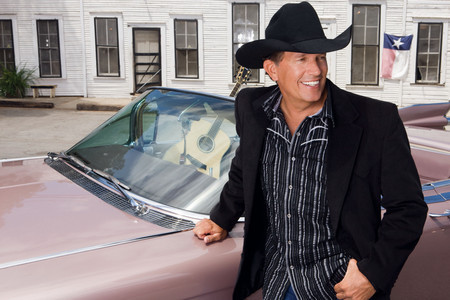
But really, has George Strait been good for country music?
Well, first things first, Strait pretty much is country these days.
The two are practically indivisible from one another, like intertwined strands of DNA.
There's no doubting Strait's musical pedigree, nor his impact on the genre.
More than any other artist, Strait provided the bridge between a more traditional country western swing and the commercial, cosmopolitan sound that has ruled Nashville for decades.
Strait was arguably the harbinger of this evolution when he debuted with "Strait Country" in 1981, combining the earthy grit and expert musicianship of old-school country's highest peaks with a more polished, radio-friendly sheen.
The result was a fresh sound that would become synonymous with country music in the years to follow.
And it's paid incredible dividends for the man.
Strait's scored more No. 1 singles than any artist in any genre, having notched 57 of them.
Only the Beatles and Elvis Presley have released more hit albums than Strait, who also has racked up more than 70 nominations for the Country Music Association Awards and was only the second performer to ever be inducted into the Country Music Hall of Fame while still touring and making new records.
The guy's a legend, the rare performer whom you could brand the "King of Country" and not seem hyperbolic in the least.
But while there can be no arguments about Strait's legacy, has it really benefitted the genre as a whole?
Sometimes great artists can catalyze not-so-great movements, through no fault of their own.
Take Nirvana in the early '90s, for instance.
When that band released its seminal sophomore effort, "Nevermind," in 1991, it had a huge and immediate impact on the musical landscape.
Seeing the band's success, record labels were quick to snap up pale imitators who watered down the group's sound, resulting in bands such as Bush going platinum.
All of a sudden, "alternative" went from being a legitimate genre designation to a meaningless catch-all term that signified little.
None of this should be seen as indictment of Nirvana -- nor should Strait be criticized for having a similar effect in Nashville.
Still, it was Strait who ushered in a new era of commercialism in country music, with Garth Brooks building on that momentum years later, spawning scads of lesser imitators who've glommed onto Strait's pop savvy but not necessarily the musicianship that lies at the core of it.
As such, much of mainstream modern country feels less than inspired, market-tested and safe.
Of course, there are exceptions, throwbacks such as Jamey Johnson or top-notch musicians like Brad Paisley, but too many contemporary artists put commercial aspirations over real craftsmanship or anything approaching genuine sentiment.
Country music is big business, and it's treated as such: Take a look at some of the poppy, prefab chart toppers of today, and you get the sense that they're more of a byproduct of some corporate boardroom than a honky-tonk.
It's not as if country is on an island here.
You could make similar arguments for how mainstream hip-hop and hard rock have been similarly defanged.
But few genres have lost touch with their roots like country. If you listen to, say, modern heavy metal, you still hear traces of pioneering bands such as Black Sabbath, Judas Priest and Iron Maiden in many of the popular acts of today.
But can anyone discern any meaningful Hank Williams, Johnny Cash, Merle Haggard or Waylon Jennings influences in contemporary country?
It's rare to see such a central figure of a genre like Strait spawn so many weaker offspring who ultimately diminish the bloodline that he was pivotal in creating.
Truly, then, this "King of Country" deserves a better court.
Contact reporter Jason Bracelin at jbracelin@ reviewjournal.com or 702-383-0476.
Preview
George Strait
7:30 p.m. Saturday
MGM Grand Garden arena, 3799 Las Vegas Blvd. South
$79.50-$131 (891-7777)