Singers join Philharmonic to create ‘A Night at the Opera’

You dig bebop? Call that "bopera."
You crave pop? Call that "popera."
Then it follows that all another music genre needs to crash through your preconceptions and turn you on to this big, powerful, emotional art form is an opportunity. Call that opera.
"What's not to like -- this is opera's top 40," says tenor Arnold Rawls, who is winging into Vegas from Chicago to join fellow singers and the Las Vegas Philharmonic on Saturday for "A Night at the Opera," an installment of its "Masterworks" series at the University of Nevada, Las Vegas.
On its website, the Philharmonic spells out its intent, sub-billing the event as being "For People Who Think They Hate Opera."
"What (Philharmonic conductor/music director) David Itkin has programmed are really popular pieces, stuff people will know because they've heard it on radio or seen it on TV," Rawls says. "That's the key. You hit them up with something they know, and do it in a high-class setting with really good artists. I hear audiences just go crazy at the end of one of these things."
Among the operatic heavy hitters on Saturday's bill: "Nessun Dorma" from Puccini's "Turandot"; "Celeste Aida" and "Sempre Libera" by Verdi; "The Toreador Song" from "Carmen"; Vesti la Giubba" from "Pagliacci"; and other music from Leonard Bernstein and Gioachino Antonio Rossini.
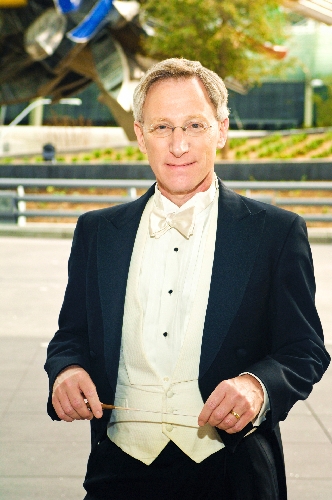
"It sells itself," says Itkin, who will conduct a pre-performance lecture at UNLV's Artemus Ham Hall. "These are the most famous tunes ever written. Everybody knows them. They may not know that they know them, but they do."
Distilling fully staged opera into a concert of excerpts, "A Night at the Opera" puts four prominent performers -- Rawls, soprano Patricia Johnson, mezzo-soprano Eugenie Grunewald and baritone Tod Fitzpatrick -- onstage to rock some opera (not to be confused with a rock opera), along with the Las Vegas Master Singers.
"When I first started doing complete operas in Arkansas, people said, 'You're crazy. No one will come. It isn't going to work,' " says Itkin, referring to his just-concluded tenure as conductor of the Arkansas Symphony Orchestra, a position he held while simultaneously guiding the Philharmonic. "Historically for the last decade, the concert operas and operatic concerts have been the largest-selling thing we did. I think the same thing will happen in Las Vegas. It will take some nurturing, and this is the beginning of that process."
Stripping away the trappings of a fully produced opera, Rawls says, presents a challenge. "It's a lot more difficult, because you don't have the advantage of costumes or stage directions, so you're pretty much on your own to convey the character to the audience," Rawls says."You have to work a lot harder."
Conversely, novice opera-goers could be intimated, not only by listening to music in foreign languages, but by excerpts that don't tell complete stories. Fear not -- Itkin's got it covered.
"I'm going to be talking a lot more than usual during the concert to put the music in context for the audience, so they have some sense of what's going on in the opera at the moment it happens," he says. "I want them to know what kind of character is singing."
Concert-style opera also will get a boost from the Philharmonic when it moves into the under-construction Smith Center for the Performing Arts, which the organization will co-anchor with the Nevada Ballet Theatre. There, Itkin adds, they can mount it with projected translations and other touches for which Ham Hall isn't equipped.
"Opera hasn't had a lot of traction in Las Vegas," Itkin says. "We are going to create traction."
Contact reporter Steve Bornfeld at sbornfeld
@reviewjournal.com or 702-383-0256.
Preview
"A Night at the Opera"
with the Las Vegas Philharmonic
8 p.m. Saturday; lecture at 7:15 p.m.
Artemus Ham Hall,
University of Nevada, Las Vegas,
4505 S. Maryland Parkway
$35-$75 (895-2787)