New Creative Challenge

Art probably isn't the first thing that comes to most people's minds when totting up the financial damage caused by a deepening recession.
But to creators, dealers and buyers of fine art, the effects of a shaky economy are all there, from lower-than-expected prices at auctions to a pullback in spending among formerly avid art buyers to a general downer vibe hanging over the art community in recent months.
Jerry Schefcik, director of the Donna Beam Fine Art Gallery at the University of Nevada, Las Vegas, said conversations with arts-connected people here and elsewhere point to "some pullback" in art sales, as well as "not as much purchasing going on in galleries here in town."
Art buyers, like pretty much everybody else, "are being careful with the money they spend," Schefcik said. "I guess discretionary income is probably where a lot of art purchases come from, and if (buyers) are holding on to discretionary income to take care of nondiscretionary expenditures like utilities and stuff like that, it hurts the market."
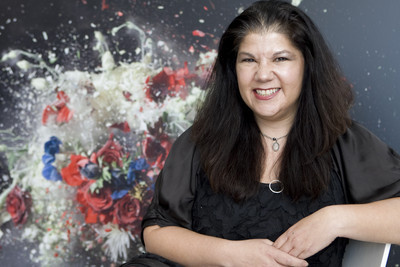
Naomi Arin said it's the same sort of dynamic that appears to be keeping investors from jumping wholeheartedly back onto Wall Street's bandwagon. Collectors, said Arin, owner of Naomi Arin Contemporary Art (formerly Dust Gallery), are "just fearful about what's going to happen."
Las Vegas gallery owners detected signs of what was to come long before gallery owners elsewhere did. Arin said many of her clients who were, or are, heavily into the stock market and real estate were scaling back their art-buying budgets as far back as January.
"They were done," Arin said. "No more shopping."
"I definitely think the local market was hit before the sort of global art market," agreed Las Vegas-based art consultant Michele Quinn of Michelle C. Quinn Fine Art Advisory.
Quinn said she began noticing a "pullback" among clients six to eight months ago, "not really in a significant way, but the temperature definitely was changing."
"It was just more caution than anything else," she said, in contrast to the "exuberance" seen beforehand.
Quinn said clients -- many of whom are in the gaming industry -- "wanted to sell more than buy," and those who continued to buy were taking longer to think about their purchases.
Then came November's auctions in New York City where, Bloomberg News reported, prices for works fell as much as 50 percent. And those auctions followed weak prices fetched for contemporary pieces in London the month before.
Long story short: After the November auctions, "everything shifted dramatically," Quinn said. "Within three weeks, everything changed."
In a way, the retrenchment is similar to that seen in the housing market, where profit-minded investors and speculators tended to drive prices higher than were, perhaps, realistic.
"What the recent (lower) prices have done is basically just weeded out the speculators in the art business who, over the last four or five years, have been buying things and flipping them," Arin said.
"What happened is, the market became very inflated over the last four years, and it was due to the sheer volume of people getting involved in the purchase of art as investments."
"In a sense, this correction is probably healthier for the market, so that people who have been collecting a long time can get back to purchasing work at more-or-less less-inflated prices," Arin said.
It's also, she added, a time when "people can stop and really consider what makes something a good painting and what doesn't."
Of course, at the beginning of this entire art-buying equation is the artist who, aesthetic concerns aside, is a businessman or businesswoman who still has to buy raw materials, rent studio space and provide for basic living expenses. And, for artists, awaiting whatever correction that may come in the art market means outlasting whatever happens between now and then.
"Definitely, I'm concerned bordering worried," said David Ryan, a Las Vegas-based artist.
Ryan is working on pieces for shows in late January and early February. "There are a lot of expenses that go into that," he said, "and who's to say what's going to happen?"
Ryan said he's grateful for the reassurance offered by veteran dealers who tell him the trick is simply in riding out the cyclical storm. Until then, he said, "I just try to hunker down and focus on the art and let everything else just kind of work itself out, because that's really all any of us can do."
Las Vegas-based artist Tim Bavington agrees. The current economy "doesn't change my approach to what I do in the studio," he said. "It has to do with making art."
"It's always been sort of a tenuous proposition to try and sustain an art career," said Bavington, who quit his day job as a freelance commercial artist and illustrator seven years ago to concentrate full time on his art. He and his wife are raising two children.
"I don't watch the news to scare myself," Bavington said. "All I can control is what I can do in my studio, and so far we're hanging in there."
The state of the economy is "scary, to say the least," Bavington conceded. "But you can't make art out of fear, and you can't work if you're paralyzed by fear."
On the upside, there are signs that the tide may, again, be turning, even if it's a bit more slowly than most probably would like. Arin said the mood late last month at the Art Basel Miami Beach art fair was brighter than she had expected.
"I think it was really positive. I think everybody felt pretty good, and dealers felt good," she said. "It seems that people are buying with their eyes instead of their ears."
And, while prices at Art Basel still were lower than they were during the now-apparently-ended boom years, that could mean buyers who were pushed out of the market -- or new buyers who haven't yet gotten their feet wet -- can get back into the water.
"The best work is always going to sell," Quinn said. "And it's definitely a buyer's market right now."
Contact reporter John Przybys at jprzybys@reviewjournal.com or 702-383-0280.