Local governments reduce arts, leisure programs even as demand for them increases

During the past couple of years, as the recession has forced people to curtail their spending, the demand for publicly funded arts, cultural and recreational programming has dramatically increased, local county and city representatives say.
People are using their public recreation centers and amphitheaters like never before. They're going to plays, concerts and festivals, and taking art and music classes.
"Our largest event is the Super Run car show in downtown Henderson," says Bud Pico, manager of cultural arts and tourism programs for the city of Henderson. "From 2008 to 2009, it grew from 110,000 attendees to 150,000. People are anxious to find things to do, especially inexpensive activities."
Such programs have always been affordable and plentiful. But, just as individuals have had to save money, so, too, have Clark County and the cities of Las Vegas, Henderson and North Las Vegas. And parks and recreation departments have felt those effects.
Henderson cut Sunday hours of two recreation centers and their budgets by $4 million. Reed Whipple Cultural Center, home to the Las Vegas Youth Orchestra and the Rainbow Company Youth Theatre, was nearly closed; the City Council gave it a one-year reprieve last month. Winchester Community Center has lost a lot of its programming, such as concerts, that had a strong following.
Future budget cuts could lead to even more reductions, city and county representatives say. What would be cut and by how much is not yet known. They're having to learn to do more with less, coming up with creative ways to fund events or keep classes on the schedule.
"It's tough to say how far we've fallen back, maybe a couple of years," says Patrick Gaffey, who runs Winchester Cultural Center for Clark County. He applied for, and received, a $50,000 federal grant to address the center's budget shortfalls. That money runs out in June. "We're holding our own right now, but what scares me is the next year and the year after that."
For years, Winchester offered senior programs where staff would take seniors to Cedar City, Utah, or on other small trips in the Southwest. The program was very popular, says Candy Rutledge, senior program administrator for Clark County Parks and Recreation. But it has been eliminated.
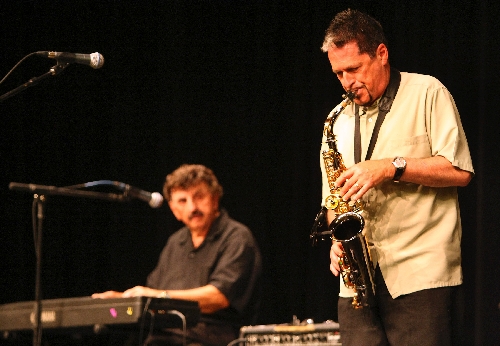
In 2009, the county also eliminated a moonlight concert series at the Clark County amphitheater and reduced a jazz series. But an emergency federal grant enabled them to fund the jazz series for one more year, Rutledge says.
Visual arts don't seem to be suffering as much from cuts, yet. They're inexpensive to exhibit although they can be time intensive, Gaffey says.
What this means for the public is that they may see fewer free or low fee concerts sponsored by the county and local cities, and they may experience more competition when trying to register for a guitar class or pottery class. And, when they do go to a concert, especially in Henderson, they just may see banners that mention retail or private sponsors.
"We did suffer budget cuts, but before we allowed it to affect programming, we explored creative ways to fund them," says Pico. "We have a tremendous number of sponsors now. It's more corporate than it's ever been."
Target, Land Rover and several local radio stations are among the private entities that are sponsoring events planned and operated by the city of Henderson.
"We struggled obviously to come up with ideas," Pico says. "Nothing was too outlandish. We thought we had such great community support and we continue to grow, so we decided to change our business plan with the changing economy. It's a different concept. It's all based on the business at hand and how to keep arts and arts education happening without having to rely strictly on huge ticket prices."
Contact reporter Sonya Padgett at spadgett@review journal.com or 702-380-4564.