Giving New Life to Classic Art Form

When the subject is classical, the man's downright, well ... sass-ical.
Musically speaking.
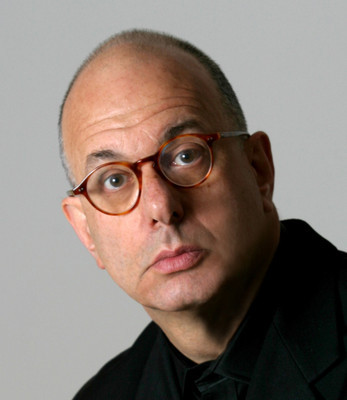
The faults, the fogies and the future of the Mahler-Mozart crowd trigger emotional crescendos in Leon Botstein, the music director/conductor of the Jerusalem Symphony Orchestra, which will follow his baton straight to the University of Nevada, Las Vegas tonight, performing with guest violinist Robert McDuffie.
The symphonic representatives of the Israeli capital are renowned not only for masterful interpretations of familiar masterpieces, but a bold spirit of promoting more contemporary composers. It's a shot of musical adrenaline the classical world needs to refresh itself, as Botstein emphasizes in this interview:
Question: Why do you think classical music ensembles need to become re-energized to engage the public?
Answer: Most symphony orchestras in major cities are dug in some Neanderthal past. The solution is not in crossover, this was never designed to compete with popular entertainment. And it's not in diluting classical music or dumbing it down. The real solution is letting it breathe and be what it is, which is far more interesting than what its defenders believe.
Q: Why would its defenders think it was dull?
A: They're nervous and they're selling products to an older generation that has stuck with them and they're frightened. They don't know how to make something new, they don't have the capacity to build trust with the audience. Music is a form of history -- music in politics, music in literature, in all those ways that music is related to, you could open up a huge repertoire. Mexican, Venezuelan, Argentinian composers -- there's a huge reservoir of possibilities, a lot of music that is just terrific and audiences want to hear. We have the greatest loyalty from people who don't want to learn something they already know how to whistle, but something new. We don't go to the same movies all the time, do we?
Q: But isn't there also a comfort level for audiences going to hear pieces they cherish?
A: That's a very small market. Doing the same thing all the time is robbing the public of judgment. It's like a fine wine. I can judge a good wine from a terrible wine but I don't know if it's chateau this, chateau that, so it's irrelevant pretension. It's connoisseur snobbery. Music is about expression, not about this person performing the same "X" Mahler Symphony, the same "Y" Mahler Symphony. There are other symphonies like it that deal with nature and life and they're beautiful.
Q: Is better promotion needed?
A: Part of the blame goes to trying to promote a particular trained performer. There's no career like (Yasha) Heifetz anymore, like (Arthur) Rubinstein. There's no superstars anymore, they come and go very quickly. The idea of selling this art form to a Hollywood version of personality is an insult to the art form. There are young stars and they're great, but for artists to last through a long period, it has to connect to some purpose beyond doing the same repertoire of 50 years ago.
Q: Should orchestras target younger audiences?
A: Classical was never the passion of the young. It's a mature person's art. It's a long form, like a novel. A 4-year-old wouldn't know enough words to read "War and Peace."
Q: So there's no place for younger generations in classical music?
A: What's interesting is that more young people are studying instruments and playing better classical music now than ever, especially a new population in Asia. They've taken to it with an enthusiasm for which we are deeply grateful. The Koreans and Chinese, it is incredible what they have contributed to this art form. The level of play of today's entrants is at the level of what graduation was 25 years ago.
Q: Are there other ways to stimulate interest?
A: If we made the concert hall more interesting, more user-friendly and we didn't talk down to the audience. And we're entering either a depression or a recession, right? This is a great time to build a new audience because people are not going to travel, not going to be consuming, so this is a great moment for people to enjoy entertainment. This is a deeply satisfying art form and there's always a hunger for it.
Contact reporter Steve Bornfeld at sbornfeld@reviewjournal.com or 702-383-0256.
PREVIEW What: The Jerusalem Symphony Orchestra When: 8 p.m. today Where: Artemus W. Ham Hall, University of Nevada, Las Vegas, 4505 S. Maryland Parkway Tickets: $45, $60 and $90 (895-2787; www.pac.unlv.edu)