Fostering Talent

It's a big version of what his funeral is going to be like, he jokes.
"Big."
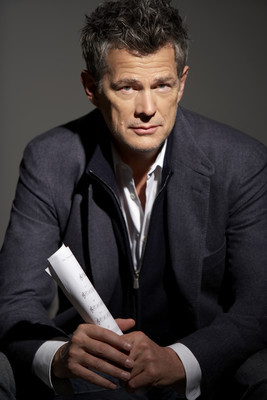
That's a word that comes up often when parsing the hit-covered canon of producer/songwriter David Foster, which is highlighted by the kind of sweeping, widescreen ballads that have catalyzed more wet eyes than hay fever.
"Most people accuse me of going big all the time, and it is naturally what I feel," Foster says, traveling through the streets of New York City on a recent Wednesday evening. "When I lay my hands on the piano, going 'big,' for lack of a better description, is what I feel. But I can also have those quiet moments. Some people like it, some people hate it. Some people think it's corny, and it moves some people to tears. When I lay my hands at the piano, what comes out, comes out, and I'm comfortable with it."
As well he should be.
Over the past 35 years, Foster has won 14 Grammys, including three for producer of the year, and been nominated a whopping 42 times. He's scored hits with everyone from Natalie Cole to Celine Dion, Barbra Streisand to the Corrs, Madonna to Chicago, and overseen such blockbuster soundtracks as "The Bodyguard," "Footloose" and "Ghostbusters."
Most recently, as the head of his own label, 143 Records, he's helped develop the careers of Josh Groban, Michael Buble and Katharine McPhee, all of whom will be taking part in tonight's "David Foster and Friends" concert that also will feature Andrea Bocelli, Brian McKnight, Boz Scaggs and others.
Set to be taped for a PBS special to air later this year as well as a DVD and possible CD release, the show, which Foster cheekily notes probably will sound a lot like any tribute concerts to him after his death, has been in development for some time now.
"Everybody's schedule is so crazy, trying to get all these artists under one roof proved to be pretty much impossible," Foster says. "We had at least two dates before this -- if not three -- over the last year and a half that had to be canceled or moved. Originally, we were trying to keep Celine in the loop and do it out at Lake Las Vegas, which is a great venue. But that fell apart, and now she's not (available), so we just stuck with this date.
"Everybody's sacrificing," he adds. "Bocelli is flying all the way from Italy just to do this. Buble's on vacation. Josh is in London right now. Brian McKnight has a gig the night before. It's pretty crazy."
Of course, Foster has long-standing ties to Vegas, as he serves as the musical director for Andre Agassi's annual benefit concert and his score for the 1988 winter Olympics is one of the soundtracks to the fountains at Bellagio.
A classically trained pianist who began playing at age 5, Foster enrolled in the University of Washington's summer music program when he was 13.
Four years later, he was touring with Chuck Berry.
Throughout his career, Foster's works largely have been defined by his skill at marrying the broad scope, symphonic overtones and high-level of instrumental proficiency that define classical music with traditional pop structures, resulting in swelling, dramatic works that never shy away from grandeur.
Nevertheless, Foster doesn't feel like he has an overly discernible, unifying aesthetic.
"I've certainly been accused of having a sound before," he says. "It's really hard to walk that line when you're working for a group, like, Chicago in the '80s, when I became their keyboard player, their bass player, their co-songwriter and their producer. It's kind of hard not to put your stamp on it. I think there's only two or three original guys in the band now, and apparently they're upset about those days, because they felt that I had too much influence. But if you listen to Alice Cooper and then Earth, Wind and Fire and then Toni Braxton, you can hardly say that I put my entire stamp on anything."
Still, Foster does have his trademarks, namely, his tendency toward gravitating to some of the most powerful voices in pop, traditionally styled instruments posited on power, finesse and pop classicism.
In a way, then, Foster has been able to keep moving forward by keeping a keen eye on the past.
"The older you get, the more difficult it gets to be current, obviously," Foster says. "I think the mistake that a lot of people make is that they keep trying to be current, and keep hitting the wall. If you're smart about it, and do alternatives like Michael Buble or Josh Groban, you can be age-appropriately hip, without trying to write the next Christina Aguilera hit, which, for me, would be next to impossible," he continues with a pause. "But you have to be able to admit that."
Contact reporter Jason Bracelin at jbracelin@reviewjournal.com or 702-383-0476.
what: David Foster and Friends
when: 8 p.m. today
where: Mandalay Bay Events Center, 3950 Las Vegas Blvd. South
tickets: $185.75-$290.75 (632-7580)