Fine Tuning

Mya sounds like a chipmunk, Ol' Dirty Bastard a street preacher, backed by funeral organ that could have been stripped from some old Vincent Price flick.
Pretty soon, the climactic riff from Metallica's "One" crashes through everything like a lightning bolt splitting open a redwood, while Lil Mama waxes poetic about her lip gloss.
"Ooh, ooh my lips so luscious," she purrs over a bed of heavy metal power chords that conjure images of angry dudes with contorted faces. "The way I spice it up with the Mac, Mac brushes."
In just under two minutes, a whole mess of genre distinctions whiz by, blurry and fleeting, like mile markers along the freeway as they're sped past.
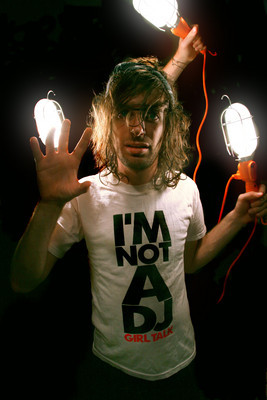
The song is "Like This," one of the many split-personality jams on mash-up artist/producer/DJ Girl Talk's "Feed the Animals," a disc that takes a mountain of records from artists as disparate as the Allman Brothers and Missy Elliott, Avril Lavigne and Rod Stewart, and melts them down into one indivisible hunk of vinyl.
It's a fluid sound that takes the shape of whatever vessel it's poured into, hence a Queen classic gets twisted into a hip-hop club banger, Jimi Hendrix kisses the sky while Eminem raps about throwing up on himself.
Along the way, any notions of what constituents populist pabulum, classic rock, pointy-headed indie experimentation and bawdy R&B become largely immaterial and as beside the point as the dialogue in a skin flick.
"All music has value," says Girl Talk mastermind Gregg Gillis. "Everything is cool on a certain level. I think that attitude is definitely reflected in my work.
"If you're releasing music to the public on a large scale, then that puts you in a specific category of artists, from Radiohead to Young Jeezy to Stevie Wonder to Depeche Mode," Gillis adds. "It's all people who came up with a specific project, loosely invented public characters for themselves and then worked to expose that to the public as extensively as possible. It's all entertainment. They're all in the same boat."
Of course, what Gillis does may not be entirely legal, as he doesn't get permission to sample the songs that he incorporates into his albums.
There have been plenty of court cases in the past where artists have taken issue with one another over unauthorized usage of their material, from the Rolling Stones suing The Verve over their hit "Bittersweet Symphony" to The Turtles taking umbrage with De La Soul for "Transmitting Live From Mars," both of which featured uncleared passages of music from the original songwriters.
But in a digital age, as new media outlets have arisen, copyright laws have become more mutable and subject to debate over what constitutes Fair Use. The way music is disseminated and consumed, constructed and deconstructed has changed so much, that the boundaries over content and commentary, creation and reinterpretation have become a bit more opaque.
"Recycling ideas and recontextualizing media is becoming so common now," Gillis says. "The way we understand these acts is quickly evolving. Just take a look at YouTube and check out how interactive people are with the media that they consume. We're surrounded by new works of music and art that are produced directly via pre-existing media."
Besides, Gillis says he's never gotten flak from any of the artists whose works he's reimagined.
"I've heard from a few people," he notes. "Big Boi from OutKast rolled out to a show of mine in Atlanta. We got to hang out for a minute. He didn't really give me feedback, but he basically acknowledged that he was down with what I'm doing. Some other people have reached out via e-mails, just to say what's up and that they have no issues with my stuff."
Perhaps this is attributable to the careful attention to detail and obvious affection for the source material that is palpable in Gillis' repertoire.
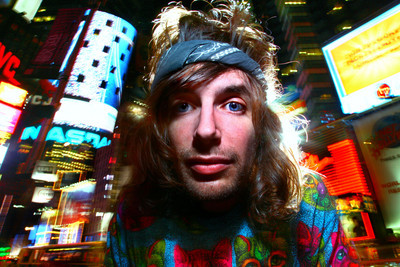
Having once studied biomedical engineering at Cleveland's Case Western University, the Pittsburgh resident has an extensive academic pedigree that unsurprisingly manifests itself in his music.
"I'm very meticulous in the way I work," he explains. "I focus on small elements and fine tune the details of those segments. That eventually goes on to impact a much larger picture. I think that's similar to a lot of engineering-style work."
This preoccupation with nuance has begun to pay dividends for Gillis, whose most recent disc, and fourth overall, has been met with plenty of well-deserved accolades. Everyone from Stephen King to Time magazine has hailed it as one the best records of the year.
And in a way, that's kind of fitting.
Seeing as how Gillis' catalog is so wide-ranging and aesthetically incongruous on the surface, it's little surprise that the same could be said of his boosters.
"It's awesome and hilarious," Gillis says of the warm critical response he's gotten of late. "It's been a wild ride over the past few years, and just when I think things can't get more surreal, I read that Stephen King is comparing my last album to James Joyce's 'Ulysses.'
"This project, from the early underground days until now, has always been about embracing pop music and culture," he continues. "Those mentions bring me closer to that actual world."
Contact reporter Jason Bracelin at jbracelin@ reviewjournal.com or 702-383-0476.
Preview Girl Talk 8 p.m. Monday House of Blues at Mandalay Bay, 3950 Las Vegas Blvd. South $22-$25 (632-7600)