Fest Bets

Fest-ward, ho!
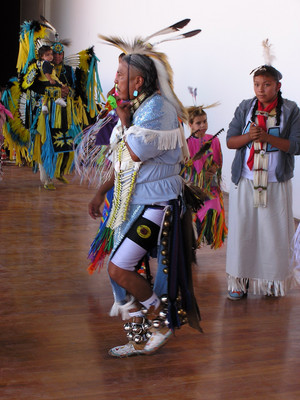
Celebrating two cultures over one weekend, Native American and Mexican heritages get their festival due, the former Saturday at Floyd Lamb Park, the latter all weekend at the Winchester Cultural Center Park.
"This festival is extremely important because these art traditions are really dying off as generations of people leave the reservations and intermarry with other races," says Tammi Tiger, chairwoman of the board of the Las Vegas Indian Center. "These are from traditional artisans coming off reservations from Arizona and New Mexico and Northern Nevada, demonstrating authentic Native American craftwork you may never see again."
The celebration ties into November as National Native American Heritage Month. Native food, songs, dancing, storytelling and cultural demonstrations -- featuring free, "make-it-and-take-it" crafts -- will fill the festival as well, stressing the importance of renewing Native American traditions for future generations.
"We're doing crafts projects for youths, which is a great opportunity for the event to forward along some of these art forms that might be dying to open the eyes of native and non-native children to the beauty of this culture," says Darren Copeland, event coordinator for the City of Las Vegas Department of Leisure Services. "All they need is the opportunity to see it and learn about it and light the fire that some may carry forward."
Completing the cross-cultural weekend is the annual "Life in Death: Day of the Dead Festival" ("Dia de los Muertos"), a Mexican tradition of honoring departed family and friends. Every year on Nov. 1, the "pure souls" of the children are celebrated, and on Nov. 2, all souls are prayed over and remembered.
"The tradition comes from pre-Hispanic times, before the Spanish came to conquer Mexico," says Irma Wynants, cultural specialist for the Clark County Department of Parks and Recreation. "The indigenous people of Mexico had a ritual for the dead, and they believed they would come one day, and that's why there is celebration, to welcome the departed ones, to make them feel at home."
The festival features elaborate "ofrendas," which are altars built in memory of the dead that are often brimming with favorite foods and beverages of the deceased, as well as pictures and other items associated with them. They will be on full display at Winchester Park, with three $500 prizes to be handed out for the most creative, traditional and best-themed ofrendas.
"You will always see a lot of food and a lot of flowers, which guide (the departed) because they have a very strong smell, and incense, and candles represent their souls and also light the way home," Wynants says, noting that some ofrendas use pieces of bread, rather than candles, as stand-ins for the souls.
"As you're doing this, you are passing on the knowledge to your family, the people around you. One of the requirements for people who put up ofrendas is that they explain what it means because there's a lot of symbolism on what is put together."
In some sections of Mexico, she adds, prayers and parties take place at cemeteries. "The way we do it here, sometimes it's not quite as personal," she says. "There's a strong tendency to build an ofrenda for (artist) Frida Kahlo, because she was so nationalistic and represents so much, or to famous personalities like Pancho Villa."
Performances also will highlight the festival, including traditional folkloric dance by local groups such as Ballet Mexicano de Martha Luevanos, Viejitos de Uren and Huares de Aranza, as well as mariachi bands. There also will be readings of "calaveras," which are satirical poems about those still living and often offer a good-natured poke at celebrities and political figures. The best will fetch $75, $100 and $150 prizes.
Food -- including free samples of Day of the Dead bread -- plus crafts demonstrations and workshops, children's activities and an exhibit of Mexican artists at the Winchester Cultural Center Gallery will round out the two-day Day of the Dead blowout.
But is this tradition merry or morbid?
"Some people feel it's morbid, but in reality it's not," Wynants says. "It's a connection to your past."
Viva La Festivale, folks.
Contact reporter Steve Bornfeld at sbornfeld@reviewjournal.com or 702-383-0256.
PREVIEWS what: Native American Heritage Festival when: 11 a.m.-4 p.m. Saturday where: Floyd Lamb Park, 9200 Tule Springs Road cost:Free (229-8100) what: "Life in Death: Day of the Dead Festival" when: 4-9 p.m. Saturday; 3-9 p.m. Sunday where: Winchester Cultural Center Park, 3130 S. Mcleod Drive cost: Free (455-7340)