Extinct animals with tusks featured at Las Vegas Natural History Museum

If you weren't around when mammoths roamed the valley 10,000 years ago -- and we're pretty sure you weren't -- you can get an idea of what they looked like and how they lived at a new exhibit offered by the Las Vegas Natural History Museum.
"Tusks! Ice Age Mammoths and Mastodons" features 80 fossil specimens, artifacts and replicas of proboscideans -- animals named for their long and flexible trunks -- and the animals that lived alongside them.
Mastodons and the Columbian mammoth, which once lived in Southern Nevada, are a major part of the display. The traveling exhibit is on loan from the Florida Museum of Natural History but is relevant to Las Vegas because of the valley's history, says museum director Marilyn Gillespie.
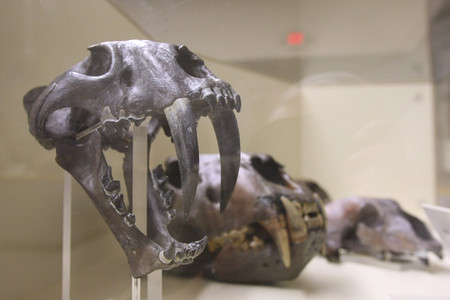
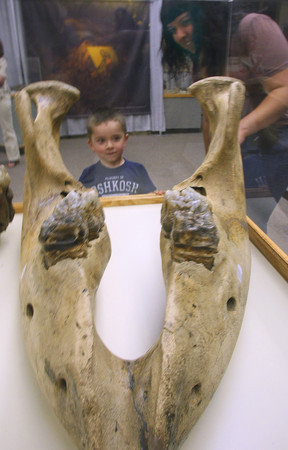
Among the items on display are mammoth and mastodon tusks, skulls, teeth, jaw bones and dung. The skull and tusks of the extinct, 10-million-year-old shovel-tusker, also a proboscidean with four tusks, also is there.
Several Columbian mammoth fossils have been discovered in the Las Vegas Valley near the Gilcrease Ranch; the museum displays a few of those items, which are on loan from a private collection. They are not part of the new exhibit, Gillespie says.
Mastodons and Columbian mammoths -- not to be confused with the woolly mammoth -- are both extinct species of elephants. They could be distinguished by the shape of their skulls and teeth.
There are different theories about what happened to the species, Gillespie says. Some believe that they were overhunted by American Indians, while others believe they died as a result of climate change.
"Tusks!" is on display through Aug. 30.
"Glow," an exhibit about bioluminescence, will remain on display through the fall.
The museum is working on an upcoming exhibit about ancient Egypt, slated to open in about six months. It will add an additional 4,000 square feet of exhibition space, Gillespie notes.
Changes have recently been made in the museum's existing galleries. Informational kiosks with touch screens have been added to the prehistoric life gallery, or the dinosaur room. In about a month, Gillespie expects to open the "Life Morphing" exhibit. It will show the evolution of life from ocean to land.
Museum hours are from 9 a.m. to 4 p.m. daily. Admission is $8 general admission, $7 for seniors, $4 for kids. Ages 2 and younger get in free. An annual family pass, which allows unlimited visits for a year, costs $45.
Contact reporter Sonya Padgett at spadgett@reviewjournal.com or 702-380-4564.