Call To Arms

What has Woodstock really wrought?
That question seems to be on the tip of a lot of tongues these days, as we look back on the mud-caked music festival that took place 40 years ago this week. To hear many attendees and participants tell it, it was a transformative three days of storied, in some cases career-defining performances by the likes of Jimi Hendrix, Santana, The Who, Country Joe McDonald and others that helped turn music into a movement, at least for a time.
Rolling Stone magazine lists Woodstock among the "50 Moments That Changed The History of Rock & Roll," and its legacy as a galvanizing, unifying event has long cast an enduring shadow over much of contemporary rock 'n' roll.
"We thought we were all individual, scattered hippies," singer-songwriter David Crosby told Rolling Stone of the watershed festival. "When we got there, we said, 'Wait a minute, this is a lot bigger than we thought.' "
But, four decades later, what has been the true impact of that generation of idealists that Woodstock catalyzed and has since come to represent?
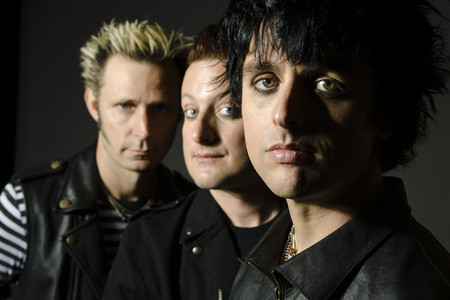
This is one of the questions pondered by Green Day on the band's latest disc, the thematically dense concept album "21st Century Breakdown," as they continue to evolve from once bratty Bay Area pop punks into more serious-minded, rock opera fetishists.
Taking in the sprawling, multilayered record, one gets the sense that these dudes would argue that many of the symbols of '60s-era idealism, all that flower power and such, ultimately never generated enough wattage to power a desk lamp.
The album, which is a sketch of modern-day society as a mental dystopia populated by overmedicated automatons who sleepwalk through life willfully under the thumb of the powers-that-be, is largely viewed through the eyes of a pair of young vigilante types named Gloria and Christian.
She's a "hero for the lost cause," a "runaway of the establishment," a defiant square peg desperate not to fit in with the status quo of a static age.
He's a firebomb incarnate, a member of "generation zero" who's "gonna burn it all down" and who pulses with a generalized rage.
Together, they embody a kind of opaque rebellion.
"We are the class of '13, born in the era of humility," Green Day frontman Billie Joe Armstrong sings on the title cut to "21st Century." "We are the desperate in the decline. Raised by the bastards of '69."
That last line is key, and one of the disc's most oft-cited lyrics.
In the rush to commemorate the lofty aspirations of the baby boomer generation as encapsulated by the music of their youth, which something like Woodstock is a kind of shorthand for, Green Day offers a contrasting view of it all on "21st Century." (Ironically, Green Day was one of the standout acts of the 25th anniversary of Woodstock back in '94, when they were snot-nosed punks on the rise).
It's as if they feel betrayed by that era and its participants, who once espoused plenty of high-minded ideals only to later come of age and help turn music into a commodity, urge their kids to "just say no" when they said "yes," allow Tipper Gore and the Parents Music Resource Center to villainize rock 'n' roll for a time and, according to Armstrong, reduce the notion of liberty into something that he dismisses as "the freedom to obey."
As such, much of "21st Century" can be read as a call to arms against the ennui that the band feels that we've been consumed by, and whose roots they trace back to a bygone era.
"Overthrow the effigy, the vast majority." Armstrong commands on rousing rocker "Know Your Enemy," "Burning down the foreman of control."
Of course, in issuing such impassioned marching orders, Armstrong is buying into the idea of music as a force for change, something directly born of the era that some of "Century" could be seen as a critique of.
"I need to know what's worth the fight," Armstrong sings on an album-closing "See The Light," even if, by record's conclusion, it's still not really clear if he's been able to find anything to fit the bill.
Because of this, "Century" certainly feels a little flawed -- just like the social and political landscape in its cross hairs.
But in the end, the whole point is to try and find some measure of hopefulness in the shortcomings of all three.
Contact reporter Jason Bracelin at jbracelin@ reviewjournal.com or 702-383-0476.
Preview
Green Day
8 p.m. today
Mandalay Bay Events Center, 3950 Las Vegas Blvd. South
$49.50-$54.50 (632-7580)