Behind the seams: Wardrobe supervisors keep ‘Crazy Girls’ looking dazzling

You might think being the wardrobe supervisor for “Crazy Girls” would be an easy gig, especially if you’ve seen the bronze sculpture of the dancers that is a popular tourist attraction. A keen eye is needed to identify any “costumes.”
But, in fact, there are two women who handle the job for the long-running show at the Riviera. Jean Corporon and Holly McKinnis are two halves of one job. Corporon works three nights a week; McKinnis works four nights. They also handle Jan Rouven’s Riviera show, “Illusions.” Both women are well-versed with a glue gun, needle and thread and sewing machine.
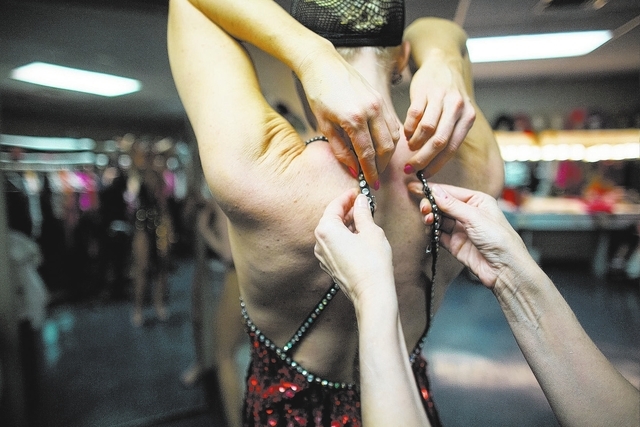
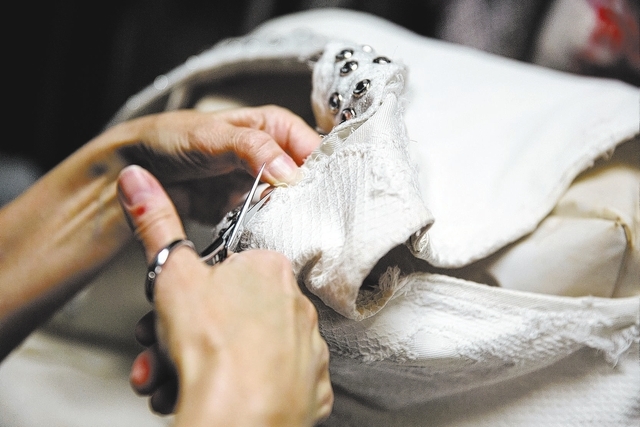
“Actually,” Corporon says, “though we work two shows now, we have worked as many as three shows a night. Our longest assignment, however, has been ‘Crazy Girls.’ With ‘Crazy Girls,’ we’re dealing with trained dancers (and) athletes who move constantly. Rhinestones come off; seams are stressed; shoes need sprucing up; and spray tan on clothing needs to be washed away.”
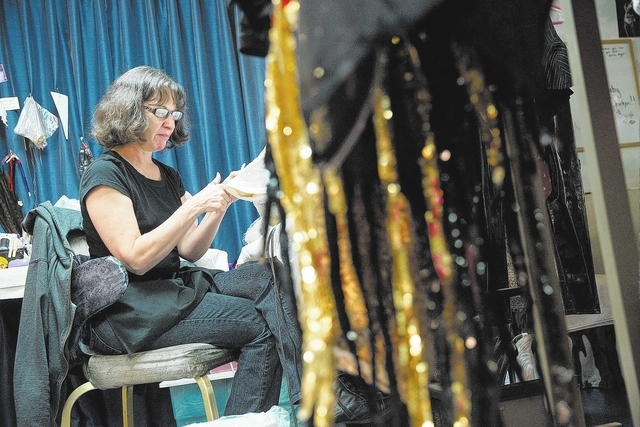
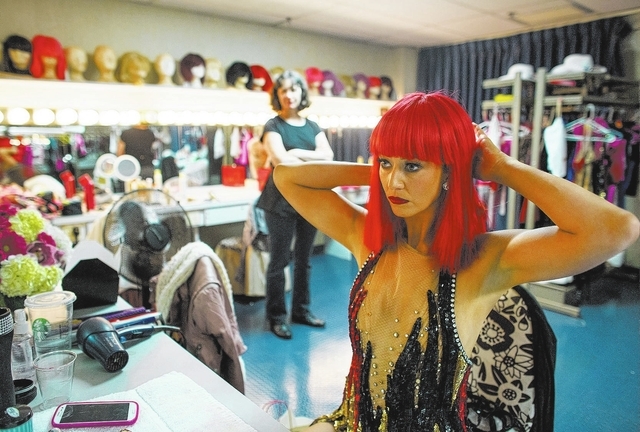
The major backstage equipment for Corporon and McKinnis includes a sewing machine, steamer, ironing board, washer and dryer, and “E6000, the glue that can fix anything.” Some costumes are washed by hand, but many are part of a once-a-week washing with all the other “Crazy Girl” costumes. McKinnis uses an apron to carry essentials such as a needle and thread, scissors, safety pins, pad and pencil and a flashlight.
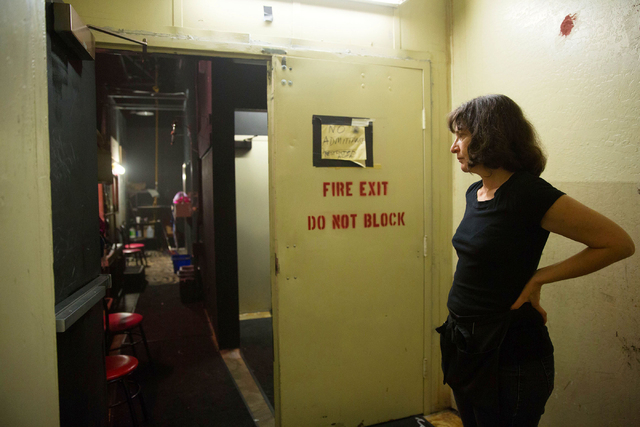
Why the flashlight? Because in addition to repairing and sometimes creating costumes for “Crazy Girls,” either Corporon or McKinnis is backstage for every performance. As with most backstage workers, Corporon and McKinnis dress in black, giving them easy wardrobe decisions when coming to work.
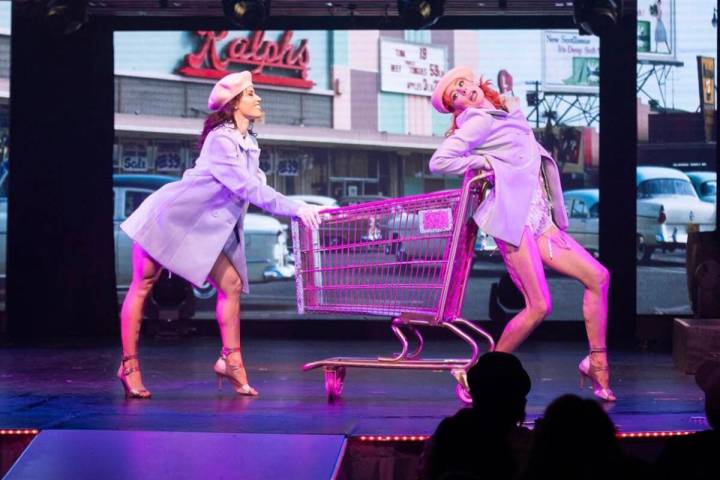
Now in its 27th season, the show typically has a lineup of seven dancers, with more available on a swing basis. Each dancer has eight to 10 costumes and brings them backstage for each performance.
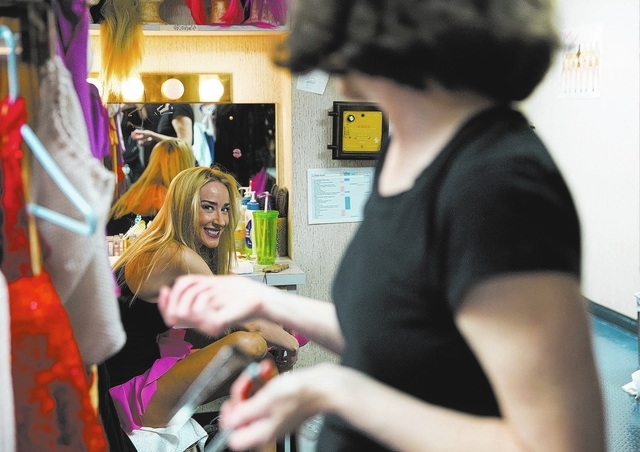
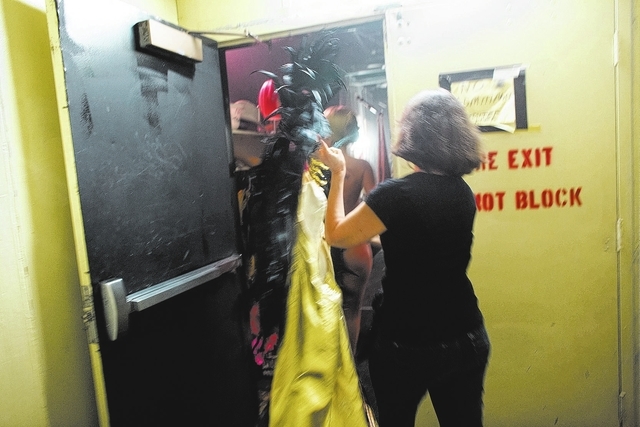
The action is quick. As one costume comes off, Corporon or McKinnis retrieves that costume for transport back to the main dressing area and the hanging racks.
“In some ways, I think I was hired because I could run around,” McKinnis says, laughing. “We have a lot of work to do during each show.” Corporon adds that backstage is not large, so the choreography there can be as intricate as that onstage. “The dancers like a logical routine; they can’t be tripping over one another.”
How small are the costumes? “Very small,” McKinnis says. “I’d say our girls range from about size zero to size four.” (A weekly weigh-in reminds the dancers of their commitment to keeping in shape.) And if any of the costumes are no longer useful and are filled with rhinestones, Corporon and McKinnis have been known to harvest the rhinestones for another day.
“In this show, the largest pieces are the finale foxtail coats with 50 foxtails each,” Corporon says.
Though G-strings are a staple of “Crazy Girls” costumes, audience members might not realize that the performers also wear “under Gs,” which they maintain themselves. Wigs are typically maintained by the dancers, as are their spray tans, but the wardrobe supervisors are responsible for costumes, including minor shoe repair.
Jenn Stowe, the company manager and mostly retired “Crazy Girls” dancer who married show producer Norbert Aleman, says that without the wardrobe supervisors, the show could not go on. Including the solo numbers, the show’s dancers have 17 quick-change numbers. Four of the numbers are new, having been added by Stowe in the past year.
Though the majority of “Crazy Girls” costumes are purchased items, Corporon has made several of the costumes herself, including all the solo costumes. Corporon says a well-made costume can be expected to last a long time, but she and McKinnis are always looking for a tear, a missing hang strap or worn-out Velcro.
McKinnis adds that much of their work involves hand sewing.
“A hook and eye sewed by hand will last much longer than anything sewed by machine,” she says. “Think of your machine-sewn buttons on commercial clothing; those buttons eventually fall off. Hand sew the buttons, and they’ll last as long as the garment.”
Corporon says, “We leave notes for each other and send emails about work that needs to be done. Fortunately, we are on the same wavelength when it comes to work.”
McKinnis adds, with a laugh, “I’d say together we make one damn good brain. We both understand immediately what the other needs or wants done.”
Corporon has been with the Riviera since 1991, first working with the “Splash” production, then two years later becoming part of the Crazy Girls Theatre’s behind-the-scenes team. McKinnis joined the Riviera in 2008.
Corporon learned to sew in middle school. When her own career as a dancer ended, she joined her husband as an “Ice Capades” employee. He was an electrician; she worked in wardrobe. Richard Corporon remains in the business as master electrician for “Jubilee!” at Bally’s.
McKinnis, a theater arts graduate from UNLV, is a trained seamstress who worked in wardrobe with the Tropicana’s “Folies Bergere” before coming to the Riviera.
Corporon and McKinnis are members of the International Alliance of Theatrical Stage Employees.
Why do Corporon and McKinnis like their jobs? The flexibility and the creativity are great, they agree. When McKinnis’ husband, Jay MacLarty, passed away in 2010, Corporon was able to take on many extra shifts. Vacations are also easy to arrange because two people share the job.
Corporon and McKinnis are not as young as the girls they dress, but they aren’t mother figures, either, though they do occasionally use their talents to help out a dancer whose personal jeans have popped a zipper.
“I’ve been working with the dancers for a long time,” Corporon says, “and I’ve found that by and large the girls are just nice people — hardworking, to be sure — but great to work with.”
McKinnis adds, “Many of the girls have second jobs. They come in to work at 8:30 (p.m.) and leave at 11, so during the day they can do modeling work, waitressing, go to school, bartend. Some of the girls have gone on to other shows. Some have stayed with ‘Crazy Girls’ for many years.”
Stowe says, “We have a kind of little family here.”