Dam Short Film Festival all about raising the status of genre as art

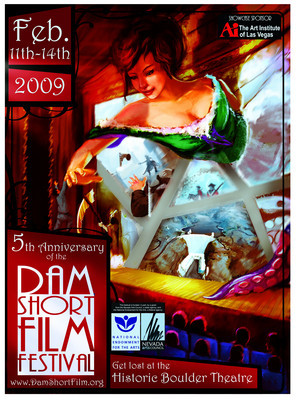
Boulder City's Dam Short Film Festival is long on celebrations this year.
The festival, which opened Wednesday at the historic Boulder Theatre and continues through Saturday, celebrates its fifth year, showcasing 124 separate titles, divided into 22 programs.
The lineup includes two current Oscar nominees: the French live-action short "Manon on the Asphalt" (screening Friday afternoon during the international drama program) and the British "This Way Up," which is part of Saturday's "Fantastic Voyages" animation program.
In the past, "we've had some that were short-listed" for Academy Award nominations, notes festival director Lee Lanier, calling the presence of this year's Oscar nominees a coincidence.
The Dam Short Film Festival also boasts special programs geared toward the weekend's red-letter days: a "Scream If You Can" horror program for Friday the 13th and Saturday's "Love and Romance" section in honor of Valentine's Day. (The first 20 ticket-holding couples to attend Saturday's romantic special program will receive boxed chocolates to spread the love.)
Spreading the love of short films remains the festival's overall goal, according to Lanier, who cites "a greater number of higher-caliber filmmakers" participating in this year's gathering.
Organizers chose the lineup from a record 400-plus entries, he says.
"I think each year the quality gets better," Lanier adds. "Our reputation has spread."
So has the status of short films in general, festival organizers say.
In addition to more festivals devoted to shorts, such Internet sites as YouTube mean more opportunity for filmmakers, according to Lanier.
Besides, "it's much easier to watch a short film on your computer," points out Jay Rosenblatt, the award-winning filmmaker who's the focus of this evening's special showcase, "A Documentary Life: The Works of Jay Rosenblatt."
The San Francisco-based Rosenblatt, who has been making shorts since 1980, has won more than 100 awards and has received Guggenheim and Rockefeller fellowships for his works, many of them characterized by collagelike mixtures of old and new footage.
Some of them have turned up on PBS' "P.O.V." series; others have played various international festivals.
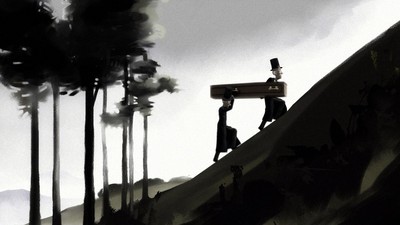
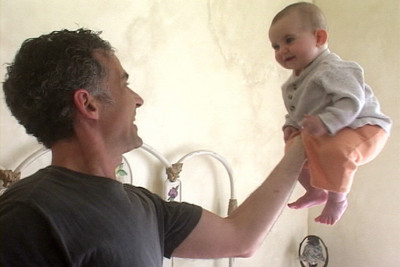
Tonight's program ranges from the political ("Human Remains" focuses on notorious dictators, "I Just Wanted to Be Somebody" explores Anita Bryant's life and influence) to the personal. (In "Phantom Limb," Rosenblatt explores grief and loss linked to his younger brother's death, at age 7, while in "I Used to Be a Filmmaker," he creates a diarylike account of his infant daughter's development.)
Although Rosenblatt admits to having "nothing against feature films, my ideas are for short films," he explains during a telephone interview from his Northern California base. "The film and the idea kind of dictate the length."
In some circles, "there is a sense of second-class status" for filmmakers who specialize in short subjects, Rosenblatt acknowledges. "There's almost an expectation" that short films serve "as a prelude to making a longer piece."
But Rosenblatt likens short films to short stories, a literary form that's just as respectable as its long-form counterpart, the novel.
The movies he makes often have a personal connection, which Rosenblatt finds to be "a point of departure" for him -- and "a good way of pulling in the viewer."
And while they're classified as documentaries, "they're more of the essay kind of documentary," he says. "I try not to label my films."
That eclectic approach applies to many of the shorts featured at this year's festival, as reflected in programs devoted to everything from family-friendly fare to edgy, underground titles.
Regardless of the subject matter, Rosenblatt maintains, "people who come to short film festivals have a real place in their hearts just for film, as an art form."
Contact movie critic Carol Cling at ccling@reviewjournal.com or 702-383-0272.