Songs of the Heart

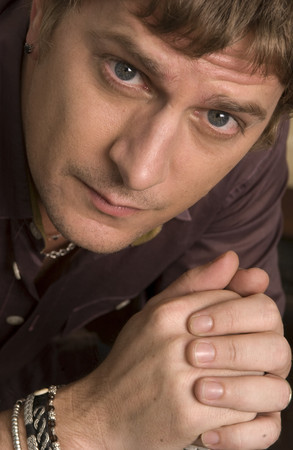
Rob Thomas is a pretty cool guy who is well aware of the fact that his songs routinely paint him as the opposite of as much.
He's a self-effacing dude, funny and forthcoming, someone who freely admits that his tunes are sometimes served with a side order of schmaltz, crowded with star-crossed lovers with pinatas for hearts.
It's made him a rock star, though he seldom really speaks like one.
Instead, he fancies himself something of an everyman, the assembly line worker with a CEO's bank account.
"As soon as I start thinking of myself as a rock star, then I start writing songs about being a rock star, and then it all kind of falls apart," Thomas says. "I think it's the fact that I'm just like everybody else that makes my songs work. I make music just for people that listen to music. It's not really for any group of disenfranchised youth or any of that kind of stuff."
As such, Thomas probably will never get much credit for his artistic bona fides. His songs are pointedly populist, taking the personal and making it something that resonates on a broader level. He doesn't really pen confessional songs, per se, even though a lot of his material is rooted in real life experience. Instead, he cloaks it all in a kind of generalized, occasionally syrupy sentiment that makes it easy for his listeners to insert themselves into the various relationship scenarios of which he routinely sings.
Take Thomas' recent hit "Her Diamonds," from his second solo album, "Cradlesong." The song was inspired by Thomas' wife's battle with an autoimmune disease, but it doesn't feel like a recounting of the couple's struggles. "I don't know what I'm supposed to do, but if she feels bad, then I do, too," Thomas sings breathlessly on a tune that seems to be more about overcoming tough odds in general than any kind of first-person narrative.
"If I write about a moment, like if my wife and I have a horrible fight and we think we're gonna break up, I write about how that makes somebody feel, and that becomes universal," Thomas explains. "And so I can sing a song that's about me and that's about something really personal that I went through, but the person hearing it really just thinks it's about them and their life. You can really be super personal, but as a writer, you can take yourself out of it and just write about the residual emotion that comes from something that happens and not the actual thing itself."
In short, Thomas sees himself in service of his songs.
"The main rule for me in writing songs is that you have to care more about what it says to somebody than what it says about yourself," he says.
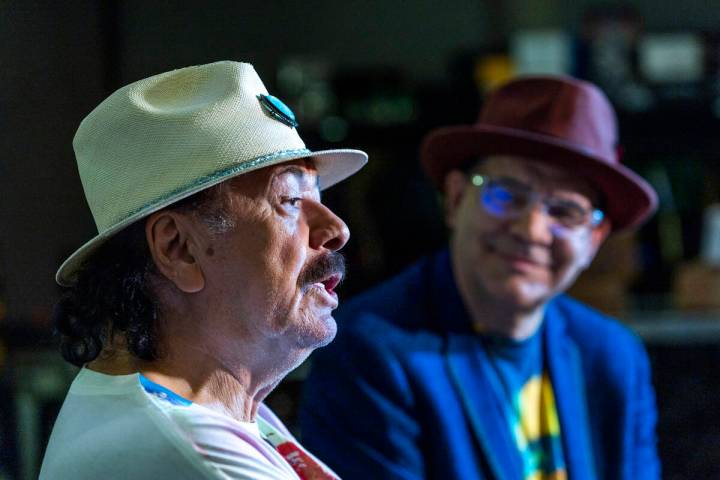
And it's worked for him. As frontman for Matchbox Twenty, Thomas has notched dozens of hits, collaborating with everyone from Santana to Willie Nelson in the process. He's a fleet-footed jack-of-all-trades as a songwriter, having penned country, pop, rock and reggae tunes. He seems out to be everything to everyone.
Really, the only thing he doesn't try to be is hip.
"When you're that kind of artist, you're never going to be the coolest artist of the moment," Thomas notes of his radio-friendly pedigree. "But it gives you this freedom to be able to write whatever kind of songs you want and sound believable."
As such, Thomas is an unlikely star, someone not completely at home in the spotlight.
This is another way in which the guy seems inherently relatable.
Clearly, the dude still is attempting to get comfortable in his own celebrity skin.
"I don't trust anybody that's not uncomfortable with that a little. You're probably a little bit of an a-hole if you don't think this is odd or weird," Thomas says of the trappings of fame. "Most songwriters I know are fueled by self-doubt, and no matter what you write, you always hear the distance between that and something else that you really love and how you're not that. I'll listen to a Paul Simon record and just go, 'Oh my God, that's so unbelievably good,' and then that fuels me to want to go write something that makes you feel as good as that.
"You're always chasing something," he adds. "You're not writing a song because you feel like you know how to write a song. You're writing a song because you feel like you have no idea and you're trying to find it."
Contact reporter Jason Bracelin at jbracelin@ reviewjournal.com or 702-383-0476.
Preview
Rob Thomas
8 p.m. Saturday
The Pearl at the Palms, 4321 W. Flamingo Road
$54-$89 (942-7777)