Making a Scene

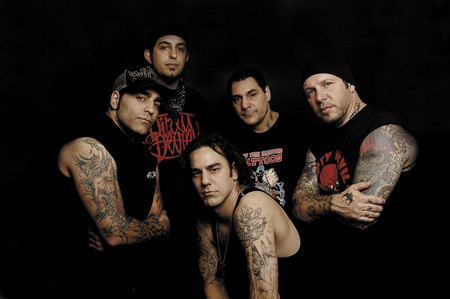
Beginning in the mid-'80s, they were as synonymous with New York City grit as subway graffiti, cinder-block-sized sewer rats and Times Square smut shops. Twenty-five years later, the Big Apple may have cleaned itself up a bit, may have yanked a few worms from its core, but the city's hardcore pioneers Agnostic Front remain as raw and confrontational as ever.
Take band frontman Roger Miret, a thick-necked, no-nonsense kind of guy whose body is a brightly colored canvas of ink. He's done hard time with harder dudes, helped give birth to a clenched-fist of a genre and never given much thought to whether or not he'd actually survive long enough to tell about it.
"I used to have this mentality of live fast, die young," Miret recalls. "I used to throw a garbage can through a McDonald's window during the day. I won't do that nowadays. I'll do that at night," he chuckles.
"I kind of want to live to watch my children grow, so things are a little different," he adds, "but at the same time, it's my rebellion. It's the way I grew up."
Along the way, a whole scene grew up with him.
With its fantastically pissed off full-length debut, 1984's "Victim in Pain," which shotgunned 11 songs at unprepared listeners in a little more than 15 minutes, Agnostic Front defined New York hardcore as a seething, socially aware indictment of "Blind Justice" and "Fascist Attitudes."
The music, ultra fast, in-your-face and as unrelenting as a carpet bombing, was inseparable from the city that served as its backdrop.
Rudy Giuliani may have done his best to give NYC a face-lift, but Agnostic Front continues to be a steady reminder of all its scars, hidden or otherwise.
"It's like a 'Taxi Driver' version of New York, not the candy-coated, Mickey Mouse, Disney World that New York is (nowadays)," Miret says of the band's thematic grist. "It's like the mafia. It's not there any more, but guess what? It is."
Still, Agnostic Front's legacy encompasses far more than just sketching the blueprint for the East Coast hardcore aesthetic.
Pairing bellowed-out gang vocal choruses with a thrashy crunch, Agnostic Front was one of the first acts to bridge the gap between metal and hardcore, once mortal enemies.
These days, the sound is everywhere, so much so, that it's almost as if metal and hardcore have fused DNA.
But back in the day, wearing a Metallica shirt to a CBGB's hardcore matinee gig could result in missing teeth.
Miret and company helped change that.
"I always felt like there were more things in common than not in common," he says of the bad blood that once boiled between fans of the two scenes. "I looked at the metal kids, the punk kids and the hardcore kids back then, and we all dressed the same. We all wore tight black pants, black shirts. We all spoke against society in some form. We were all walking out of step with society. The only difference was that one guy had long hair, and the other guy had a mohawk. I didn't see any point in fighting against each other. This should all come together."
Eventually, it did.
And it's remained that way ever since.
No band looms larger over the contemporary hardcore landscape than Agnostic Front, even though it's had a disjointed history, breaking up for a time in the early '90s after the group lost considerable steam.
But with the scene again on an upswing, the Front is back.
"It's been a giant roller coaster ride, and it's been that way a long time," Miret says of his band's topsy-turvy career arc. "Either people get on it, or they don't get on it. In the New York hardcore scene, for instance, 3,500 people used to come out to a Ritz show. That doesn't happen any more, but I've seen it get as low as shows where there were 20 people there. There's momentum right now, which is really cool, but I'm always prepared for the lack of momentum and sticking with it. This has always been a movement to me."
Contact reporter Jason Bracelin at jbracelin@ reviewjournal.com or 702-383-0476.
Preview
Agnostic Front
8 p.m. Tuesday
The Cheyenne Saloon, 3103 N. Rancho Drive
$10 (645-4139)

 Add as a preferred source on Google