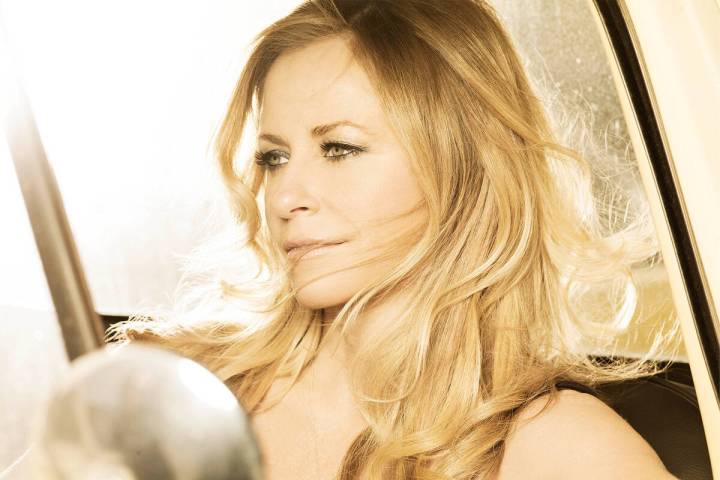
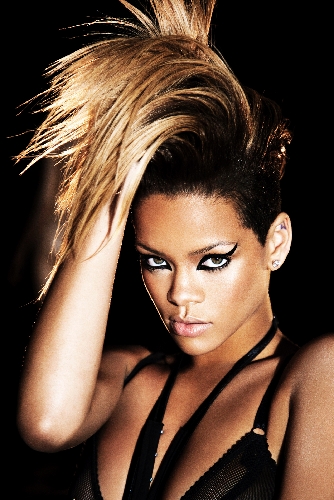

Rihanna and Ke$ha

They have much more in common than the arena stages that they're currently sharing.
Still, on the surface, pop tarts Rihanna and Ke$ha appear to be opposites.
The former is a Barbados-born chanteuse initially defined by a sweet, girl-next-door come-hitherness before eventually wielding her libido like a battle flag.
The latter is a knowing, self-aware caricature of the party-till-you-puke girl gone wild from Nashville who sings about brushing her teeth with Jack Daniels.
But the two share one defining characteristic emblematic of the way gender roles have shifted in mainstream pop music: They sing songs about treating boys the way boys have long sung about treating girls.
In their respective catalogs, men are the sex objects that their female counterparts have long taken great umbrage at being portrayed as.
The dudes are there to be used and abused, played with and punished, for their mistresses pleasure, and little else.
"I don't really care where you live at, just turn around, boy, and let me hit that," Ke$ha commands on the electro striptease "Blah Blah Blah." "Don't be a little bitch with your chit chat."
For her part, Rihanna has evolved into a woman in charge, a stick of carnal dynamite after debuting as a demure, doe-eyed, reggae-lite trifle.
"Tonight, I'mma give it to you harder. Tonight, I'mma turn your body out," she purrs on hit single "Rude Boy," a song on which she pivots between relinquishing and relishing control. "Relax. Let me do it how I wanna. If you got it, I need it. And I'mma put it down."
Together, Ke$ha and Rihanna seem like models of female sexual liberation.
But here's the real question: Is this a sign of feminine empowerment, of women attaining a more dominant role in the bedroom, putting their needs first, or is it simply women aping and ultimately perpetuating the same kind of behavior that has long fostered an imbalance between the sexes?
Should the goal be to beat men at their own game or change the game instead?
It's an increasingly heated debate, one that takes place weekly on the pop charts.
For her part, Ke$ha delights in outdoing the dudes in terms of flaunting a love 'em and leave 'em dismissiveness, treating her beaus like articles of clothing.
"Boots and boys, they bring me so much joy. I gotta say it, I wear 'em both," she chirps on "Boots and Boys."
Rihanna, too, is all about being a woman in command, of having her way with her various boy toys to the fear -- and delight, no doubt -- of some, free from any antiquated shackles of chastity.
"I'm such a lady, you don't have to be so afraid," she reassures on "Wait Your Turn." " 'Cause I got room up on my team. You can play, but hold up."
Still, while it's inarguably a positive for women to be increasingly in touch with their desires and passions and unafraid of explicitly stating and going after as much, it's more than a little ironic when feminine assertiveness is defined in terms of the degree to which women mimic the traditionally masculine behavior of sex as conquest.
You could argue that the best thing for both sexes would be to level the playing field for all involved, to stop defining sexual relations in terms of dominance and submissiveness.
Until then, the actors -- and their genders -- may change, but their roles remain the same.
Basically, the battle of the sexes has become trench warfare.
And these two ladies are (wo)manning the front lines.
Contact reporter Jason Bracelin at jbracelin@ reviewjournal.com or 702-383-0476.
Preview
Rihanna, with Ke$ha
7:30 p.m. Saturday Mandalay Bay Events Center, 3950 Las Vegas Blvd. South
$50-$130 (632-7580)

 Add as a preferred source on Google