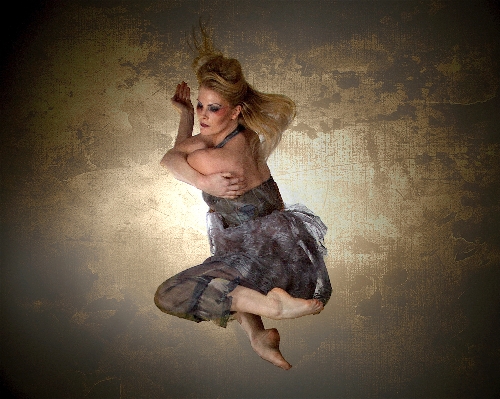
Dance Enhanced

Picture a cactus in a leotard.
That's an image likely influenced more by ingesting illegal substances than the reality of "Dance in the Desert."
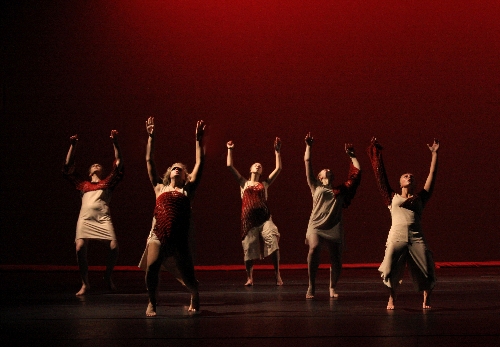
Yet it's an intriguing idea as a logo for the 12th annual balletic festival, which pirouettes into the College of Southern Nevada's Nicholas J. Horn Theatre for three performances this weekend.
"Each year we are part of 'Dance in the Desert,' because we need to pull together as a community of dancers," says Bernard Gaddis, founder/artistic director of the Las Vegas Contemporary Dance Theatre, making its fourth appearance at the event.
"Being in Vegas and the fine arts not being one of the main focuses, we as performing arts organizations can't afford to be separatists. It's the only way arts are going to survive in Nevada."
"Dance" serves up its usual buffet of 15 companies from points around the country, including: New York's Kent Lindemer and Lynn Needle; Michigan's RusticGroove Dance; Scorpius Dance Theatre, Desert Dance Theatre and Step's Junk Funk, all out of Arizona; Maida Withers Dance Construction Company from Washington, D.C.; and Moving Arts Dance of San Francisco.
Among those joining the Gaddis group representing Las Vegas are the Nevada Repertory Dance Theater, Saving Grace, the Las Vegas Ballet Company, the CSN Dance Ensemble and Red Desert Dance.
Thematically, "Dance" goes the celebratory route this year, honoring the 100th anniversary of the birth of innovative choreographer Alwin Nikolais, who died in 1993 after a seminal career. Honors conferred on Nikolais included the National Medal of Arts, presented by President Ronald Reagan.
"Before he came along, in the 1950s, a lot of the dances, things that Martha Graham had done, were based in psychodrama and others were boy-meets-girl things in classical ballet," says festival director Kelly Roth, who worked with Nikolais in the late '70s and early '80s.
"Nik's idea was that motion is the thing that defines dance as an art form and didn't have any literal narrative attached to it. It didn't have to tell you about the psychological state of the choreographer. That was very liberating for me, because it allowed me to deal with the body as an instrument, rather than a personal bag of emotions."
Heralded for his concept of abstract dance, Nikolais was instrumental in what dance historians have described as rejecting man as the center of the universe but instead placing him as one element of the environment.
Downplaying melodrama and traditional story-driven ballets in favor of abstraction didn't subtract theatricality, which Nikolais emphasized to great effect.
"Early in my career, I had studied at the Nikolais lab in New York City, while I was still in college," Lindemer says. "It was a very formative experience for me. He's known for total theater, his eye was attuned to the whole aspect of performance and image-making."
As a young artist, Nikolais developed skills in scenic design, acting and puppetry, eventually becoming a pioneer in multimedia approaches to dance, including the use of costumes, sets, props and revolutionary lighting techniques.
"It was the idea of multimedia before we had MTV," Roth says. "He would use slides that he would project on the dancer and the sets and extensions of the dancers' limbs and strange costuming. You had a difficult time finding the dancer in this big kaleidoscope of color and sound onstage."
Those influences, Roth adds, impacted not only ballet, but can be glimpsed in performances on the Las Vegas Strip.
"The remnants of this are in things like Cirque du Soleil and Blue Man Group," Roth says, noting that his innovations, dovetailing with seismic cultural shifts in 1960s America, produced false -- but amusing -- assumptions.
"People were doing psychedelic drugs then and they assumed that's how he got his ideas. His ideas were based on principles he had developed for years, but people went to his concerts and thought that's what an acid trip was like. But he never dropped acid."
Not even a little? Not even enough to explain the cactus in the leotard?
Contact reporter Steve Bornfeld at sbornfeld@ reviewjournal.com or 702-383-0256.
Preview
12th annual "Dance in the Desert"
7:30 p.m. today,
2 and 7:30 p.m. Saturday
Nicholas J. Horn Theatre, College of Southern Nevada, 3200 E. Cheyenne Ave.
$8-$10 (651-5483)

 Add as a preferred source on Google