5 places to find ancient petroglyphs near Las Vegas


Life is a bit different than it was 2,000 years ago. Even more so, storytelling and communication are different.
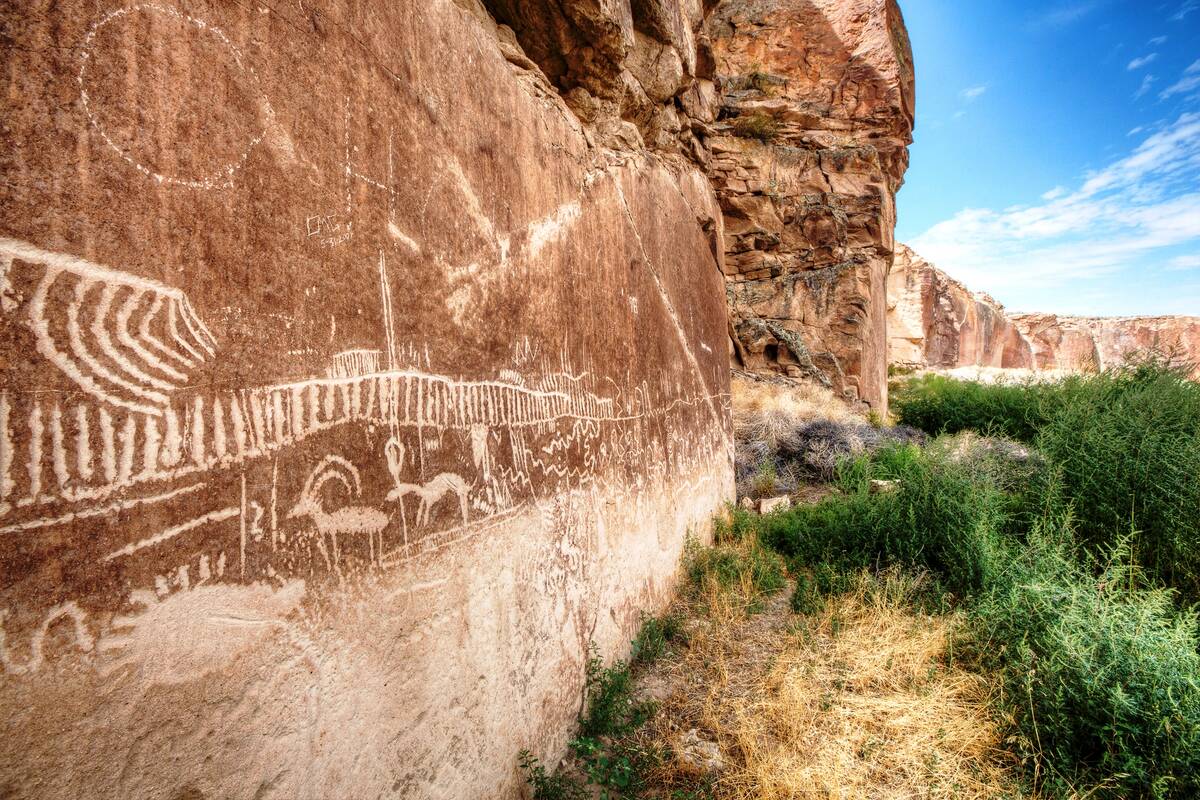
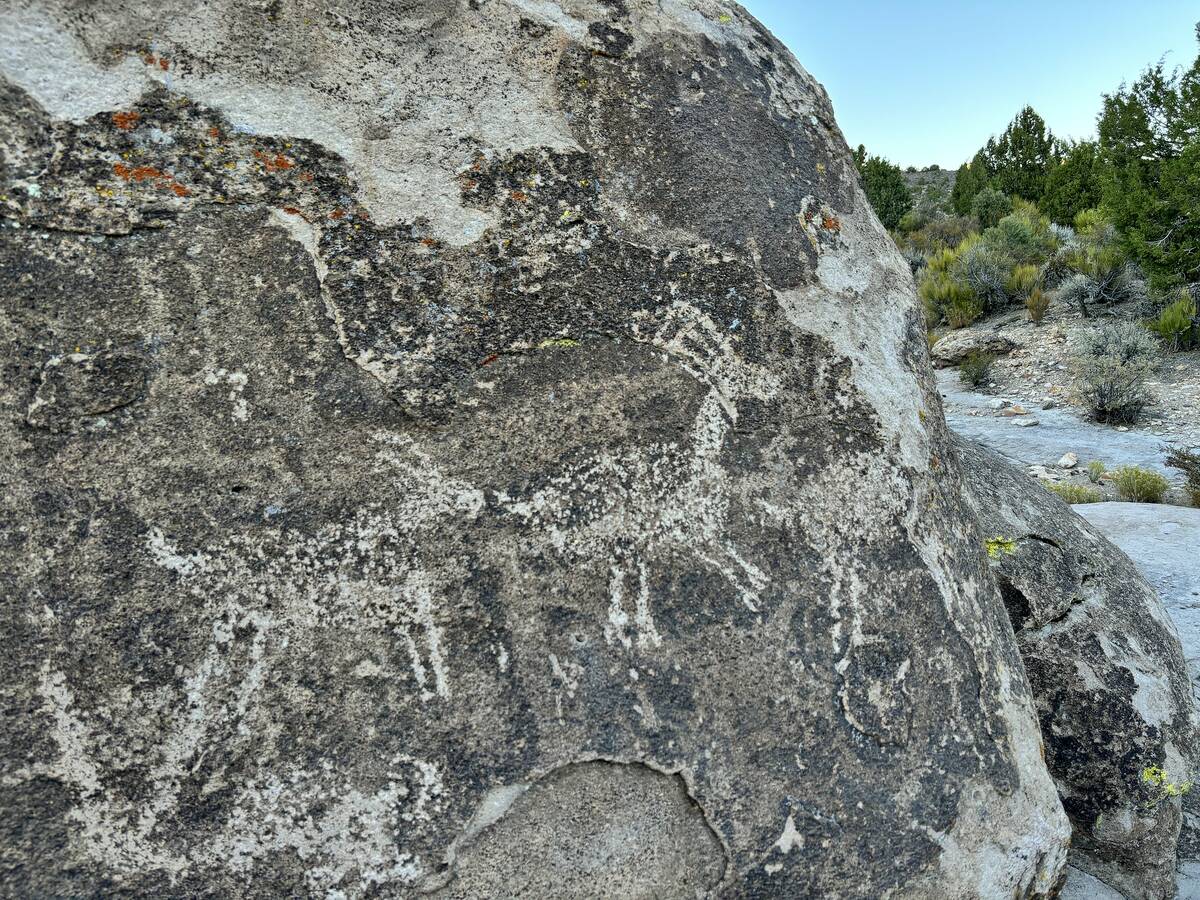
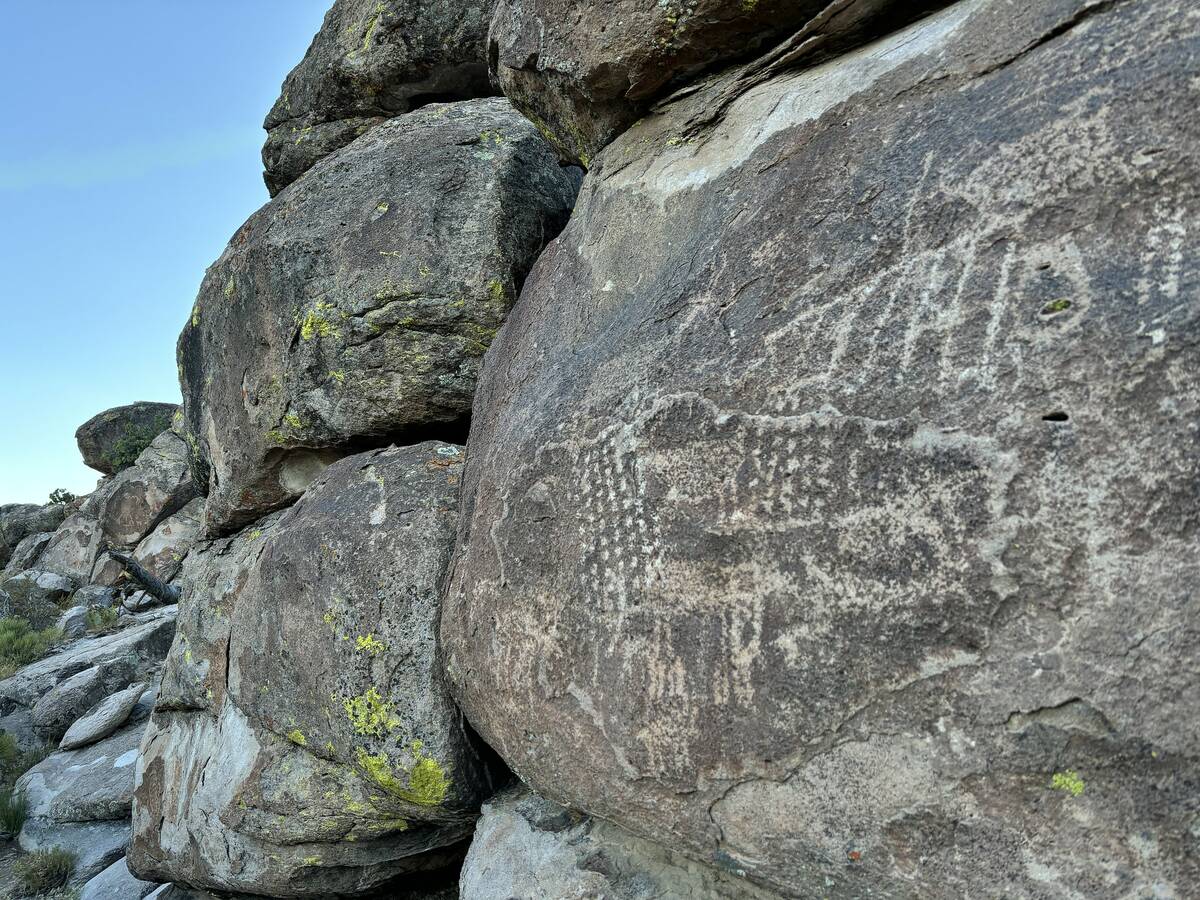
What’s known today as rock art, or petroglyphs, is evidence of that, and that evidence is all over Southern Nevada. While time has disrupted modern means of interpretation for much of it, rock art is understood to have played several roles depending on location, people and scenario, representing art, sacred knowledge, location markings and much more.
In fact, Nevada is home to the oldest known rock art in North America. In 2013, geochemist Larry Benson and his U.S. Geological Survey team published a study dating petroglyphs in Winnemucca Lake to at least 10,500 years old. The dried area — about 35 miles northeast of Reno within the Pyramid Lake Indian Reservation — was studied using radiocarbon dating of crustal layers.
That’s one of the oldest remaining pieces of evidence of human activity on the continent. Pretty amazing.
what is a petroglyph?
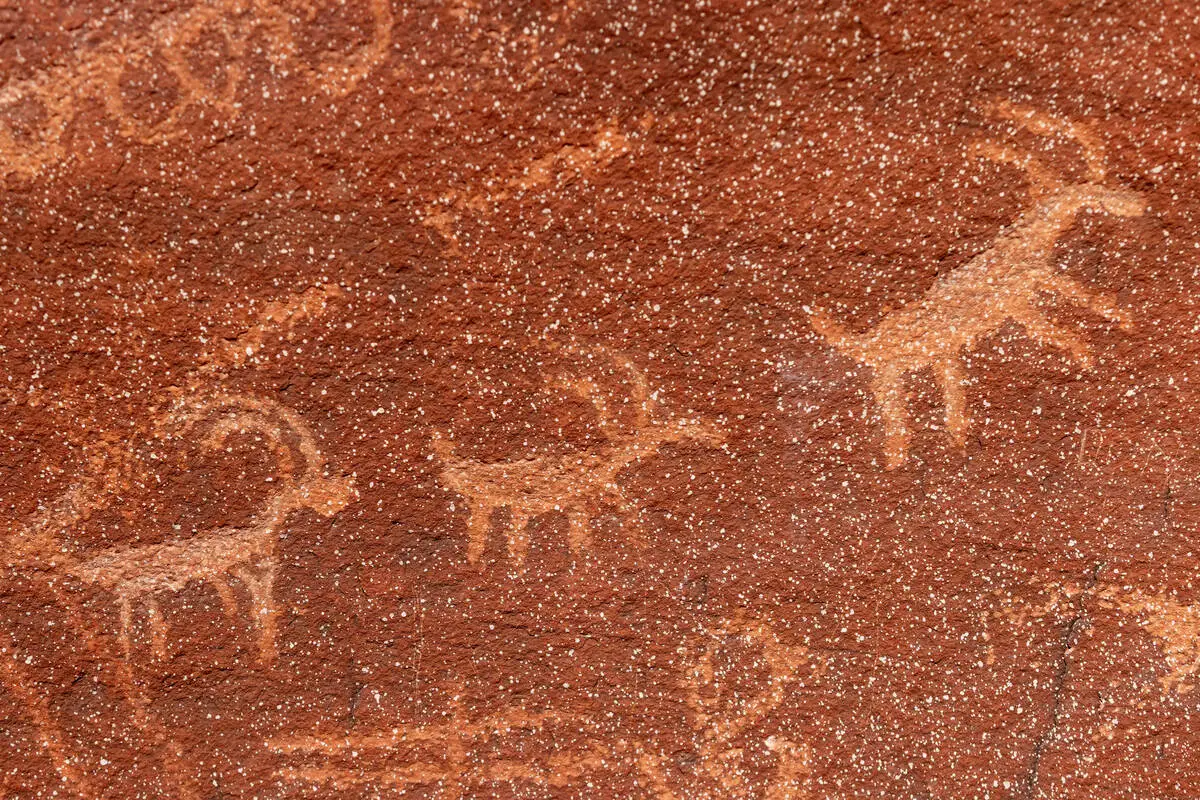
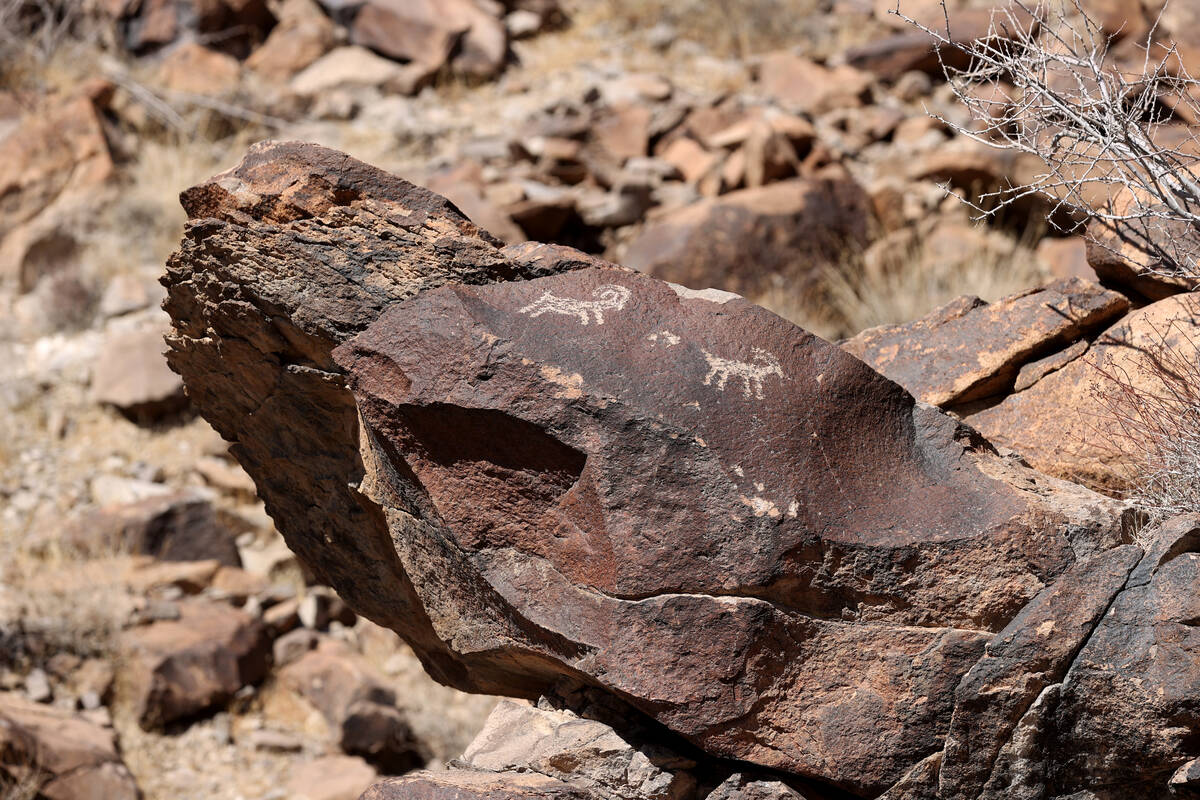
The word “petroglyph” spells it out if you recall Greek roots: “petro,” meaning stone, and “glyph,” meaning carving. The art is made by pecking (or engraving or abrading) directly into the rock surface with a stone chisel or other tool. On sandstone in the West, the carving removed the rock’s desert varnish, or patina, exposing lighter rock.
Petroglyphs specifically represent complex societies and aren’t a stand-in for ancient graffiti or lettering. Placement, size, arrangement, location and context all matter for each individual image.
where to find them
Grapevine Canyon
Avi Kwa Ame National Monument
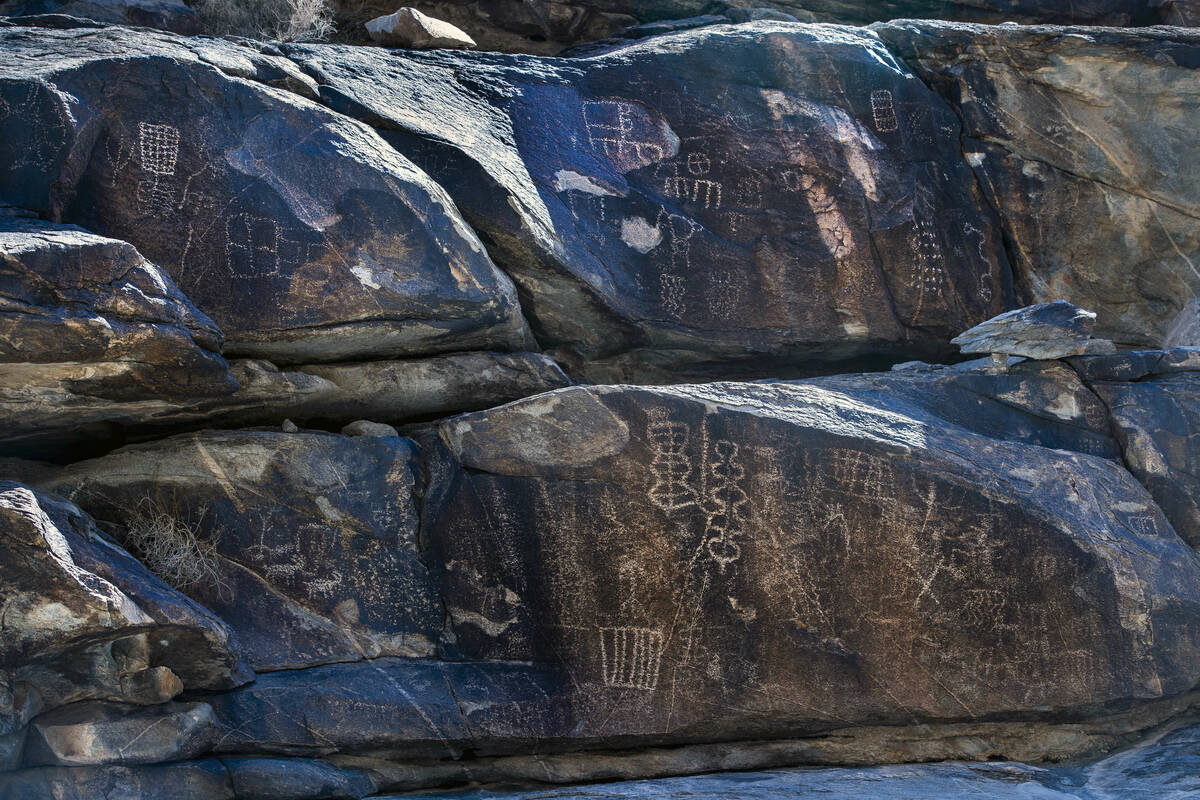
The trail through Grapevine Canyon is moderate, at 3.4 miles total and a gain of about 377 feet. Inside, you’ll find one of the most significant petroglyph sites in the Southwest.
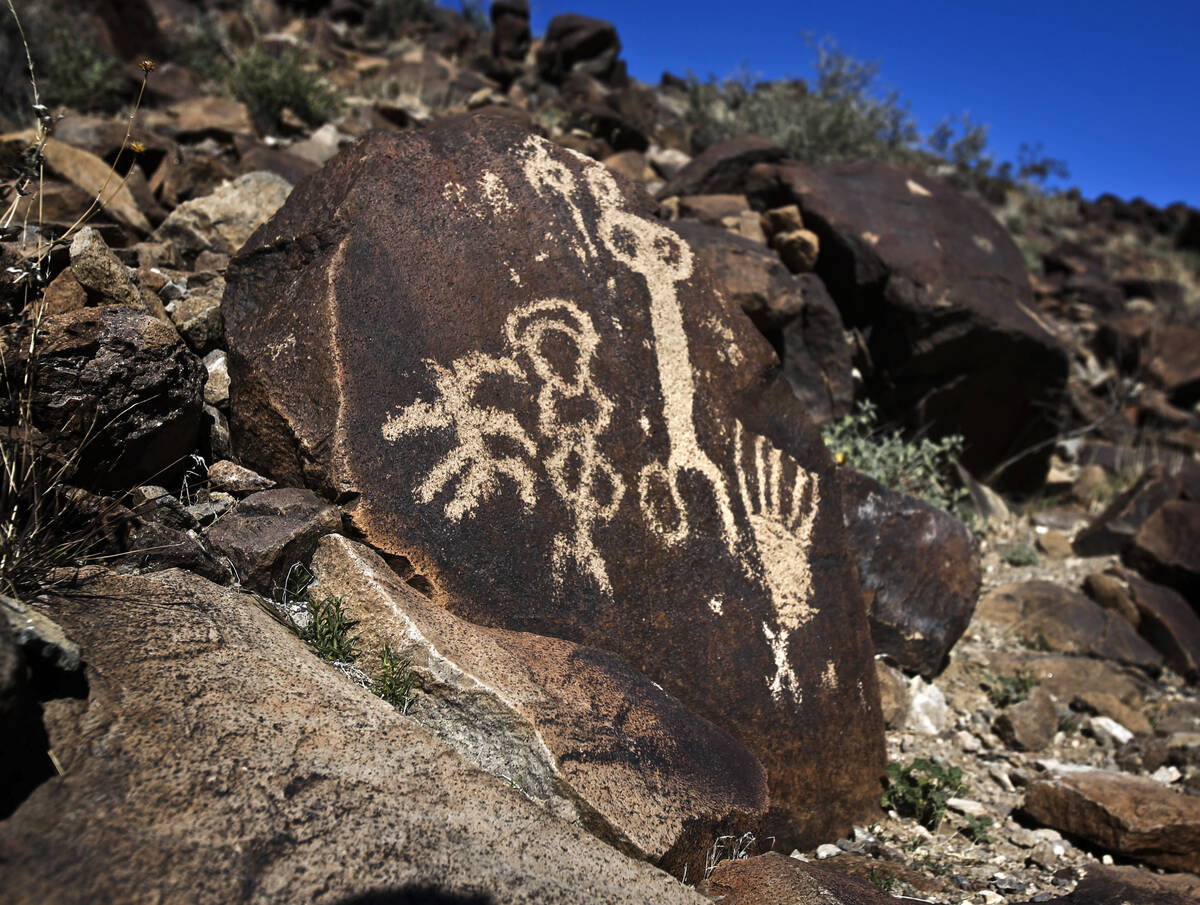
According to Friends of Avi Kwa Ame, the canyon is home to hundreds of petroglyphs and is recognized as “the spiritual gateway to Spirit Mountain, a place in which spirits and spiritual forces travel to and from the Mountain.”
Carvings include sheep, spirals, stars and geometric designs of spiritual significance, created along with pictographs between 1,200 and 1,800 years old. Ancestors of the Mohave people, the Aha Makav, used the canyon for days at a time, according to archaeological research.
To get there, take U.S. Highway 93 south from Las Vegas, then U.S. Highway 95 toward Searchlight to Nevada Route 163, or the Laughlin cutoff. Two miles before Laughlin, follow a sign for Christmas Tree Pass, then take that road for 1.5 miles. There, find a sign on the left for Grapevine Canyon. The canyon begins a quarter-mile from the trailhead.
Mount Irish Rock Art and Archaeological District
Basin and Range National Monument
This area, on the southern tip of the national monument, includes petroglyphs, pottery and rock shelters indicating habitation from 1000 B.C. to as recently as the 1860s. Most of the art depicts bighorn sheep and deer in a style seen across the Great Basin.
Here, there are three areas to explore: Paiute Rock, depicting human forms, animals and trees; Shaman Knob, home to the depiction of the Pahranagat anthropomorph known as “Pahranagat Man” or “P-Man”; and Shaman Hill, showing human or spiritual figures, sheep, beehives and other figures.
You reach Mount Irish Archaeological Site — one of Nevada’s most important, according to the BLM — by traveling 12 miles north from Alamo to the junction of U.S. 93 and state Route 318. Take Route 318 for 3 miles, then turn west onto Logan Road. Follow that for 7.5 miles.
Valley of Fire State Park
In this state park, about an hour northeast of Las Vegas, you’ll find three sites for petroglyphs:
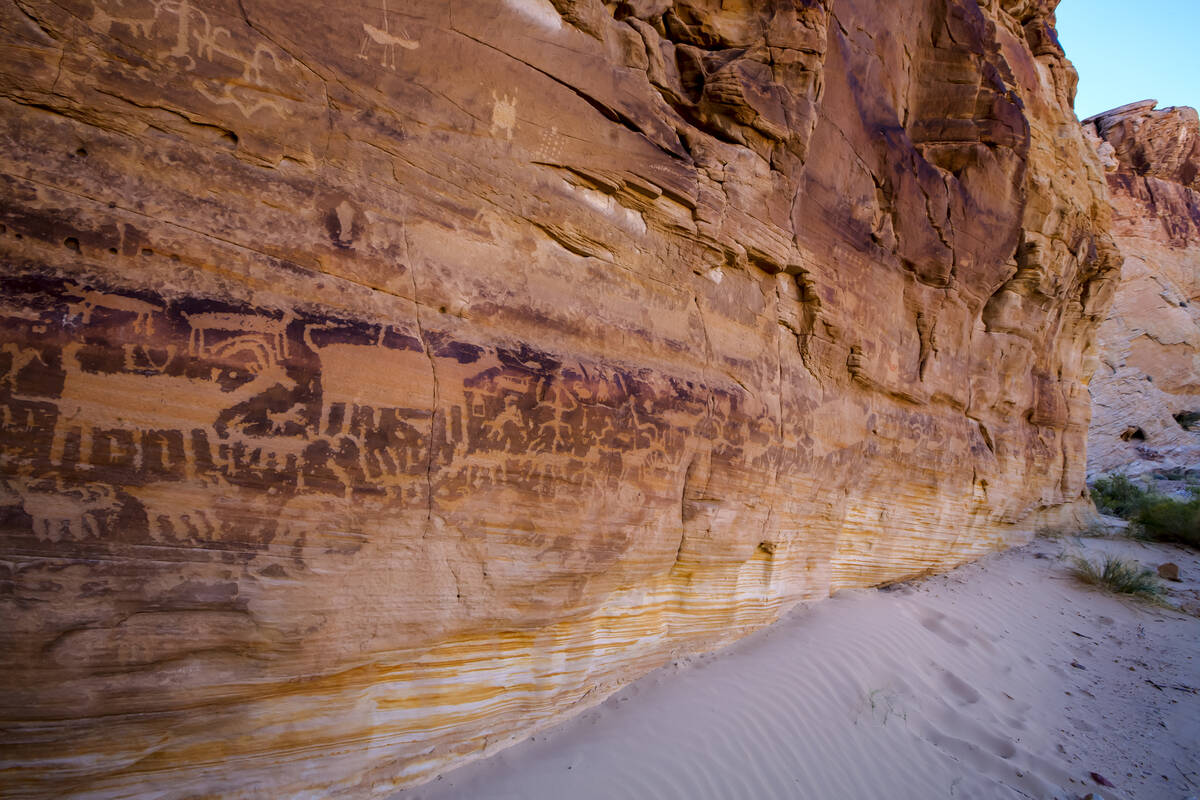
— Atlatl Rock: At this most popular petroglyph site, the main panel can be found up 80 metal stairs, with more viewable at ground level around the rock formation. The feature is named for the atlatl, a spear-throwing tool carved at the top of the main panel.
— Lone Rock and The Cabins: Find Lone Rock at the edge of a parking lot that serves a picnic area before finding the cabins further down the road, used by the Civilian Conservation Corps in the 1930s. Behind the cabins, find petroglyphs that were created long before the stone buildings.
— Mouse’s Tank Trail/Petroglyph Canyon: A short out-and-back trail (three-fourths of a mile) through a sandstone wash and canyon where petroglyphs can be found on the left side from beginning to end.
The oldest petroglyphs in Valley of Fire date between 10,000 and 7,500 B.P. (before present, or years counted backward from 1950). The newest images align with the arrival of Nuwu (Paiute) people around A.D. 1100. However, it is not known which is which.
Petroglyph Trail
Sloan Canyon National Conservation Area
At the southern end of the Las Vegas Valley, explore petroglyphs numbering 1,700 pieces over 300 different panels. One of the most archaeologically significant sites in the state, Sloan’s petroglyphs depict daily life, history, flora and fauna.
Researchers believe the art was made by Indigenous cultures from the Archaic to the historic era.
The trail is best taken in the early morning hours and is a moderate 5.5-mile hike with 616 feet of elevation gain. But note, the trail is rocky and requires scrambling at times.
Nawghaw Poa Road will be closed until November for the construction of the Sloan Canyon National Conservation Area visitor center. In the meantime, this trail has been rerouted to Democracy Drive. Petroglyph Canyon is a day-use area only, open to the public from 8 a.m. to 4:30 p.m. Dogs are prohibited, and the canyon is limited to 20 people at a time.
Petroglyph Wall
Red Rock Canyon National Conservation Area
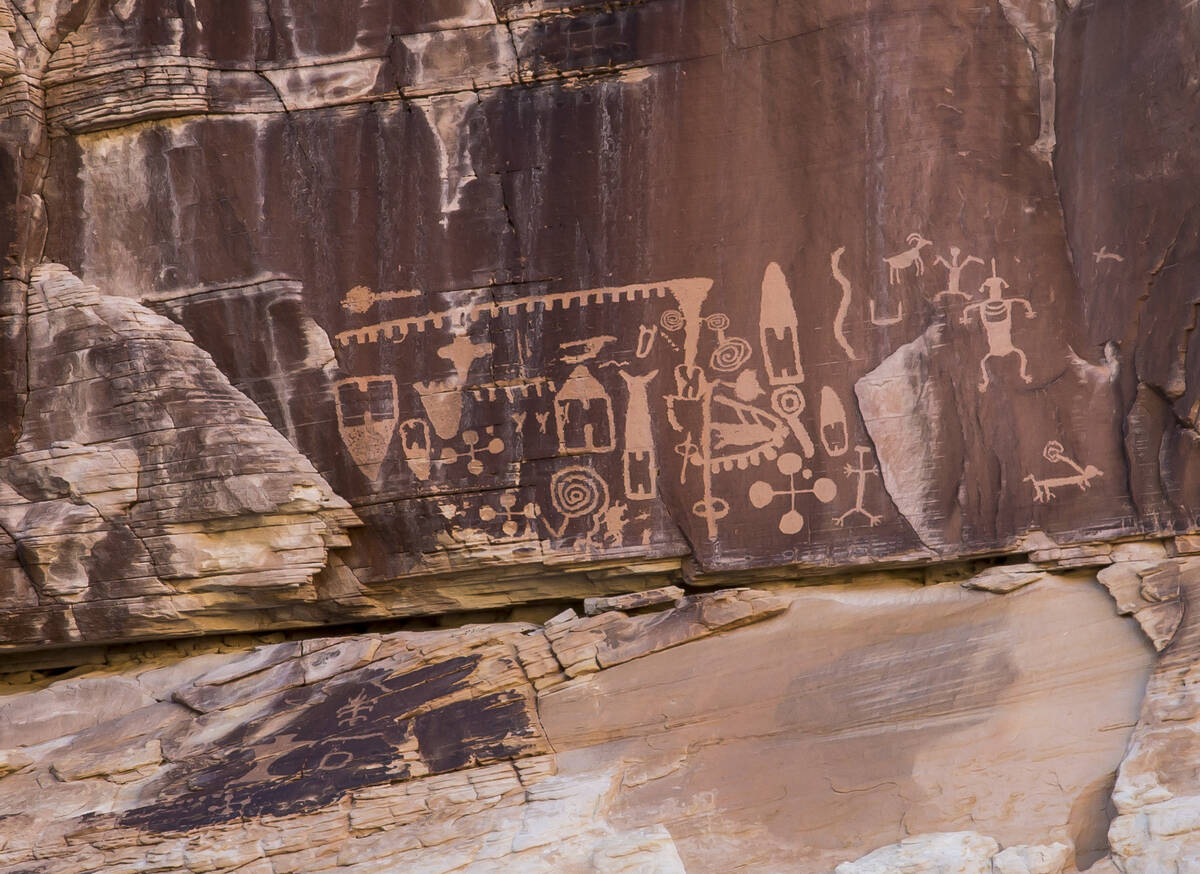
This small wall is accessible via a quick, easy walk of two-tenths of a mile from the Willow Springs Picnic Area parking lot and trailhead. At the cliffside, you’ll find historical rock art estimated to be 800 years old.
Without a living witness, the meaning of the art might never be known.
The immediate area is home to more history, with ancient dwellings and cooking sites nearby.
how can we protect them?
These archaeological sites must remain protected; petroglyphs are fragile and irreplaceable.
That means, when visiting, refrain from any disturbance, including touching and tracing. Stay on marked trails, keep a respectful distance, and practice Leave No Trace principles. Don’t climb the rocks or connect with them in any way that would damage the art, as it is illegal.
Instead, observe, imagine, appreciate. Take only photos (and a pamphlet for far deeper knowledge than we can provide here), and leave only footprints.
If you do witness any harm being done to petroglyphs, report it to nearby rangers, if applicable, or the Bureau of Land Management, which oversees many of the sites. BLM’s law enforcement office can be reached at 800-637-9152. To get further involved, look into the Nevada Site Stewardship Program.
Contact Kristen Di Chiara at kdichiara@reviewjournal.com.

 Add as a preferred source on Google