
10 of the best places for stargazing near Las Vegas


You’ve probably heard the notion that Las Vegas is the brightest city on Earth. That largely came from a 2010 NASA photo showing the city from space — especially the Strip’s brightness, a Class 9 (the highest) on the Bortle scale — and everyone just ran with it. The true answer? It might be, it probably is and it’s “reputed to be,” as NASA put it.
Either way, the center of the city is far too bright to see stars in the sky, as is much of the valley.
Thankfully, Las Vegas is surrounded by hundreds of miles of open desert, including spots that have been protected and recognized by Dark Sky International, the organization that advocates for darker places through its International Dark Sky Places program.
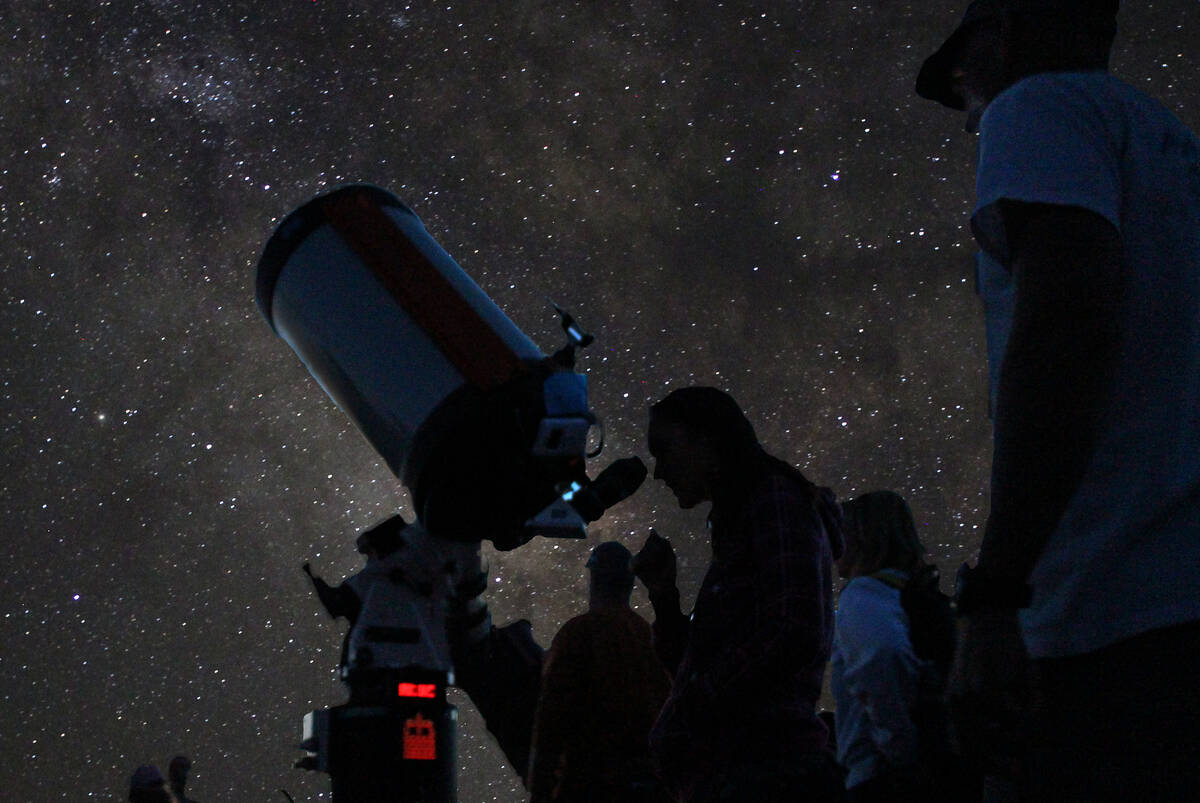
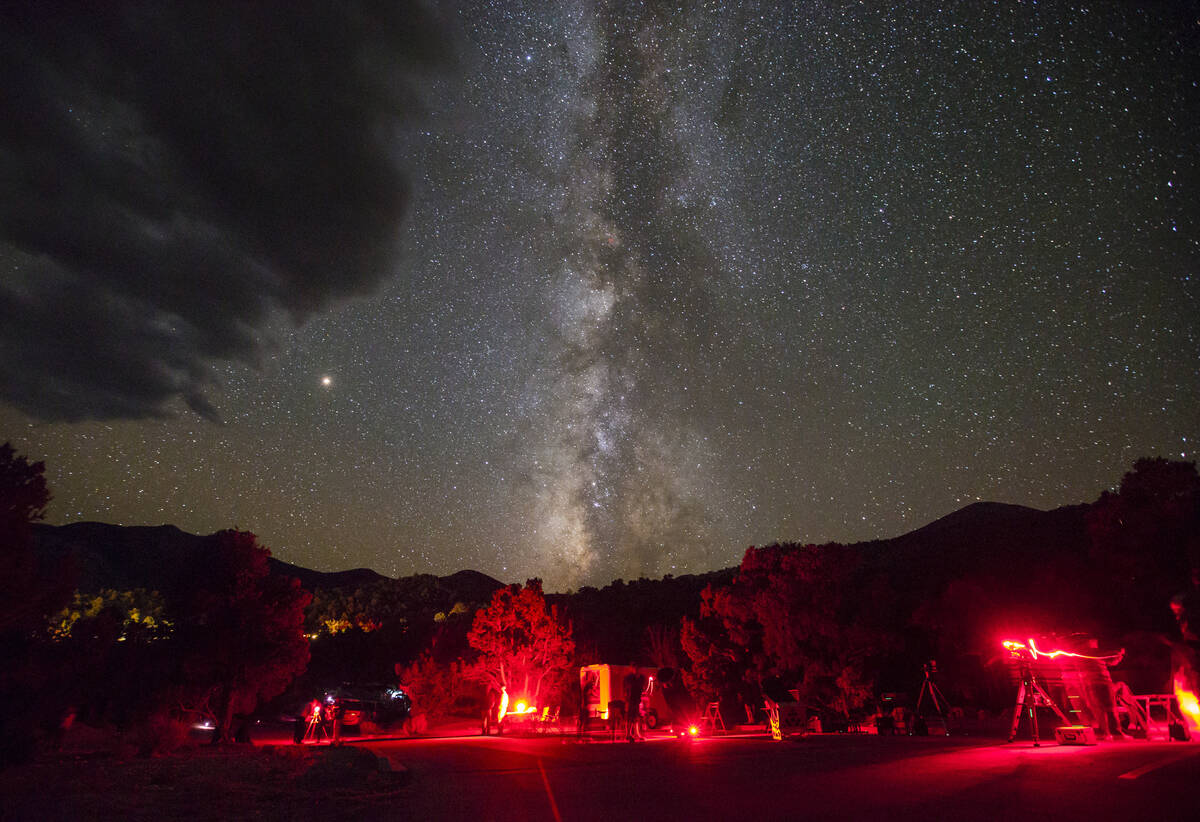
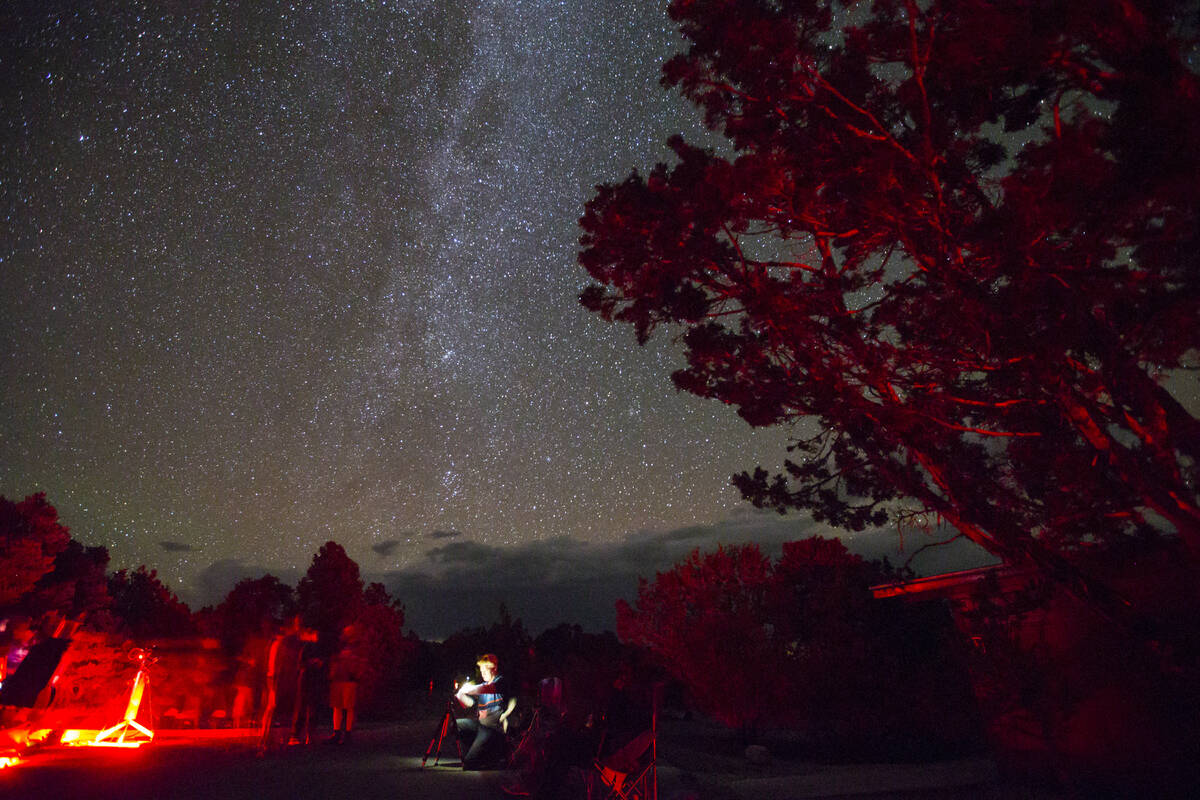
Pro tips: Visit any of these places during the new moon, when the sky is darkest; allow your eyes 30 minutes or so to adjust; use red light for your flashlight or your headlamp; and, of course, leave no trace. If you’re new to stargazing, download a night sky app to map the stars in real time.
official dark skies
Death Valley National Park
Unlike many of the parks, Death Valley doesn’t close. The skies have the highest-tier ranking from Dark Sky, meaning you can see just about everything out there. According to the park, Mesquite Flat Sand Dunes, Harmony Borax Works, Badwater Basin and Ubehebe Crater are the best places to stargaze, and visitors call Dante’s View a hot spot. The park also hosts an annual Dark Sky Festival in early February.
About two hours from downtown Las Vegas on U.S. Highway 95 North into California
Great Basin National Park
Nevada’s only national park boasts some of the darkest skies in the Lower 48. At night, stand anywhere in the park and prepare to look up in awe. The park commits to its dark skies by using red exterior lighting, turning off white lights at night, and using motion detectors so they’re not on continuously. For the best views (but a heads-up: no camping), visit the Astronomy Amphitheater, Mather Overlook, Baker Archaeological Site and The Ranching Exhibit on state Route 488.
Head up to the park in September for their Great Basin Astronomy Festival. If you can’t wait that long, drive about the same distance the other way to Grand Canyon for their star party in June.
About four hours north on U.S. Highway 93
near Las Vegas
Lake Mead National Recreation Area
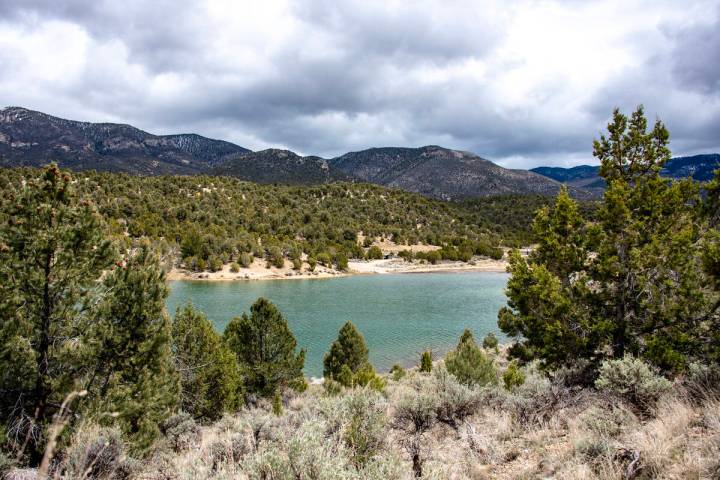
Lake Mead, at 1.5 million acres, is a vast, wide-open protected space east of the city, separated by the Muddy Mountains and Black Canyon and Eldorado wildernesses. Great views of the stars can be found as close as Boulder Beach and Northshore Road, but hop onto the Arizona side to Temple Bar Campground (1½ hours away) for some of the easiest viewing.
About 30 minutes east of downtown
Lovell Canyon
On the backside of the Spring Mountains, Lovell Canyon is a secluded wilderness area with dispersed camping (no amenities; first-come, first-served). If you are not the social type or are looking to add a daytime hike before your nighttime stargazing, this is the spot to do it.
About one hour on state Route 160 toward Pahrump
Mount Charleston/Lee Canyon
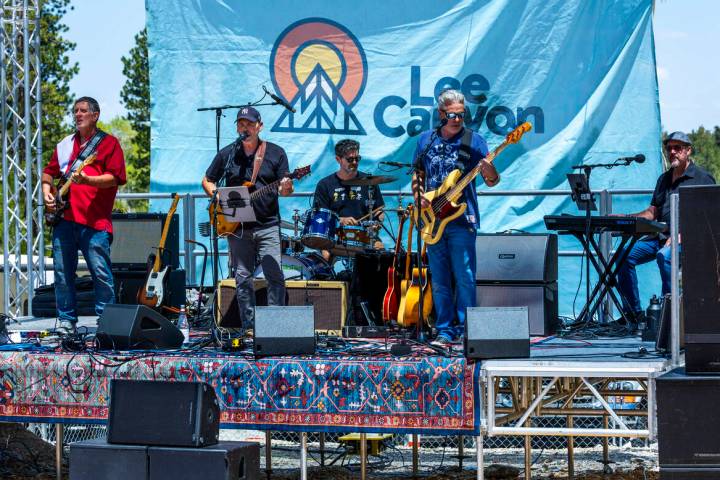
On the eastern side of the Spring Mountains, find the all-familiar Mount Charleston and Lee Canyon. Both offer high-altitude, low light-pollution views. Lee Canyon, along with the Las Vegas Astronomical Society, hosts Stars on the Summit, which includes a chairlift ride along with stargazing. The most recent event was in August, but keep an eye on their calendars for more info. At Mount Charleston, find similar views from higher-altitude campsites.
About 45 minutes or one hour on U.S. 95
Valley of Fire State Park
After dark in this park, campers are limited to the Arch Rock or Atlatl Rock campgrounds, and nighttime passersby are limited to areas outside of the park, but don’t let that slow you down. The area offers a mind-blowing scenic backdrop for astrophotography and is just far enough from Las Vegas for prime viewing.
About one hour north on U.S. 93
Avi Kwa Ame National Monument
According to Friends of Avi Kwa Ame, the night sky has been a place of “deep spiritual connection and ancestral wisdom” to the Mojave people, per tribal elder Paul Jackson Jr. In this protected desert south of Las Vegas, the Milky Way and all the stars are on full display. The organization has embarked on a Dark Sky Project, which will assess the best viewing spots, monitor light pollution and improve visitor resources. In the meantime, if you visit, respect the land.
About 1½ hours south on Interstate 15
farther from Las Vegas
Basin and Range National Monument
One of the first national monuments in Nevada covers more than 700,000 acres, with not a single LED sign in sight. As Travel Nevada puts it, this isn’t a place you discover by accident. Get there with your stargazing gear, plenty of gas and water, and look up at just about anything in the night sky.
About two hours north on U.S. 93 to state Route 318
Clair Blackburn Memorial Stargazing Park
In Tonopah, you can see thousands of stars with the naked eye at this dedicated park that was named the top stargazing destination in the nation by USA Today. Quick tip for getting there: Ignore Google Maps. Turn by Tonopah High School and follow the pavement until it turns into a dirt road, then keep going straight until you reach the stargazing park.
About three hours north on U.S. 95
Boundary Peak Wilderness
Boundary Peak is Nevada’s tallest mountain at 13,140 feet. It’s an advanced 8-mile hike that starts at nearly 10,000 feet. But you don’t have to do all of that to see the stars, nor do you need a permit to camp in the small, surrounding wilderness that borders California’s White Mountains and one of the least-populated regions of Nevada. Like much of Nevada’s public lands, it is isolated, so the night sky is easily visible to the naked eye.
About three hours on U.S. 95 North, at the California border
Contact Kristen Di Chiara at kdichiara@reviewjournal.com.

 Add as a preferred source on Google