Resurrecting the Dead

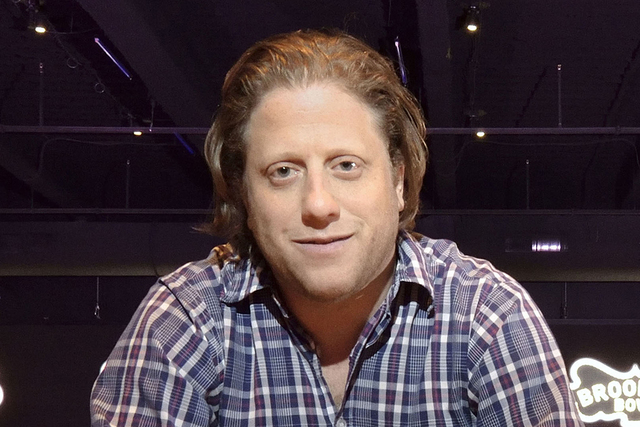
Peter Shapiro cares about rock ’n’ roll. No, he really cares.
While plenty of people stake claim to this sentiment, Shapiro — the independent concert promoter co-presenting Fare Thee Well, the Grateful Dead’s eagerly anticipated run of reunion shows, including the first two this weekend in Santa Clara, Calif. — actually embodies it.
This is neither lip service nor hyperbole. He truly does. You can hear it in his voice, just speaking with him for a few minutes on the phone; his passion is palpable. But even without the benefit of dialogue, this notion is directly reflected in his body of work. Everything Shapiro’s done has been fueled by his insatiable love of music. He’s a walking anastrophe, whose interest in the music business clearly leans more toward the initial part of that equation than the latter.
His first endeavor effectively set the tone for everything else that followed. In 1995, Shapiro produced the film “Tie-died: Rock ’n’ Roll’s Most Deadicated Fans,” a documentary centering on the Grateful Dead and its devoted fan base. After seeing the Dead just once, his fanaticism led Shapiro to trail the band on the road and document the experience.
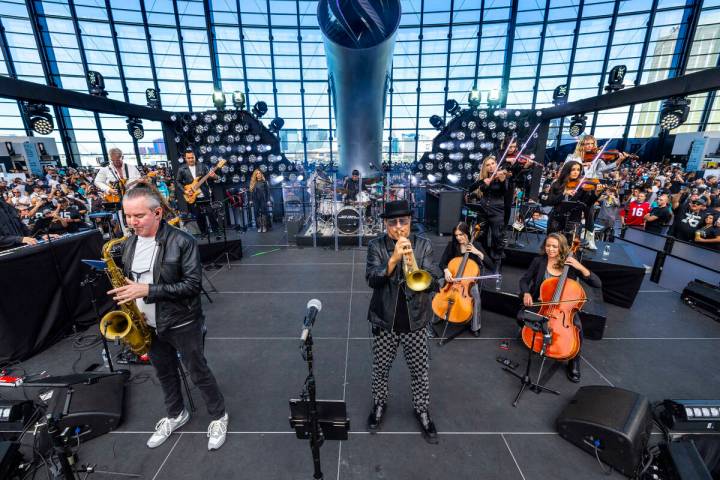
From there, he’s earned renown from the venues he’s owned and operated. The first was the Wetlands in New York City, followed by the Brooklyn Bowl franchise, birthed in its namesake Big Apple borough before two satellites were launched, one in Vegas and another in London. And finally, the legendary Capitol Theatre, the Port Chester, N.Y., venue he revitalized in 2012.
The Capitol is perhaps the defining piece of Shapiro’s puzzle, the most exacting evidence of his desire and perseverance in preserving rock’s heritage and legacy. It took two years of pained persistence on Shapiro’s part to convince the theater’s then owner, Marvin Ravikoff, to agree to lease him the space, which Shapiro was finally able to purchase about a year later.
“If it had been a normal venue this deal would have never happened,” Shapiro told Inc. magazine in a segment for its “How I Did It” video series. “I would’ve walked away day 3 out of 700.”
But the Capitol wasn’t just a building. It was an institution, a place where the Grateful Dead performed 18 times in less than a year in the early ’70s.
“I had to earn his trust, and he had to understand my vision, and he had to understand where I came from,” he told Inc. “And he had to understand what I’d done before, and why I did the things I did before. He had to buy into giving me his baby, basically.”
Shapiro certainly had established credentials by that point. In addition to the venues, he stepped in as publisher of Relix Media in 2009 to ensure that its flagship magazine, which specialized in covering the jam scene Shapiro loved, could continue publishing.
The fact that he places such a premium on things like heritage and legacy makes Shapiro the perfect partner to help the Grateful Dead’s surviving members resurrect the group one last time.
That’s part of the reason why the outfit chose to work with the independent promoter instead of one of the concert promotion giants who would typically present an event of this magnitude. The band also chose Shapiro because they’ve built a kinship over the years — impressive considering that two decades ago, Shapiro couldn’t even enlist the band to appear in his film devoted to it.
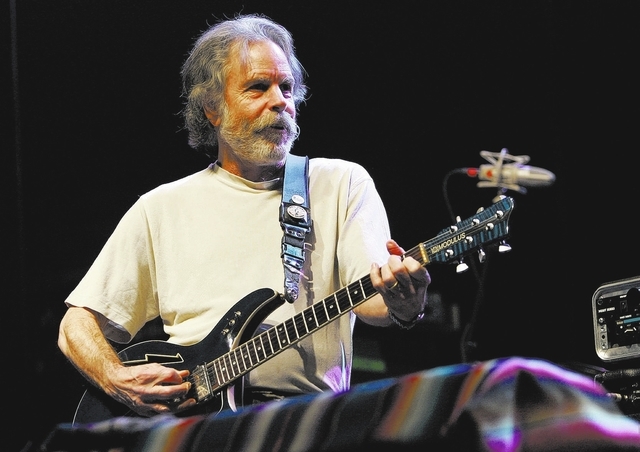
The long, strange trip began when Shapiro first saw the Dead back in the early ’90s, right around the time that Wetlands Reserve opened in New York City. After producing his documentary, Shapiro took over the club, a hub in the jam scene, and enlisted Bob Weir to perform three shows for its 10th anniversary in 1999. The relationship with Weir and his fellow bandmates developed from there.
After Shapiro brought the Capitol back to life, Phil Lesh performed at the restored venue. Shapiro and the Capitol made enough of an impression on him that the Dead bassist signed on to perform 45 shows exclusively for Shapiro. The entire time, Shapiro and his clubs have also hosted the various acts spawned by the Dead.
Those dealings paved the way for him to pitch the band on the prospects of reconvening to commemorate its 50th anniversary. As with Ravikoff, he had to earn the group’s trust.
After about six months of discussions, Shapiro and the Dead settled on the setting for the final farewell. “They each have a lot of history in rock and roll and have their own visions on things,” Shapiro says. “So I had to come up with something that they could unify around.”
The result is Fare Thee Well, a five-date run that starts with two shows in the shadow of the Dead’s birthplace and concludes with three shows at Chicago’s Soldier Field, where the Dead played its last show almost 20 years ago to the day, on July 9, 1995.
“We had one shot to kind of do it so it made sense,” Shapiro explains. “It’s in the middle of the country, July Fourth, celebrate the great American band, where people from East and West can come in the middle. It’s where their last gig was, 20 years before, just about to the day. So there were all these things that just felt right.”
The whole thing seems wrapped up in kismet when you think about it, and there’s plenty more of that to go around. One of the ideas that sprang up as part of the initial discussions was enlisting Trey Anastasio to sit in for the final run.
“Trey’s such a talent and fluent in the improvisational style of music they play, where you respond in real time in live moments off of other musicians. Trey is so schooled in that,” says Shapiro, who also has an established relationship with Anastasio, whom he featured alongside other musicians in an IMAX concert film he produced called “All Access: Front Row. Backstage. Live!”
For his part, Anastasio, slated to perform at Brooklyn Bowl at The Linq on Halloween weekend, is well-versed in improvisation. Speaking with Rolling Stone in advance of the first Fare Thee Well, he shared his thoughts on the subject. “Playing improvisational music with people is so intimate,” he says, noting that he can tell if his bandmates slept well the night before or are in the midst of a disagreement with somebody.
“I just thought bring the classic Dead with the core four guys, bringing Trey in was the right way to celebrate the 50th,” Shapiro explains. “Trey had really ever — he’s sat in with each of them different times, but this is a big moment. It’s a big moment for Trey, I think, also, to play in front of people, not just a big stadium, but for those watching the shows, who maybe don’t go to Phish shows. It’s just a huge platform.”
It is truly momentous. It’s a union of two ambassadors from a powerful movement that spans generations finally coming together. The kinship between the two acts is obvious to those who have pinpointed the Dead as the ideological forebear of Phish. But the notion is also polarizing to the faction of fans who don’t see the link. Even Anastasio and Co. downplayed the comparison early on. So to see the two titans finally performing together, well, it’s monumental.
“It’s a big moment,” Shapiro acknowledges. “There’s no question. It’s a global moment. I don’t think there’s been a musical event for one band of this scale in America. Look at what’s happening in Chicago, with all the shows going on, people coming from around the world. It’s a festival throughout the whole city. When the Stones or U2 or Madonna or McCartney play a stadium, or Taylor Swift or One Direction, it doesn’t take over the whole city.”
Shapiro’s referring to the number of shows that have been booked in the Windy City in proximity to Fare Thee Well, which sold out so quickly and proved to be in such demand, that Shapiro and the band members went back to the drawing board to come up with a plan to include all the fans who didn’t end up with tickets.
The solution was adding two more shows (“We needed to add something to depressurize things in Chicago, so we added these California shows,” says Shapiro, who had earlier told the Chicago Tribune there were no such plans), and making arrangements to broadcast the final shows live on YouTube and simulcast in venues across the country, at places such as Brooklyn Bowl in Vegas.
“It’s challenging, because there’s a lot of different moving parts,” Shapiro concludes. “It’s an interesting ride.”
Not to mention, a long, strange one.
Read more from Dave Herrera at bestoflasvegas.com. Contact him at dherrera@reviewjournal.com.
Fare Thee Well simulcast
6 p.m. July 3 through July 5
Brooklyn Bowl at The Linq, 3545 Las Vegas Blvd. South
$15-$45 (702-862-2695)

 Add as a preferred source on Google