‘Wuthering Heights’ review: A bold but shallow take on Emily Brontë’s classic

It’s hardly a surprise that filmmaker Emerald Fennell, who possesses a particular interest in shocking and riling her audience, was drawn to Emily Brontë’s “Wuthering Heights.” This is a novel that has vexed critics since the beginning, with one in 1848 decrying its “vulgar depravity and unnatural horrors.”
Nearly 179 years after its publication, “Wuthering Heights” may have been reappraised a classic, but it continues to haunt with that “wild, wicked slip” Catherine Earnshaw and her tumultuous relationship with Heathcliff.
It’s not just because of the teenagers who can’t make it work: Swirling around them are issues of class, race, property, education, inheritance, desire, revenge, trauma and the miserable weather of the Yorkshire moors.
More than a century later, it’s being sold as a great love story, but with a wink. This is love (if you want to call it that) of the tortured, toxic, obsessive variety.
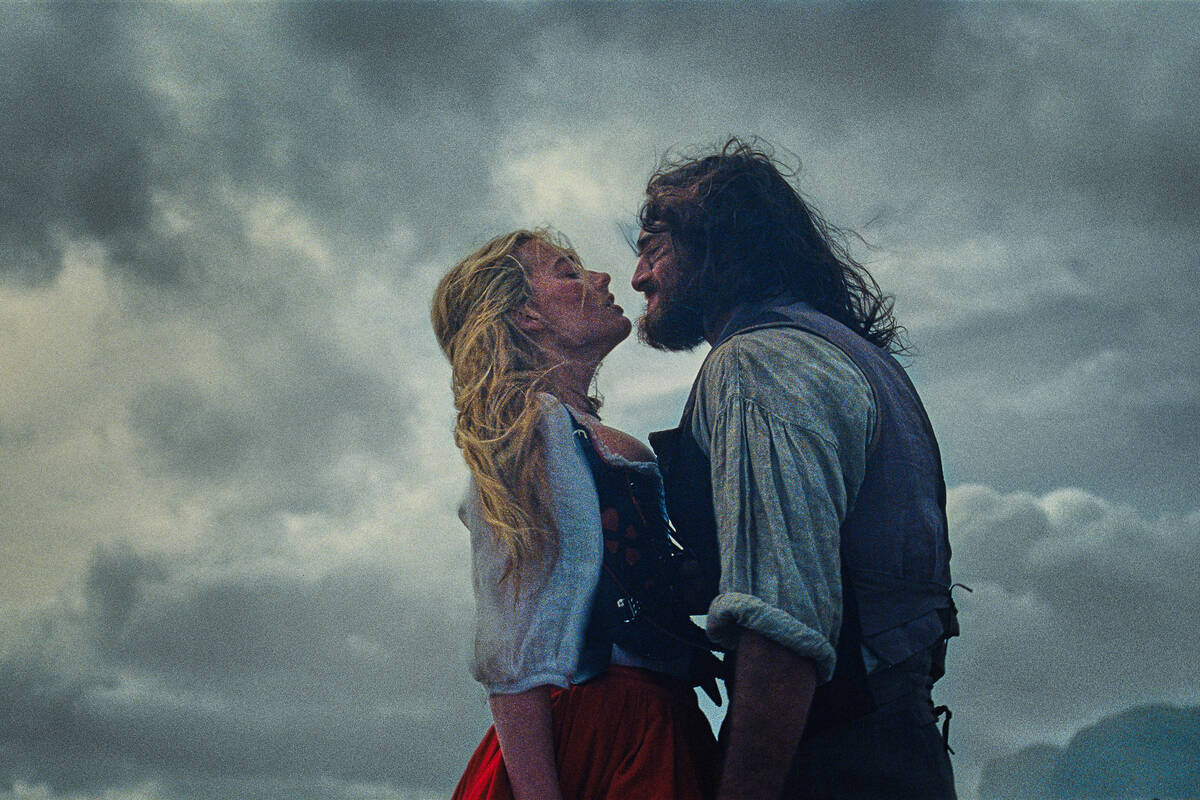
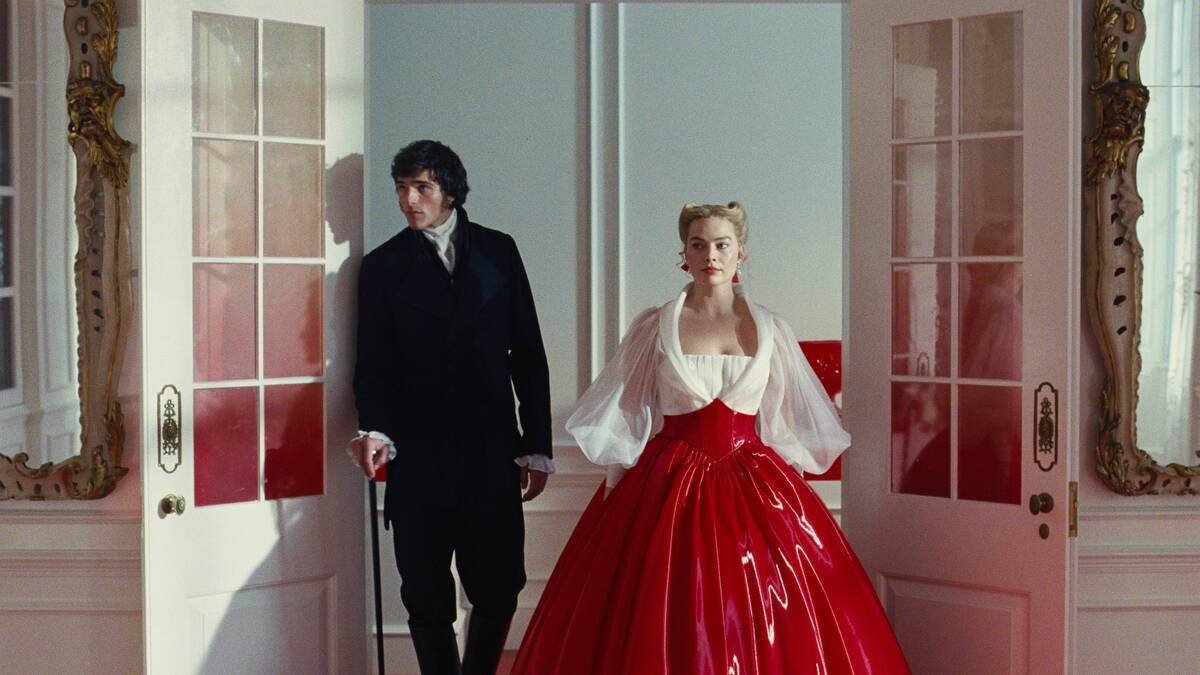
In a noble attempt to do something different, Fennell decided to make a movie that captured how “Wuthering Heights” made her feel the first time she read it, at age 14. It’s a heady experiment — a defiantly anti-academic interpretation that lets Catherine (Margot Robbie) and Heathcliff (Jacob Elordi) finally do something about all that pent-up lust.
Fennell reduces her story to a more simplistic narrative about hate and its polluting ripple effects. The film begins with a hanging that has young Cathy (Charlotte Mellington) downright ecstatic, but she might just be a product of her environment: Her father (Martin Clunes) is an abusive, unloving drunk and their home is shabby, cold and deteriorating under mounting debts and harsh conditions. Her only companions are essentially employees: a maid, Nelly (Vy Nguyen as a child and Hong Chau as an adult), and Heathcliff (Owen Cooper), whom she claims as her pet. No Hindleys or Haretons here.
The miserable Earnshaw way of life stands in stark contrast with their happier, gentler neighbors, the Lintons, who inhabit the primly manicured Thrushcross Grange. Their home is within walking distance of Wuthering Heights and yet, in a sheltered valley, it seems worlds away.
As in the book, Cathy decides to deny her heart for the promise of a comfortable life with Edgar Linton. Heathcliff overhears Cathy saying it would degrade her to marry him, and he disappears for years only to re-emerge bathed, wealthy and with revenge on his mind. When they meet up again, their dynamic feels like “Wuthering Heights” by way of “Cruel Intentions.”
Yet for all the big swings, Fennell’s “Wuthering Heights” amounts to something oddly shallow and blunt: garish and stylized fan fiction with the scope and budget of an old-school Hollywood epic.
As Heathcliff, Elordi is certainly brooding and effectively passionate. But as an actor, he was more unsettlingly toxic as Elvis.
This Heathcliff is mostly there to pine for, protect and punish Cathy.
Robbie plays her role as a kind of gothic Scarlett O’Hara, selfish, vain, vindictive and bored. Her most interesting moments are those in which she’s flustered by stirrings she doesn’t quite understand. It’s the only thing she can’t seem to control and manipulate.
Fennell clearly has many ideas swirling around, which is fitting for a story like “Wuthering Heights.” Yet as a viewing experience, it is an undernourishing feast, neither dangerous nor hot enough.
Wuthering Heights
Two stars out of four

 Add as a preferred source on Google