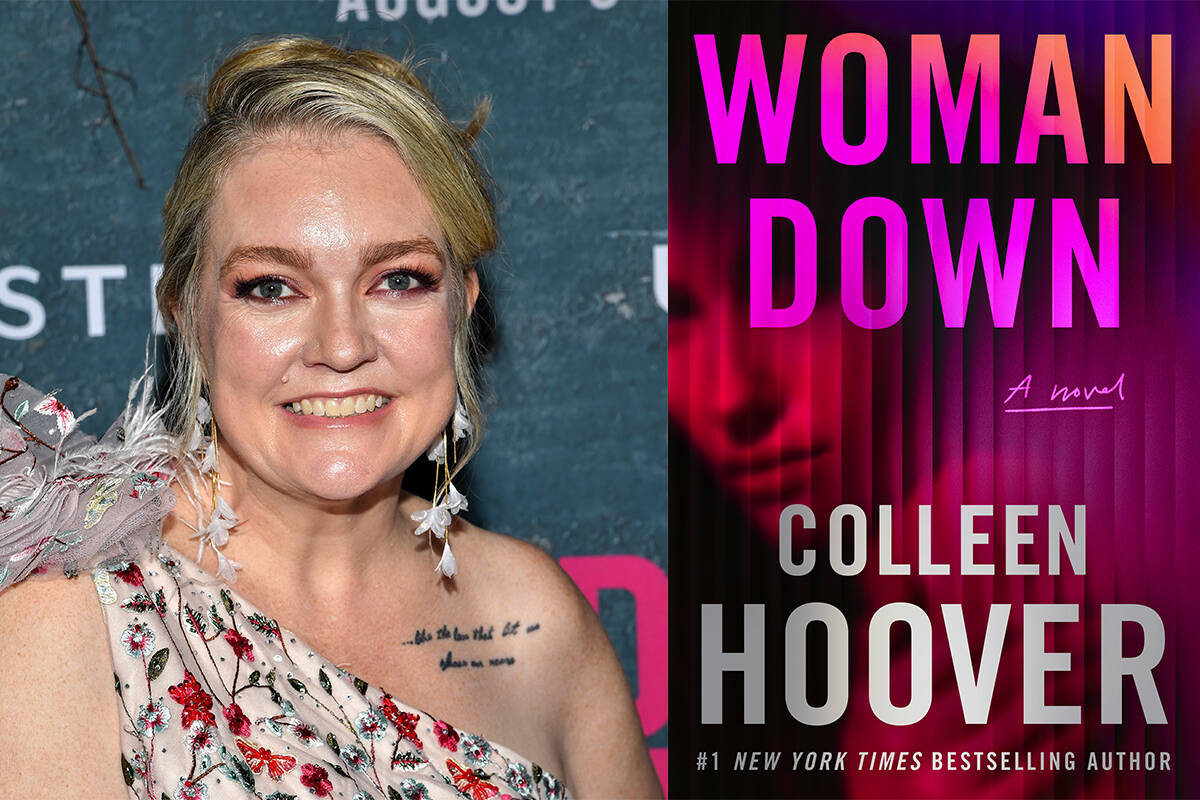
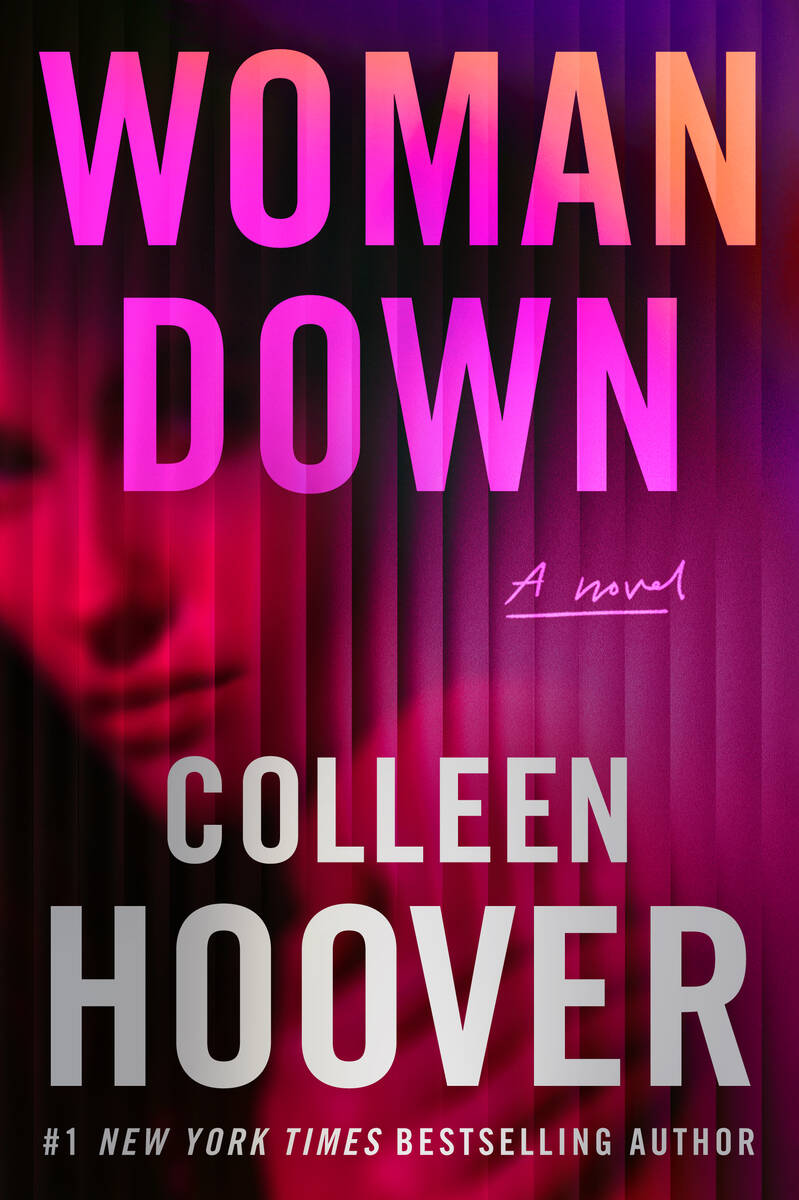
‘Woman Down’ might be Colleen Hoover’s most revealing novel

Colleen Hoover is back.
To those outside the CoHorts, this may sound confusing. Did she ever leave? Her tear-jerking melodramas, with their disarming pastel covers, are stocked everywhere imaginable.
One of her biggest hits, a first-wife-in-the-attic thriller called “Verity,” clung onto the bestseller charts well into 2025, seven years after its publication. We’re now midway through a parade of film adaptations, and lord knows how deep into a much-dissected legal dispute between Blake Lively and Justin Baldoni, the co-stars of the first of them, “It Ends With Us.”
(Even as Hoover has largely stayed out of the controversy — other than an unrelated dustup over tie-in merch — she recently made headlines with a rare public comment: “I have my own story I could tell … but I don’t want to bring attention to it,” she told a reporter for Elle, cryptically and, some would say, counterproductively. “And I don’t want to have to put someone else down to lift myself up.”)
It’s easy to forget that she hasn’t put out a new novel since 2022. For most authors, this gap would be unremarkable. But when adjusted for Hoover’s typical, blistering rate of productivity — she has averaged about two titles a year, not counting novellas and short stories — it yawns conspicuously wide.
Ever the canny marketer, she has kicked off her return, “Woman Down,” with an enticingly coy preface: Any resemblance to real people or events is purely coincidental. “Please, I beg of you, do not try to make ties between my personal life and this story, as there are none,” Hoover hastens to tell us.
Real-life parallels
“Woman Down” is narrated by Petra Rose, a writer of romantic suspense who “used to churn out two books a year with effortless grace,” posting live videos to connect with what was once a smaller, cozier, “much more positive” fan base. But following the backlash over a movie based on her book, she gets ruinous writer’s block.
Presumably the parallels to real life end there, as Petra retreats to a lakeside cabin, determined to finish her manuscript about a woman involved with a married cop. Late one night, a detective who calls himself Saint knocks on her door while investigating an accident down the road. Their flirtatious meetups in the name of book research become more torrid. Saint’s willingness to serve as Petra’s muse takes on a disturbing edge.
This all sounds like classic Hoover: vehicular catastrophe, a self-made woman, a male love interest with a totally preposterous name. But reading this novel feels like walking through a house that got a quick flip before hitting the market: The finishings look sleeker, and some key walls have been removed. Gone are the trailer parks and boarded-up apartments that provided the setting of Hoover’s older books, replaced by a chilly Airbnb. Also missing: the baroquely traumatic backstories for which Hoover became notorious (dead parents, sexual abuse, prison time).
Hoover’s style could be most neutrally described as “unadorned.” Sure, she’s said in interviews, she could pay more attention to her sentence-level prose and toss in a metaphor or two — “but I don’t enjoy reading that, and I want to write what I like to read.” She once told Vulture that she used to read screenplays because “I enjoyed them as much as watching a movie, but it only took half the time.”
“Woman Down” dials her efficiency to an almost avant-garde extreme. This is writing as pure plot delivery. Atmosphere, figurative language and imagery would just get in the way. When so much information has been withheld, no new detail — such as the sudden, uninvited appearance of Petra’s family — can land as a revelation. It makes you question how to draw the line, generically, between storytelling and, say, a robust Wikipedia summary.
Waxing lyrical
Yet “Woman Down” could also be read as Hoover’s most personal work to date. Yes, like the album of a newly minted pop star, a lot of airtime is spent bemoaning the burdens of fame, how “public scrutiny became a suffocating blanket.” But also — despite the disclaimers — it’s hard not to notice that Hoover waxes most lyrical when her characters reflect on literary life.
The monologues grow longer. The scenes are more richly grained. Over a romantic plate of lasagna, Petra mourns an earlier, more innocent phase of her career: “I used to have so much fun with it all. I used to wake up ready to see which of my friends were online. Or I’d wake up wanting nothing more than to dive back into whatever manuscript I was writing. Now I just lie in bed, dreading what each workday will bring.”
Saint tells her to remain true to herself. Readers are fickle, he says: “They just move on to the next book. The next author. The next movie. The next popular thing. Because hating you and loving you is a fad that they will move on from. Every single person will move on from this experience but you.”
Did you feel that? The frisson of what could be confession?
It’s enough to make your hair stand on end.
This is an excerpt from a Washington Post story.