
Las Vegan’s year on the road inspires his first book


It was a big question — a life changer, really — its answer delivered at long last in a grocery story parking lot.
“Should I take a leap into the unknown or cling to the familiar?” Juergen Barbusca had been wondering to himself as he pondered quitting his job in public relations for a lengthy travel sabbatical.
Then on the last day of a weeklong vacation he’d taken to come to some sort of decision, he spotted an RV with Canadian plates at his local grocer.
Interest piqued, he knocked on the door and was greeted by a 70-something man and his partner.
“There’s a whole world out there to explore,” the man told him. “The sooner you start, the better.”
The very next day, Barbusca handed in his resignation letter and soon began a yearlong journey around the country and portions of Canada in his 2003 Volkswagen EuroVan camper — “The Shoebox,” he’d nicknamed it.
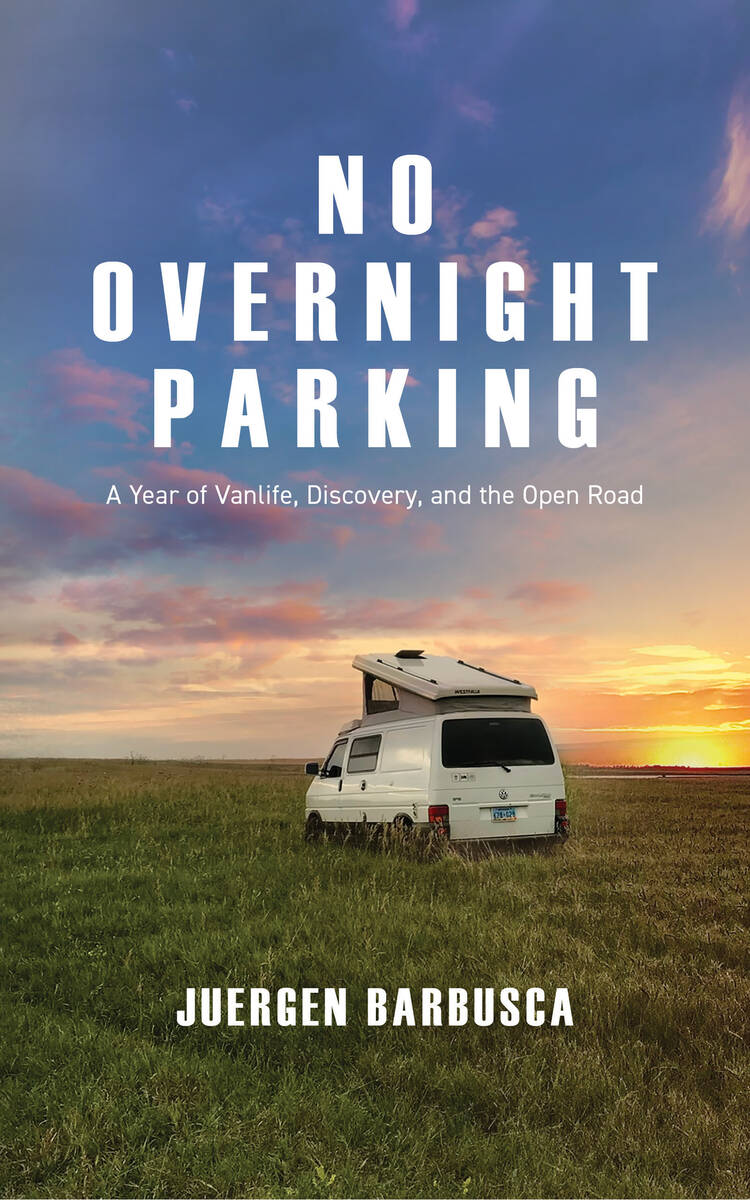
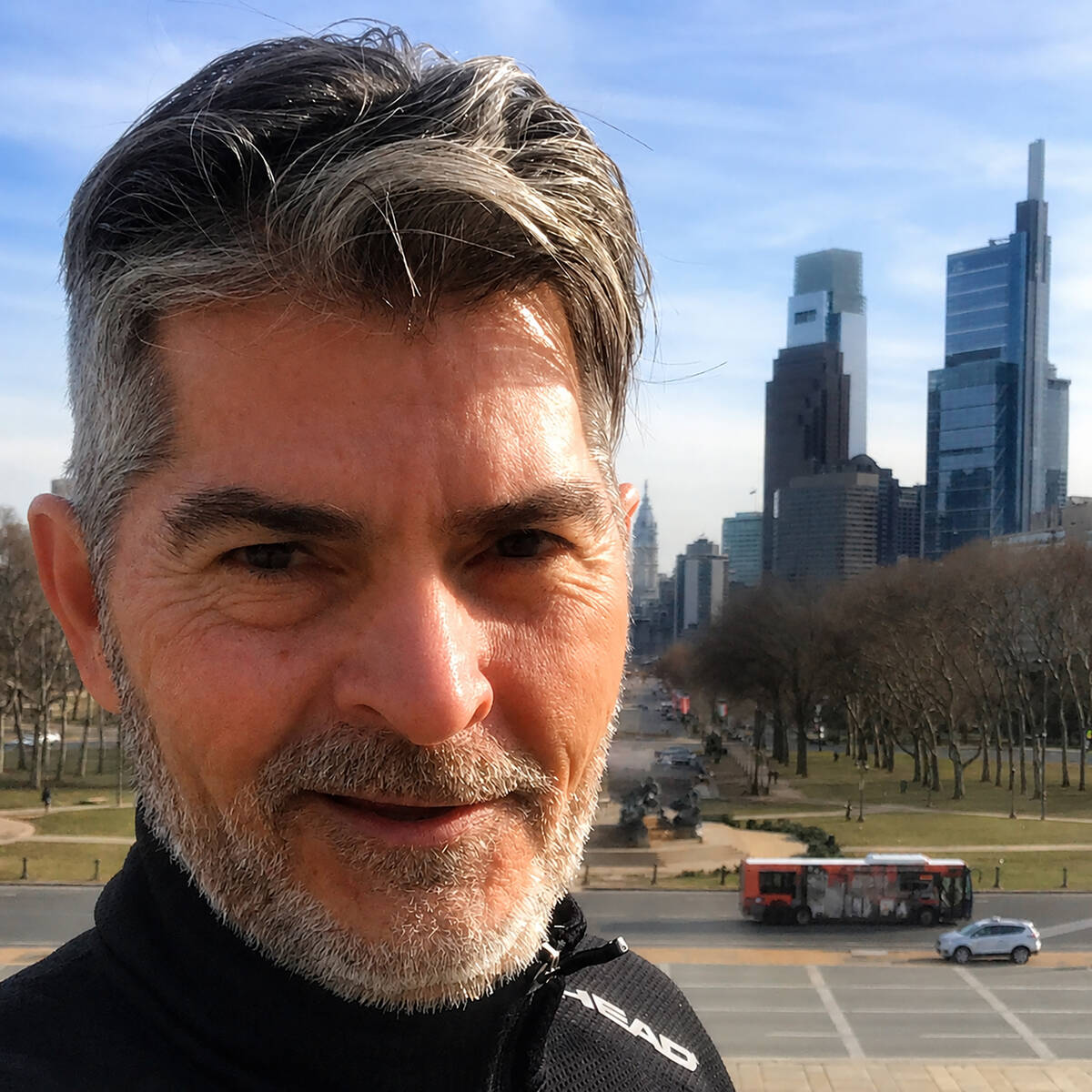
Barbusca, who grew up in Las Vegas and graduated from UNLV, has chronicled his adventures in “No Overnight Parking,” his first book, which is part travelogue, part memoir, all open roads. A story of risk, reflection and the wonders of wanderlust, it’s out now, published by Catalina Media Group.
Neon: What’s your connection to Las Vegas?
Juergen Barbusca: I’ve spent my life here, save for a decade in Europe, where I studied and traveled after graduation from UNLV. My Las Vegas story began when my mother boarded a train in New York City with my younger brother and me, arrived at the art deco train station downtown and moved into an apartment where Wynn Las Vegas now stands.
At the time, the city had barely 200,000 residents, so I’ve watched it reinvent itself over the years. It’s also where my curiosity about people began. As a 15-year-old busboy at the Stardust coffee shop, I watched souvenir hunters slip ashtrays into their pockets and late-nighters line up for $1.99 steak and eggs. People-watching here has always held my interest.
Later, while working in the not-for-profit sector, I became more interested in the generosity of Las Vegans and devoted my master’s thesis at UNLV to the subject. I recognized that same spirit of generosity among Americans as I traveled the country in a van.
What made you want to write this immersion into full-on van life?
As a public relations practitioner, I write about other people. During my year of van life, I began sharing my own experiences on social media. It was the first time I’d ever written about my own journey.
While following other van lifers online, I noticed that many focused on vehicle build-outs, how they were saving money by living in a van or sharing tips about life on the road. Those are all valuable, but I felt there was room for a different kind of story — one inspired by writers such as Charles Kuralt in “A Life on the Road,” John Steinbeck in “Travels With Charley” or William Least Heat-Moon in “Blue Highways.”
“No Overnight Parking” weaves together reflections on people and places along with the realities of van life, such as the nightly hunt for a free place to sleep — a challenge that inspired the book’s title.
The average American drives 14,000 miles annually. You did over 32,000 in just under a year. What are some of your most memorable moments from crisscrossing the country?
Many of those memorable moments came from unexpected encounters. For example, in a Walmart parking lot in Kalispell, Montana, I met a woman living in a beat-up Chevy Suburban. At first, I thought she was trying to bum a few dollars. Instead, we somehow struck up a conversation about the loneliness and isolation of living and traveling alone. That exchange has stayed with me.
While driving Interstate 10 through Katy, Texas, I pulled into what I assumed was an ordinary gas station. It turned out to be Buc-ee’s, a travel center with 120 gas pumps, a big-box-sized convenience store and the world’s longest car wash. They have a cultlike following. As I stood gawking at the sheer volume of merchandise, I noticed a group of teenagers watching me. They were nearly hysterical about my amazement. It reminded me of the wide-eyed reactions I see when watching tourists browsing the Bonanza Gift Shop on the Strip — the self-proclaimed world’s largest souvenir store.
Did you learn anything surprising while writing this?
It wasn’t a single revelation so much as a realization that grew stronger with every mile: America seems to be losing some of its local character. … As I drove across the country, the spread of national chains into virtually every retail, dining, and service category became impossible to ignore. The same familiar names seemed to greet me in town after town, and even much of the radio programming felt increasingly uniform. It has created a sense of homogeneity that didn’t exist to the same extent when Steinbeck wrote “Travels With Charley” in 1960.
What do you hope readers take away from this?
My reason for taking this trip was rooted in escapism, a longing to experience the open road and a desire to explore out-of-the-way America. Life is full of responsibilities, and not everyone has the opportunity to disappear for a year. I hope readers experience a little of that freedom for themselves.
Contact Jason Bracelin at jbracelin@reviewjournal.com or 702-383-0476. Follow @jasonbracelin76 on Instagram.

 Add as a preferred source on Google