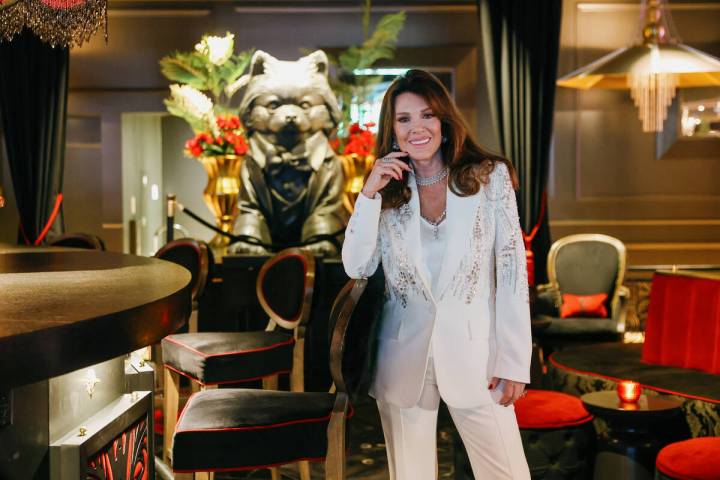



The Queen of Kitsch is in the kitchen, surveying her court, her hair as big as the guest list.
Carlotta Champagne has spent weeks meticulously arranging this green-carpeted time capsule with disco ball flowerpots and Campbell’s Soup waste baskets, where even the closets have a story to tell.
Nothing is out of place here, not a strand of Champagne’s beehive ’do nor the pair of Life magazines dating to 1969, neatly arranged on a counter next to a vintage Windsor transistor radio complete with “TV sound” sticker still intact. 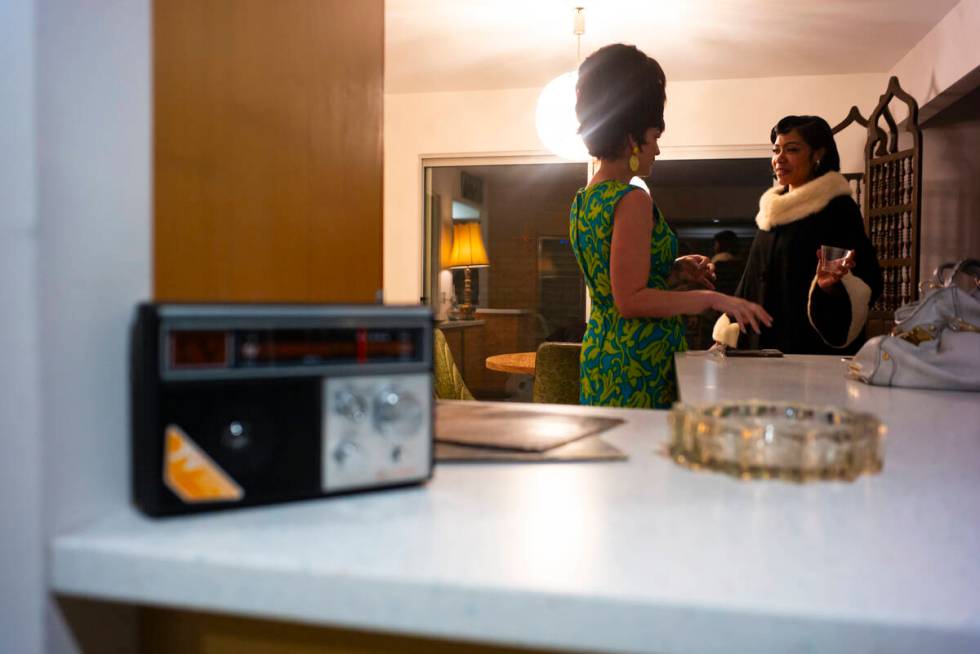
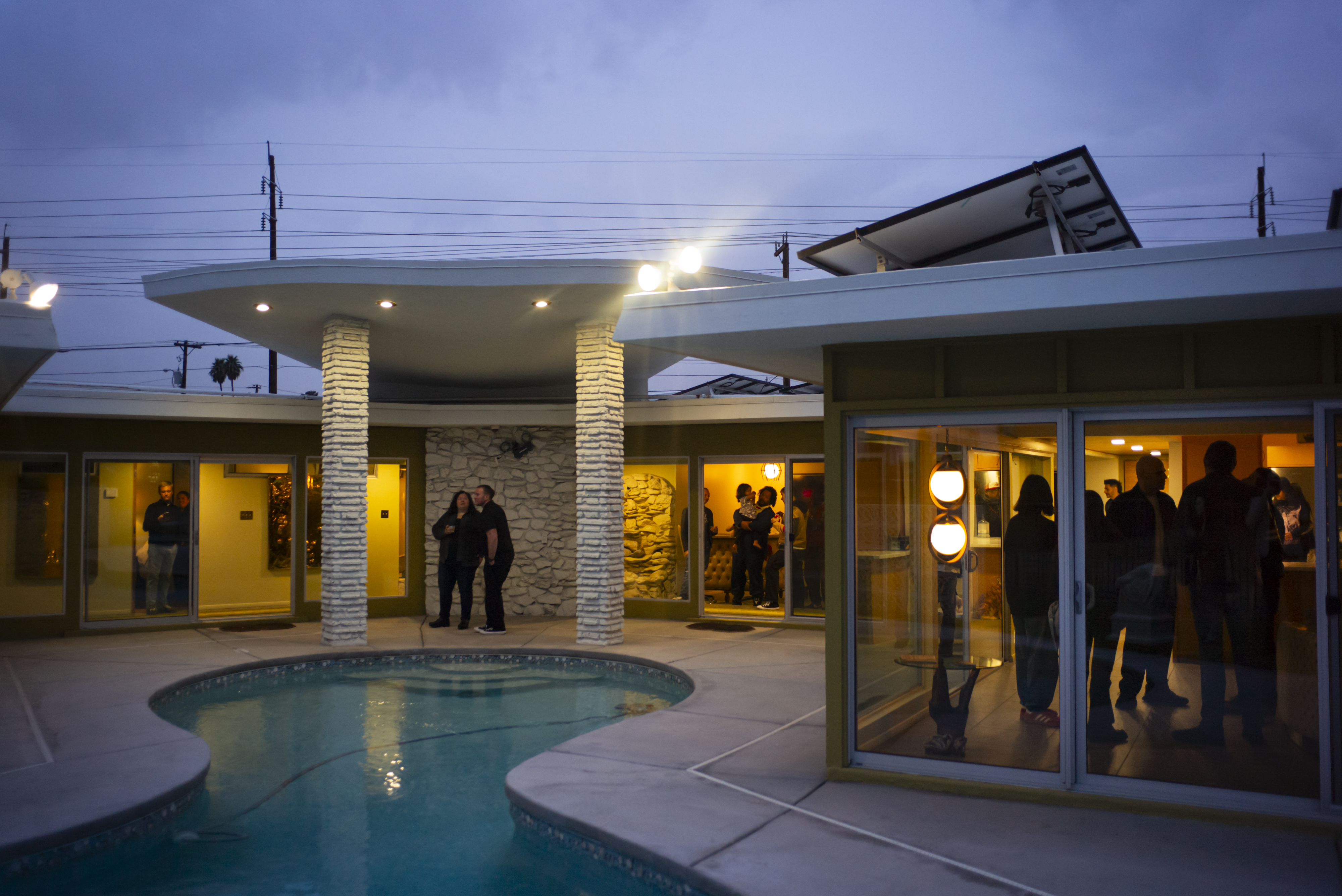
“I want to live here so badly,” we overhear a woman whispering behind us as we navigate the U-shaped, midcentury home, whose turtle-green exterior is almost as colorful as the sunset currently ripening the evening sky.
“It’s New Year’s Eve in Las Vegas, and we’re in the same Paradise Palms neighborhood where portions of Martin Scorsese’s “Casino” were filmed, and like that snapshot of ’70s Sin City excess, the house bustles with a voluminous, only-in-Vegas cast of its own.
For the next few hours, billionaires and sword-swallowers, casino executives and ventriloquists, real estate czars and punk rockers will all press themselves close to the walls to get a better look at a series of luminous, golden-hued paintings texturized with dehydrated lion’s mane mushrooms and lustrous photographs of rockets surging into the atmosphere, discharging grand plumes of smoke and fire like upended volcanoes.
Everyone’s gathered here to live “The Dream,” a collaborative exhibit between photographer Heji Shin and painter Mathieu Malouf that has brought art industry notables from around the country to the opening of Lomex Las Vegas, a new gallery in an old part of town that eyes a big, bold future for the city’s art scene while simultaneously cannonballing into its past.
True to its surroundings in an entertainment capital where the good times are meant to roll forever, like slot machine reels in casinos that never close, Lomex Las Vegas begs the question: If most art galleries are white-walled boxes as sterile as a dentist’s office and no more inviting, why can’t one of them be, you know, fun? 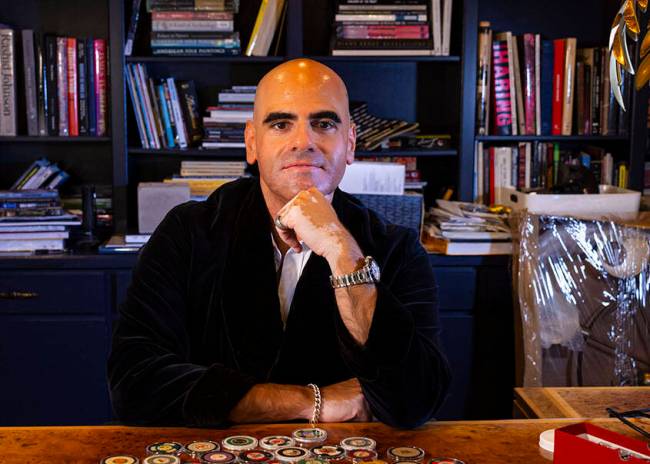
Ralph DeLuca has been waiting nine years to answer that one — and he does so eagerly on this night, working the crowd with the enthusiasm of a sports gambler who’s just cashed in on some long-odds futures bet.
“I knew artists would love this; they’re sick of just doing gallery shows in white cubes,” notes the New Jersey-born Vegas transplant and art adviser to the stars (Sylvester Stallone, Leonardo DiCaprio, among others) after the opening. “When artists see this house, they just want to do a project.”
‘No one to answer to’
DeLuca has been angling toward this moment ever since he bought a place up the street in 2017. (He’d later relocate to the similarly vintage Scotch 80s neighborhood.)
“I was like, ‘This town is the next art city,’” he recalls. “It’s the same reason the Mob came here: There’s no one to answer to.”
This meant that DeLuca could do pretty much whatever he wanted, like attempt to build a destination spot for contemporary art in an Atomic Age house nestled in a history-rich community that Dean Martin, Howard Hughes and Debbie Reynolds once called home.
To oversee its interior design, he recruited Champagne, a Vegas vintage lifestyle expert down to the blue-and-green, ’60s-style cocktail dress she wears on opening night. For curation, DeLuca turned to forward-thinking art dealer Alex Shulan, who’s developed a strong rep for spotting emerging talent as the owner of New York City’s Lomex Gallery.
To hear Shulan tell it, word is already spreading about what these three are doing out West in a city more traditionally aligned with lowbrow kicks than high-end art.
“I think people in New York have been really excited about it,” he says. “Like, every time I go to an opening or I go anywhere in the art world, people are asking me about it, trying to figure out what the hell it is that we’re doing.
“People are sort of perplexed and interested and confused, which I think is cool,” he continues, “because it’s just very outside the parameters of how people in the art world conduct themselves right now.”
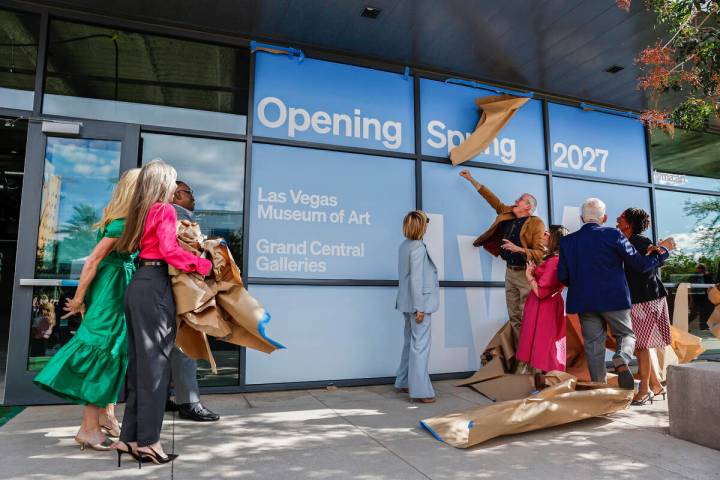
With ground soon to break on the long-planned Las Vegas Museum of Art and the continued blossoming of the downtown Arts District, the city is having an art moment — arguably its most pivotal yet.
“I realized there needs to be other art catalysts around the museum,” DeLuca explains. “I think that kind of woke everyone up. And I said, ‘OK, I’m here. Now’s the time to actually have something.’
“It’s coming at it from a different angle,” he continues. “What I think we’re bringing is artists that already have insane credibility and market demand in the contemporary art world — that’s never been done here. I thought it was the right time. I said, ‘Now, people are going to see what’s possible here.’” 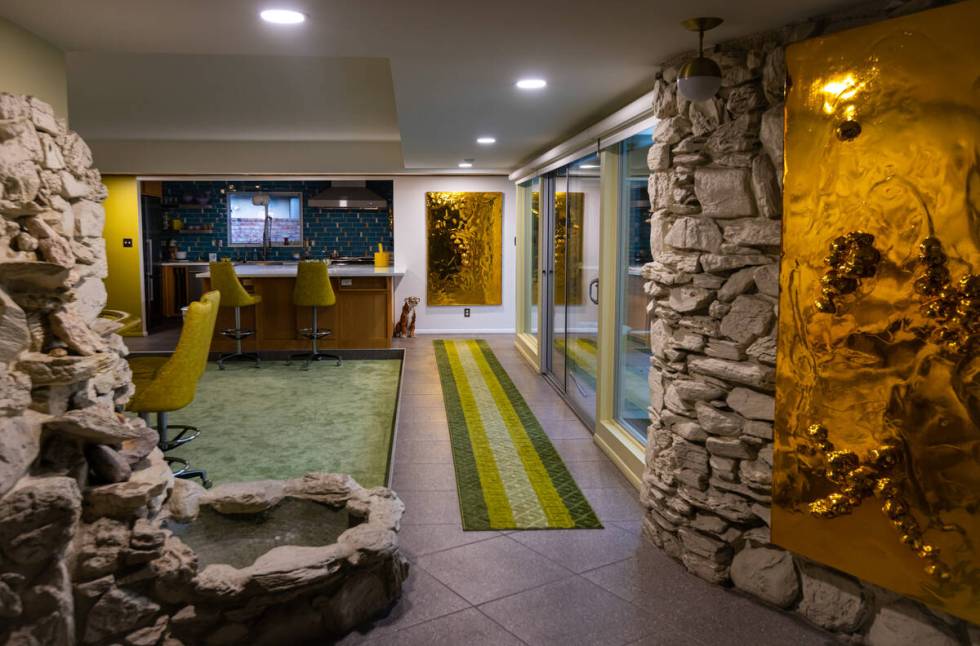
An ‘interesting’ dialogue
A week after Lomex Las Vegas’ debut, the stardust has settled.
Champagne is in the living room on a Thursday afternoon, talking up the furniture.
“I told Ralph, ‘We have to get a round sofa,’” she recalls, noting how the couch directs the attention of seated guests to Mathieu’s “Untitled (Seated Woman),” mounted on the stone wall above the fireplace.
It’s not just any sofa, though.
“This belonged to the first female casino owner in Las Vegas,” says Champagne, an artist in her own right with a bachelor of fine arts in sculpture. “She owned the Queen of Hearts; she had it custom made.
“It was a very expensive piece,” she continues. “So, I just kept at it, like, ‘I know this is kind of a big hit to the budget, but this will make this space magical.’”
It’s this synthesis of history and utility, art and practicality that defines Lomex Las Vegas, where no detail is too detailed, from the decades-old, half-used bottle of Mennen Skin Bracer aftershave on a bathroom counter to an ottoman scored from the estate of another late female icon, songwriter Allie Willis, the original Queen of Kitsch before Champagne inherited the title upon Willis’ passing in 2019.
Granted, it can be kind of hard at times to discern where the gallery ends and the show begins — and vice versa — but then again, that’s the whole point: to inhabit rooms where art’s displayed that, in turn, double as artworks themselves, to engender a creative symbiosis between the two.
“If you look at an artwork in a white space, you immediately ascribe a certain kind of value and presence to it by virtue of the way that it’s presented,” Shulan says. “And when you move something like that into a domestic environment — especially one that already has a lot going on with it visually — and it stands up or is emboldened by that, I feel like that speaks to the capacity of the artist that’s behind it.
“So, it was very interesting to me to see those artworks function in this really insane space,” he continues. “The house and the artworks are in a dialogue in a really interesting way, where they’re reflective of the environment — both literally and figuratively.” 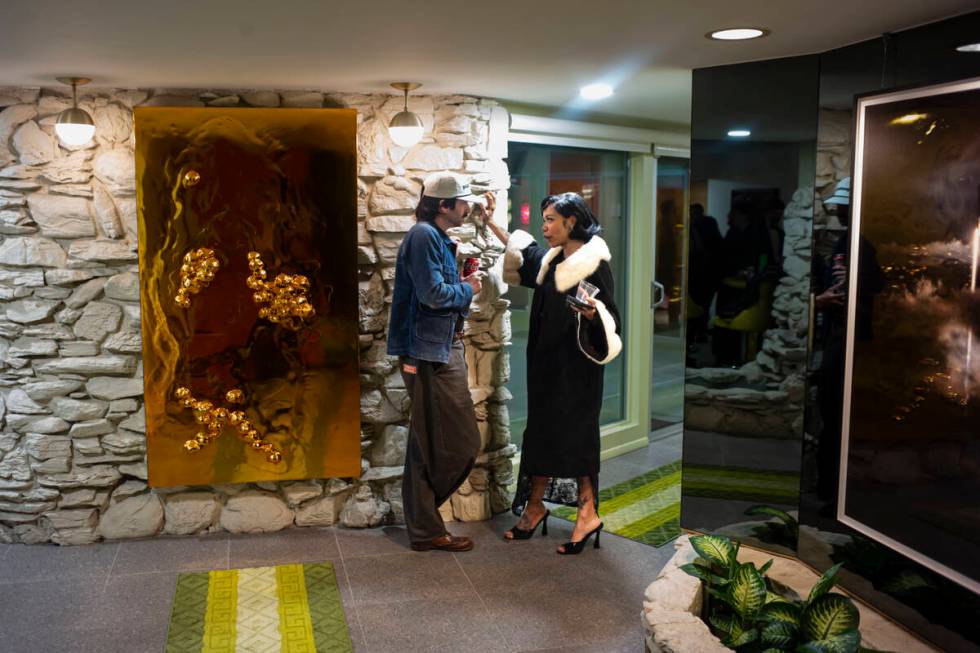
‘The perfect mousetrap’
You could argue that this environment is reflective of DeLuca as well: When it comes to the art world, he sees Las Vegas much like he once saw himself, as an underdog with teeth.
The self-taught son of a longshoreman who briefly worked as an investment banker in the ’90s, DeLuca made a circuitous entrance into the art world through an intense passion for collecting — he first made a name for himself trading in movie posters, of all things. (Ask him about that time he scored an original poster for the 1931 horror classic “Dracula,” once owned by actor Nicolas Cage, for a then-record $310,000.)
Back then, he was an outsider’s outsider; the idea that he would one day be advising Oscar winners on seven-figure art buys would have been laughable to just about anyone but himself.
“I sold $100 million worth of art last year, but when I started out, I was this kid from New Jersey with no formal education in art, no family money, no understanding, just a level of passion and curiosity, and that kind of fueled me my whole life,” he says. “I understood how to collect, I understood financial markets, I had some of that knowledge, but to walk into an art gallery, people would look at me — I was chubbier at the time; I probably dressed like a bookie — and they’re like, ‘We’re not taking this guy seriously.’
“Now, I deal with some of the most famous people in the world,” he continues. “ I remember going to my first Christie’s evening sale. I just wanted to get a ticket standing in back. Now, I’m in the front row. I spent $68 million at Christie’s this year for my clients. I want anyone who wants to experience that journey to let them know that you can. It’s possible.”
His big thing now? Taking Vegas on a similar journey.
Sure, it’s a gamble, but DeLuca is in the right place: In a city where there are video poker machines in gas stations, what’s a little more risk?
“The art world’s very exclusionary, very ‘Let’s all rush to be second,’ but no one wants to be first,” he says. “No one wants to take a risk and do anything wrong. I said, ‘The risk here is what? Blowing $100,000 setting up a house and doing a show that I didn’t mind taking the risk on, because I really believed in the work?’
“I know people were going to buy this work, and I think people were going to love the project,” he continues. “To me, this was the perfect mousetrap to show people what could be done in Vegas.”
What do the artists think?
Malouf had just gotten his driver’s license when he came to Vegas for the first time to wed fiancée Heji Shin a little over a decade ago.
He remembers driving around Fremont Street at night and to the Clark County clerk’s office to pick up his marriage license — this was a new thing for him back then, being behind the wheel — he and his wife-to-be marveling at the far-out architecture of Luxor, where they were staying.
The Vegas connections don’t end there for Malouf: When conceptualizing his paintings for “The Dream,” he needed help with the gold-coating process and ended up collaborating with a local bodybuilder that he found online, naturally.
“I met him on eBay, just looking at a listing for a machine that does a kind of mirrored gold finish on things,” Malouf remembers. “And he happened to be in Vegas — the only person I could find in the country that was able to help me make those paintings.
“I felt some sort of cosmic resonance to that,” he continues, “because gold is the thing you see a lot in Vegas: the Golden Nugget, the Trump hotel — there’s just tons of gold everywhere. And so I made those paintings there.”
It felt like a natural fit, then, when Shulan approached Malouf and Shin about creating the debut exhibit at Lomex Las Vegas — which would also be the first show they’d ever done together — amplified by the couple’s connections to the city.
Both artists’ works are spread throughout the house, and the environment encourages you to take your time taking them in. That’s one of the benefits of a space like this: You’re meant to linger here; it’s comfortable, inviting — a home — and this directly affects the art’s absorption.
“It’s much more hospitable. It’s much more of a human thing,” Malouf says. “I think the whole human element has been totally sucked out of the white cube experience. I’m not sure why — maybe it’s to make art seem more transcendent or something.
“But I think art can also be completely enjoyable in a place where humans are supposed to live or spend time,” he continues. “I think it’s something that shouldn’t be such a sacred thing, to have a completely neutral environment. I think it shows that art can exist there, and it just kind of makes you feel like staying and being there.”
For Shulan, who has hosted myriad shows at his NYC galleries since launching Lomex in 2015, working in this environment felt fresh.
“It adds another dimension to the art,” he says. “It gives it a kind of aesthetic specificity, where it’s in dialogue with this very striking architectural design that I think is productive for the exhibition.”
And that exhibition has been productive: DeLuca notes that they’ve sold numerous pieces — pieces that even Malouf himself now sees in a different light.
“I think it’s difficult to look at those paintings again in a completely neutral, white cube environment,” he acknowledges. “It kind of makes me think that art can be seen in an environment that’s less antiseptic — and that it can work. I think it kind of raises the bar a little bit.”
‘It’s for everyone’
Want to hear Ralph DeLuca speak with palpable distaste? Just ask him about his industry’s barriers to entry, how hard it can be to even buy art for those outside its inner circles.
“It’s the only business in the world where you say, ‘How much is that?’ And they say, ‘Who are you?’ ” he notes in a tone suggestive of a verbal eye roll.
Now, DeLuca is not out to crumble these barriers entirely — he still caters to the art world’s upper crust and the deep pockets the industry often demands — but he does aim to make them easier to scale. One way of doing so: to open a Vegas gateway into the primary contemporary art market, which it’s seldom had before.
“We’re trying to sell as much to locals as possible,” he says. “I mean, some people flew in from L.A. and New York to buy stuff, but we’ve sold a few pieces to locals that are like, ‘Wow, we love this. We don’t have to wait for our trip to L.A. or New York to actually buy art. There’s something here.’
“It’s for everyone who’s into art,” he adds. “I think it’s really important that locals have this experience and embrace this and understand what the art world could mean here, and what the museum coming here could mean.”
Plenty of those locals showed up at the opening, and following that promising start, DeLuca is increasingly bullish about the gallery’s future.
“We’re bringing in really important artists,” he says. “Some really important artists that have major museum shows and price points into the mid-six and early seven figures are saying, ‘What could we do here?’ ”
‘A city that’s an artwork’
This being said, it’s fair to wonder whether Vegas can actually become ‘the next art city,’ as DeLuca puts it.
But keep in mind, Vegas possesses a remarkable track record of fast and pronounced evolution in areas in which it was once lacking.
As recently as the early 2010s, the city had virtually no nightlife scene on the Strip. But with the help of superstar resident headliners like Steve Aoki, Kaskade, Tiesto and others, the city has become a nightclub stronghold.
Around the same time, there was plenty of skepticism about whether a transient town like Vegas could ever be home to a professional sports franchise. Now, the city is a sports hotbed boasting championship NHL and WNBA teams, one of the most popular NFL draws and is expected to land Major League Baseball and NBA teams in the near future.
Similarly, Vegas has developed into a destination market for music festivals — highlighted by Electric Daisy Carnival, the country’s biggest dance music fest — when it was roundly dismissed as a dead zone for music fests in the early aughts.
None of this guarantees that Vegas will continue its ascent into a desert oasis for art, of course. 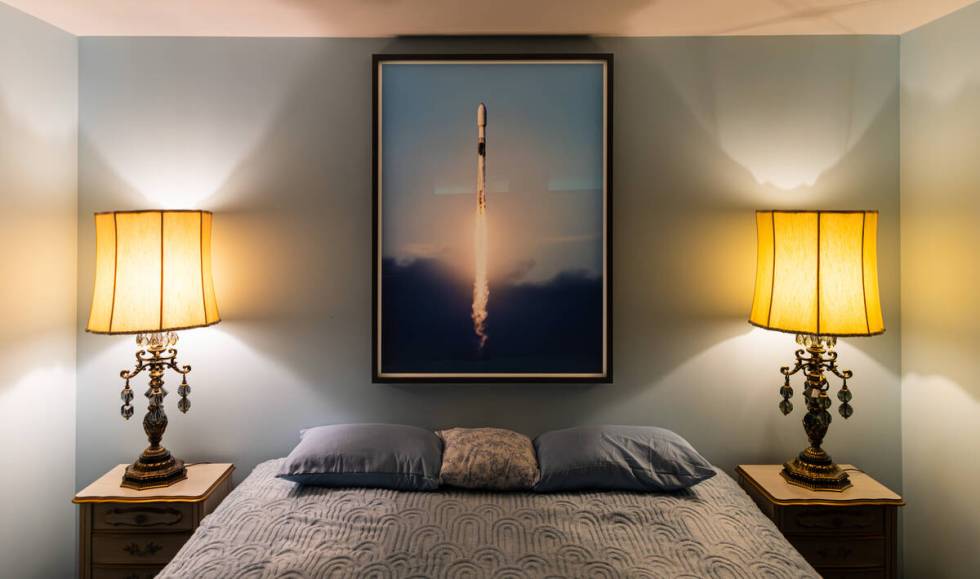
It could all prove to be a mirage.
But DeLuca is here for it either way.
“Everyone turned their nose up at Vegas, and I thought that this was a major opportunity,” he says. “It’s America’s playground; a city that’s an artwork. It’s fun, like ‘Pee Wee’s Playhouse’ for adults. This is an unapologetic city — that’s one of the things I love about it.
“The two gold standards for the art market that I’m an adviser in are really New York and London, and everyone’s like, ‘How would New York do it?’ ‘How would London do it?’ ” he continues. “Here, it’s like, ‘F--- that, how would Vegas do it?’ ”
A previous version of this story misidentified art dealer Alex Shulan.
 Add as a preferred source on Google